
Livraison le jour même ou le lendemain

Qualité garantie

Débloquez vos offres de bienvenue: Livraison GRATUITE | Jusqu'à -80 % | 30 jours d'essai gratuits à JoyPlus
Téléchargez l'application
An automatic pet feeder makes mealtimes easier when you’re working long hours, away for the weekend, or want to better control your cat or dog’s portions. However, not all models are created equal. A device designed for dry kibble won’t necessarily work for wet food, while a water fountain requires different maintenance to a smart feeder.
Before you buy, three common pitfalls keep cropping up:
Start by identifying exactly what your pet eats. An automatic cat feeder or dog food dispenser designed for dry kibble must accept the size of the kibble you use. Some devices claim compatibility with kibble up to 12 mm, but you need to compare this with the characteristics of your usual brand.
For wet food, it’s better to choose a dedicated machine. It may include a cooling system or several compartments, but its autonomy is generally more limited. The six-meal automatic cat feeder, for example, runs on batteries, which aren’t included according to its product description.
The programming should also be clear: number of meals per day, amount dispensed each time, and the ability to change timings quickly. A programmable feeder doesn’t mean you can ignore the feeding guidelines on your pet food packaging.
Food preservation is often described in rather vague terms. Instead, look for concrete features:
The HomerunPET model claims a triple locking system against moisture, insects and air, plus automatic closure after dispensing. This protection can be useful in a damp home or when the tank stays full for several days. However, it doesn’t replace the need to store kibble in a cool, dry place, as the product description recommends.
For hydration, a cat water fountain can encourage some animals to drink more thanks to a constant flow of water. However, it requires regular cleaning and periodic filter changes. A dog water fountain should also offer a reservoir suited to your pet’s size and daily water intake.
The materials that come into contact with water deserve special attention. The 316 stainless steel bowl on the Furbulous model is described as robust enough for daily use. According to its description, the product also separates the electrical components from the water tank. Its maximum capacity is 3.3 L, with two operating modes and a pump that’s said to be quiet.
Finally, check the power source: mains adapter, USB-C cable, batteries or rechargeable battery. A long-lasting battery makes it easier to place the feeder away from a socket, but you’ll need to keep an eye on its charge level and have a backup plan.
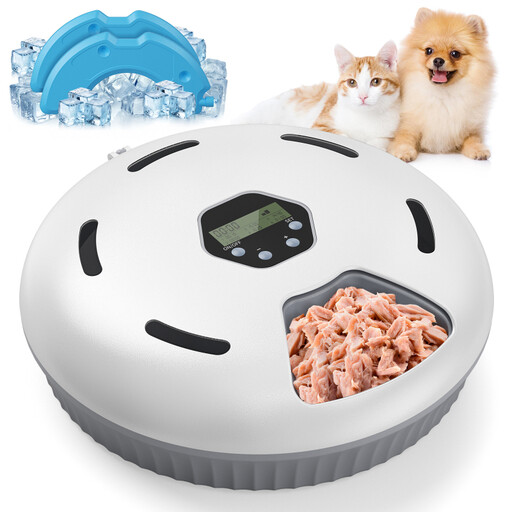
Why this choice suits this profile: Its six-meal format is ideal for anyone who wants to automate several portions of wet food without installing a connected device.
It addresses the specific needs of wet food, which is often poorly handled by kibble dispensers. Batteries aren’t included – factor this cost in from the start.
Six compartments and battery operation, with no mobile app setup required.
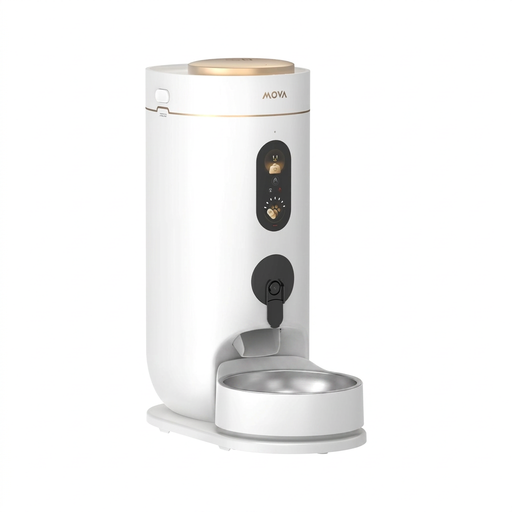
Why this choice suits this profile: Connected households can combine programming, a camera and remote interaction in a single device.
The 1080p camera, night vision and two-way audio are clearly stated. To enjoy them, though, you’ll need to accept the reliance on the app and network.
4 L capacity, separate compartment for supplements and a 150-degree wide-angle camera.
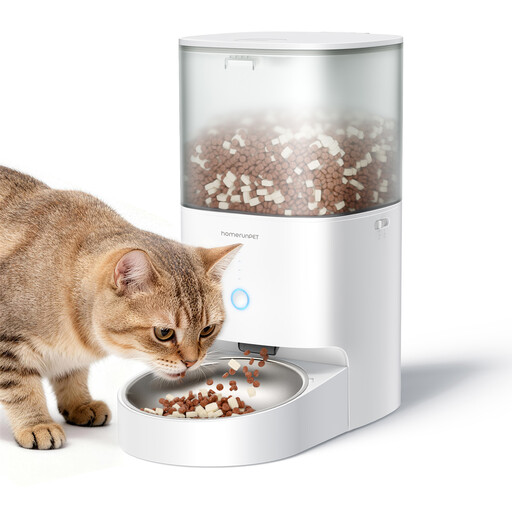
Why this choice suits this profile: Its large capacity and app control make it ideal for owners of cats or small dogs who are often away from home.
The anti-jam system and moisture lock address the common problems with devices left full for several days.
4 L tank, app with meal history, and bowl available in stainless steel or ceramic.
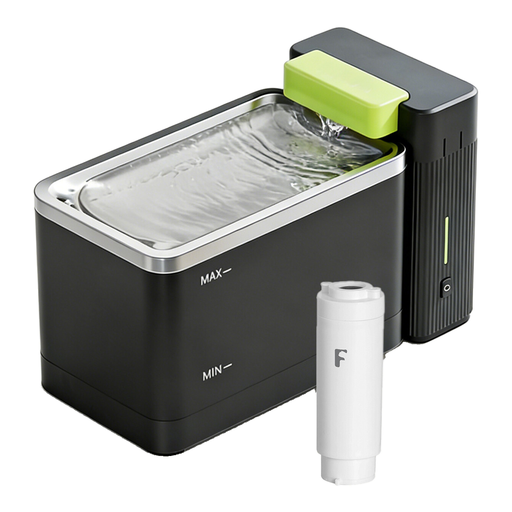
Why this choice suits this profile: This fountain is aimed at households looking for moving water, a stainless steel bowl and a medium capacity suitable for both cats and dogs.
An indicator light shows the water level and when to replace the filter. The manufacturer also states that the water is separated from the electrical components.
316 stainless steel bowl, 3.3 L capacity, ultrafiltration filter included and two operating modes.
We’ve put together a comprehensive, real-time selection of products that meet these strict criteria as well as European safety regulations.
An automated device will only stay reliable if it’s maintained according to the instructions in its manual. Clean the bowl, lid and dispensing chute regularly. For a fountain, rinse the tank and replace the filter at the recommended frequency. Never immerse the electrical base in water.
Don’t forget the ongoing costs either: filters, batteries, electricity and any replacement parts. A large capacity doesn’t necessarily reduce the total cost if the consumables are proprietary. Before you check out, make sure the filters are available and that the power supply is compatible with your setup.
Please note: a stainless steel oil dispenser or anti-drip oil bottle belong in the kitchen, while an outdoor bird feeder serves a completely different purpose. These products don’t replace a device designed to feed or hydrate your pets.
Not necessarily. Check the portion size, bowl height, tank capacity and compatibility with the kibble diameter. Many models are primarily designed for cats and small to medium-sized dogs.
It all depends on the type of food, ambient humidity, the sealing system and the manufacturer’s recommendations. Fill the tank with an amount that matches your usual consumption, and regularly check the smell, texture and cleanliness of the chutes.
Consumption varies depending on the pump’s power and the selected mode. Economy or intermittent modes can limit continuous operation. A fountain must remain plugged in or have a charged battery, and its water level needs to be checked regularly.