
Livraison le jour même ou le lendemain

Qualité garantie

Débloquez vos offres de bienvenue: Livraison GRATUITE | Jusqu'à -80 % | 30 jours d'essai gratuits à JoyPlus
Téléchargez l'application
An automatic coffee machine with a grinder grinds coffee beans to order and prepares an espresso, a long coffee or a milky drink in just a few seconds. However, technical specifications sometimes highlight figures that do not tell the whole story. A tank that is too small, time-consuming maintenance or an underestimated footprint can quickly make an attractive appliance impractical for everyday use.
Here are the criteria to consider before choosing an automatic espresso machine suited to your kitchen, your consumption and your habits.
A 15-bar coffee machine or 20-bar model generally displays the pump’s maximum pressure. That does not necessarily mean that every cup will taste better. The result also depends on the grind, the amount of coffee, the water temperature, the quality of the beans and the extraction settings.
Pressure should therefore be considered as one technical feature among others, not as a sufficient guarantee of quality on its own. A 15-bar machine is already perfectly suitable for most domestic uses, particularly for preparing espressos and long coffees.
A bean-to-cup coffee machine requires a little more attention than a capsule machine. You need to empty the coffee-grounds container, rinse the removable parts, clean the brewing unit and run a descaling cycle when the appliance indicates that it is required.
Models equipped with a milk system add an extra step. The tube, nozzle or carafe must be rinsed after every use. An automatic cappuccino machine with a milk-circuit rinsing function reduces the amount of manual work, but it does not replace regular, thorough cleaning.
A bean-to-cup coffee machine can be fairly deep, particularly when the water tank and bean container are positioned at the back or on top. Measure the available space, allowing room to open the lid and remove the tank.
You should also check:
An integrated conical grinder grinds the beans just before brewing. The number of available settings lets you adapt the grind size to the coffee being used. The models featured offer several levels, including 13 settings on several De’Longhi machines and 15 levels on the HiBREW H16.
A more finely adjustable grind will not necessarily suit everyone better, but it gives you greater flexibility when adjusting the strength and extraction to suit the beans. In a household that switches between different coffees, compatibility with pre-ground coffee can also prove useful.
A basic model is often limited to espresso and long coffee. An automatic cappuccino machine adds milk-based recipes with minimal intervention. However, look closely at the drinks on offer: the term ‘coffee’ may refer to a different recipe from ‘lungo’, an Americano or filter coffee.
Customisation generally covers:
A programmable coffee machine designed for filter coffee meets a different need. The H.Koenig MG30, for example, features LCD-screen programming, a keep-warm function and a 1.5-litre jug that can serve up to 12 cups. However, it uses ground coffee rather than a bean grinder.
Choose removable tanks, easily accessible containers and guided rinsing or descaling programmes. Parts that come into contact with milk should be easy to dismantle.
As with any electrical appliance, plug the machine into a socket suitable for the French domestic power network and place it on a stable, dry surface. Never immerse the motor unit in water, and allow the steam nozzle to cool before cleaning it. When choosing a descaling product and carrying out maintenance, always follow the instructions and recommendations provided by the manufacturer.
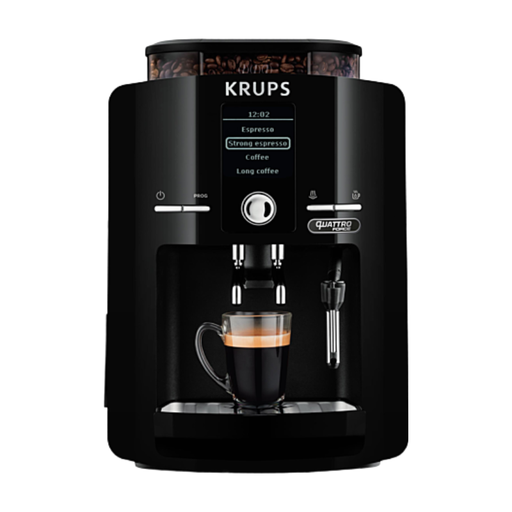
Why this choice suits this profile : Its LCD screen, 1.7-litre tank and two-cup function are ideal for everyday use without requiring a multitude of settings.
It accepts both beans and ground coffee, so you are not tied to a single format. The steam nozzle is manual, however, and must be cleaned after every use.
Integrated ceramic grinder, advertised pressure of 15 bars, removable 1.7-litre tank and simultaneous preparation of two cups.
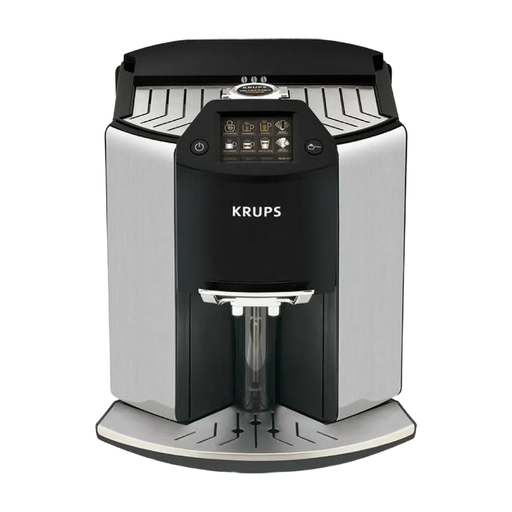
Why this choice suits this profile : Its TFT touchscreen and 17 directly accessible speciality drinks are ideal for households that enjoy trying different recipes.
Cleaning and descaling alerts make maintenance easier to manage. Automatic rinsing of the milk circuit helps prevent missed cleaning, although it does not replace cleaning the individual components.
1.7-litre tank, 280 g bean container, four strength levels, three temperature settings and 17 advertised recipes.

Why this choice suits this profile : Its 4.3-inch touchscreen, six drinks and dual-boiler system are designed for busy mornings or repeated preparation.
Coffee and milk volumes can be customised and then saved. The integrated cleaning system helps ensure routine maintenance is not overlooked.
Power of 1 350 W, 1.5-litre tank, grinder adjustable across 15 levels and advertised dual-boiler system.
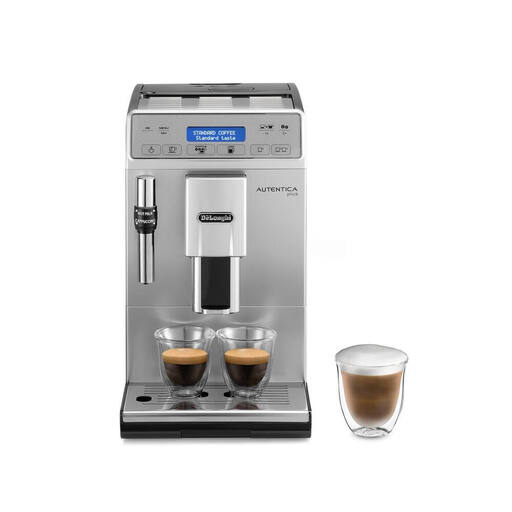
Why this choice suits this profile : With its advertised width of 19.4 cm, it fits more easily on a narrow worktop while still offering several coffee recipes.
The width is clearly stated, making it easier to compare with the available space. The steam nozzle is manual : allow some free space for the milk container.
13 grind settings, 200 g bean container, two-cup preparation and rinsing and descaling programmes.
We have put together a complete, real-time updated selection of products that meet these exacting criteria and European safety standards.
For a few coffees a day, a 1.4- to 1.5-litre tank may be sufficient. In a household with several people, a capacity of 1.7 to 1.8 litres and a larger bean container will save time. If you mainly drink milk-based beverages, focus first on how easy the milk system is to rinse rather than simply counting the number of recipes.
A coffee machine with a manual milk frother gives you greater control, but requires a little practice and cleaning after every preparation. An automatic carafe makes serving easier, at the cost of having more parts to maintain.
Consumption depends on the appliance’s power, the number of drinks prepared and the heating time. Automatic shut-off and standby functions limit unnecessary operation. To keep running costs under control, use only the amount of water required, clean the circuit regularly and run descaling cycles as soon as the machine indicates that they are needed.
This varies according to frequency of use, water quality and how regularly the machine is maintained. Rinsing, cleaning the brewing unit, emptying the coffee-grounds container and replacing the filter when recommended by the manufacturer all help extend the appliance’s lifespan. Before buying, also check the availability of spare parts and the quality of the after-sales service.
A capsule machine is often quicker to use and more compact, like the Krups Nespresso Essenza Mini, which offers two cup sizes and a 0.6-litre tank. A bean-to-cup model lets you choose your coffee and adjust the grind, but requires more maintenance. The right choice therefore depends on your priorities : simplicity, customisation, footprint or running costs.