
Livraison le jour même ou le lendemain

Qualité garantie

Débloquez vos offres de bienvenue: Livraison GRATUITE | Jusqu'à -80 % | 30 jours d'essai gratuits à JoyPlus
Téléchargez l'application
Cleaning the litter box is the near-daily chore every cat owner faces. An automatic cat litter box promises to free us from this thankless task, provide a healthier environment for our pet, and neutralise odours. The only problem: the market is flooded with models whose marketing promises don't always deliver. Before pulling out your credit card, it's crucial to know how to avoid the most common pitfalls to choose a device that will truly make your life easier.
Here are the 3 classic mistakes that can turn this investment into a costly disappointment:
To make the right choice, forget the marketing speak and focus on objective criteria. Here are the three technical points to scrutinise.
Be careful not to confuse the total volume of the device with the actual living space for your cat and the capacity of the waste drawer.
The heart of the machine is, of course, the cleaning mechanism. Most models use a rotating drum that sifts the litter to separate clumps. Its effectiveness depends on its design, but also on its compatibility with different types of litter.
Check this point carefully: some models lock you into a proprietary ecosystem by only accepting specific litters (crystal, brand-specific pellets), which can quickly drive up the cost. The most versatile models accept the majority of commercial clumping litters (clay, tofu, corn…), leaving you free to choose.
Your pet's safety is non-negotiable. A good device must be equipped with a suite of sensors to ensure risk-free operation.
To help you make your choice, we have selected several models that meet specific needs, all while avoiding the pitfalls we've just mentioned.
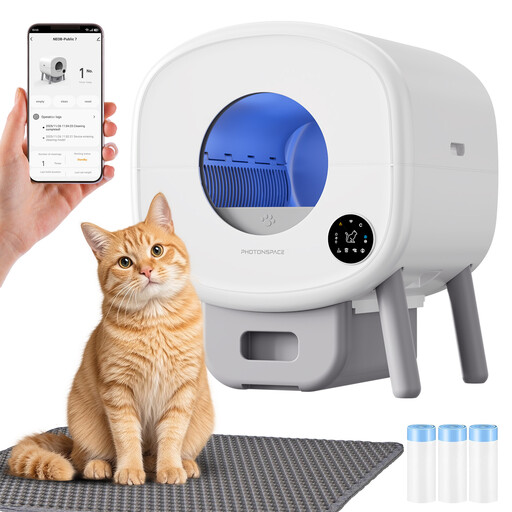
Why it stands out: Perfect for owners of multiple cats or large breeds (like Maine Coons), its huge interior volume and XXL waste drawer significantly extend the time between manual interventions.
This model tackles the "one-size-fits-all" trap head-on with its 95L interior and 15L waste drawer. The result: premium comfort for the cat and up to 15 days of autonomy for you.
Its XXL capacity is a guarantee of peace of mind. Its comprehensive safety arsenal (weight sensors, infrared) ensures maximum protection.
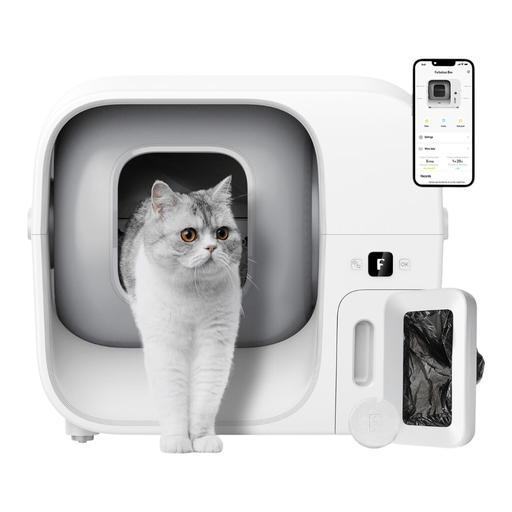
Why it stands out: For those who want a 100% "hands-free" solution and clinical-level hygiene. Its unique system bags and hermetically seals waste, eliminating any contact with odours or germs.
It shatters the "zero odour" myth by going far beyond a simple filter: it automatically seals the waste bag once full, permanently trapping odours.
Its patented automatic bagging and bag replacement system, the only one of its kind. Its nearly silent operation (as low as 37 dB).
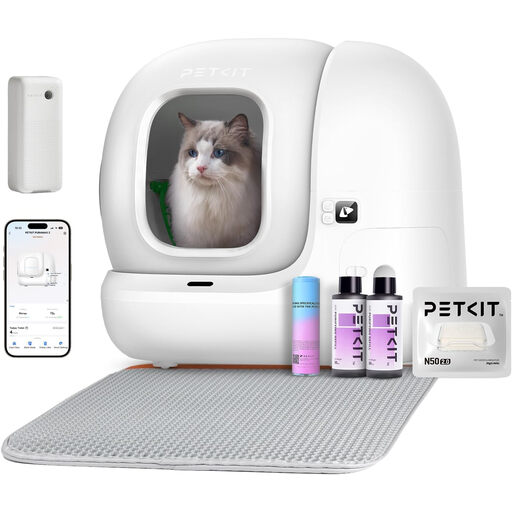
Why it stands out: This is the perfect balance for anyone seeking a reliable, spacious device that is, above all, compatible with most commercial litters, without being locked into an ecosystem of consumables.
It avoids the trap of hidden costs and vendor lock-in by being compatible with all clumping litters (except crystal-based ones). This flexibility allows you to keep your budget in check.
Its ultra-comprehensive xSecure safety system. Its large 76L capacity and powerful deodorisation which, according to PETKIT, eliminates over 98% of ammonia.
We've curated a full selection of products that meet our selection criteria and the strictest safety standards.
The noise level varies from one model to another. That said, recent devices are designed to be discreet, with a noise level often below 40-50 dB during the cleaning cycle—the equivalent of a modern refrigerator. Only the bagging process might be slightly louder, but it only lasts a few seconds.
The transition period is crucial. The trick is to place the new litter box next to the old one for a few days without turning it on. Let your cat explore it at its own pace. To encourage it, add a scoop of its used litter: the familiar scent will reassure it. Once it starts using the new box, you can remove the old one and activate the automatic mode, setting a cleaning delay after it leaves so as not to startle it.
The cost isn't just the purchase price. Remember to include: