
Livraison le jour même ou le lendemain

Qualité garantie

Débloquez vos offres de bienvenue: Livraison GRATUITE | Jusqu'à -80 % | 30 jours d'essai gratuits à JoyPlus
Téléchargez l'application
You dream of an espresso made from freshly ground coffee, without cluttering your kitchen with accessories or having to monitor every step? An automatic bean-to-cup coffee machine could be exactly what you’re looking for – provided you don’t just focus on the number of recipes displayed on the front panel.
Some marketing claims can be misleading. A machine advertised as “15 bar” doesn’t, on its own, guarantee an espresso to your taste. Likewise, a large screen or a long list of programmed drinks won’t make up for a water tank that’s too small, fiddly maintenance, or a grinder with limited adjustment. Here are the criteria to consider before you buy, followed by a selection suited to different needs.
The 15 bar claim often appears on the spec sheets of automatic espresso machines. It refers to the pump’s maximum pressure, but on its own it’s no measure of extraction quality. The result also depends on grind fineness, coffee dose, water temperature and flow rate.
So it’s better to compare the full range of settings rather than choosing a 15 bar coffee machine on that one criterion alone. In daily use, the ability to adjust strength, volume and grind fineness will be far more useful.
A cappuccino machine or a coffee machine with a milk frother makes it easy to prepare indulgent drinks, but milk requires regular cleaning. Simply rinsing the steam wand after use isn’t always enough to replace the cleaning cycle recommended by the manufacturer.
Check for an automatic rinse function, a dedicated milk circuit cleaning programme, and removable parts that are easy to wash. For everyday use, this detail can make the difference between a feature you actually use and one that quickly gets neglected.
An automatic coffee maker needs to sit on a stable worktop, with enough clearance to fill the water tank and remove the removable parts. Dimensions aren’t always listed in the same order – width × height × depth – so check each measurement before you buy.
The bean hopper capacity and water tank size should match the number of coffees you make each day. A household of several people or a small office would do well to look for a model with around 1.8 litres of water and a bean hopper of 250 to 300 g.
The integrated coffee grinder grinds beans on demand, but not all machines offer the same level of adjustment. Three settings may be enough for simple use, while 13 or 15 levels allow you to fine-tune the result depending on the coffee you’re using.
Compatibility with pre-ground coffee can also be handy for occasionally switching varieties or making a decaf. This feature is available on several De’Longhi and Krups models shown below.
For a programmable coffee machine, look for controls that let you adjust at least:
A memory function, called “My” or “My Menu” depending on the model, can save each user’s preferences. This is especially useful in a household where habits vary between a short espresso, a long coffee and a double coffee.
An automatic rinse programme at start-up and shut-down simplifies daily tasks, but doesn’t replace emptying the drip tray and the grounds container. Descaling should be done as soon as the machine prompts you, using a compatible product.
For an appliance intended for the French market, check that safety information, a French-language manual and the relevant regulatory markings are included. Also follow the usage instructions: cold drinking water, an earthed socket, unplugging before cleaning, and care with hot steam wands.
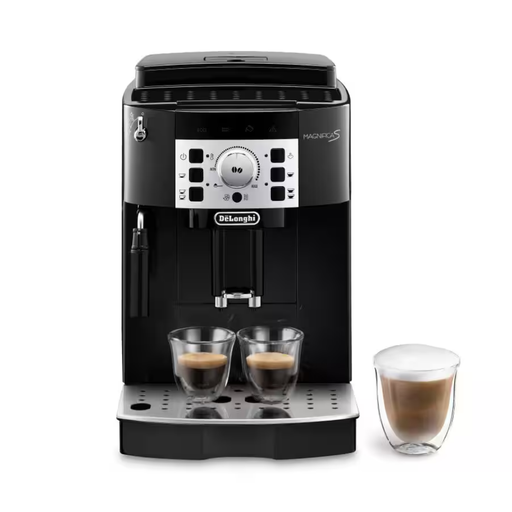
Why this choice suits this profile: This home-focused coffee machine keeps things simple, with an adjustable conical grinder, a steam wand and a 1.8 L water tank. It works with both beans and pre-ground coffee.
The descaling programme, water filter and removable parts make maintenance easier to keep on top of. The steam wand does need cleaning after each use, though.
15 bar pump, two-cup preparation and Thermoblock system.
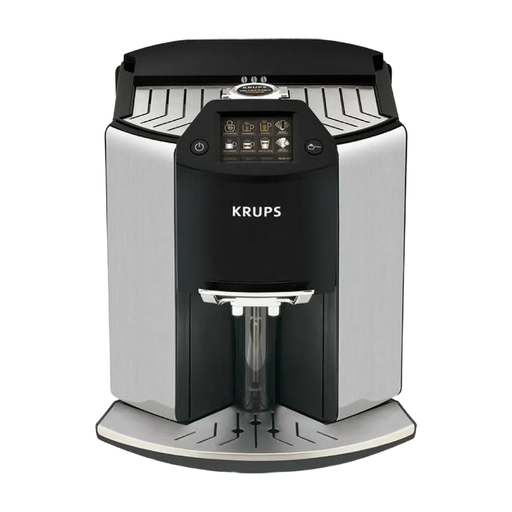
Why this choice suits this profile: Its TFT touchscreen, 17 speciality drinks and integrated milk system are aimed at users who want to enjoy a wide variety of beverages and save multiple personalised settings.
Automatic milk circuit rinses and cleaning alerts make maintenance easier to keep track of.
17 recipes, four strength levels and three temperature settings.
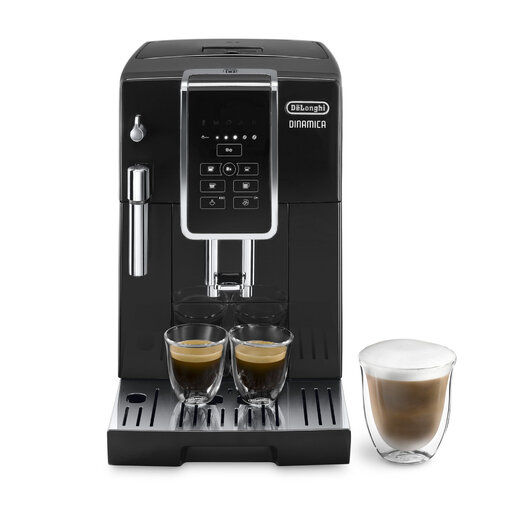
Why this choice suits this profile: With its 300 g bean hopper, 1.8 L water tank and four one-touch recipes, this machine is well suited to repeated use at home or in a small office.
Dishwasher-safe removable parts and descaling reminders help prevent you forgetting, though they don’t replace regular checks.
13 grind levels, two-cup preparation and removable steam wand.
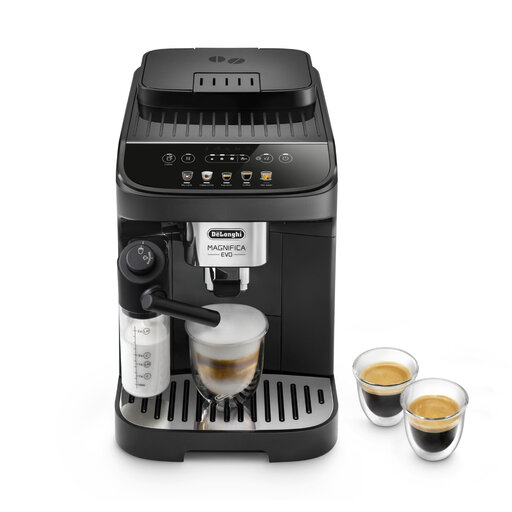
Why this choice suits this profile: Its milk container and MyLatte function are designed for making cappuccinos and other milky drinks regularly, with an adjustable amount of milk.
The automatic milk system cleaning and dishwasher-safe jug make maintaining this feature straightforward.
Five one-touch drinks, 13-level adjustable grinder and 1.8 L water tank.
We’ve put together a comprehensive, real-time updated list of products that meet these demanding selection criteria and European safety regulations.
A bean-to-cup espresso machine grinds the beans just before brewing and generally lets you adjust the grind, strength and volume. A capsule machine focuses more on standardised preparation and quick use. The choice depends on how much you want to personalise your coffees, the cost of consumables and the amount of waste generated.
The running cost includes coffee beans, water, electricity, descaling products and, if applicable, replacement water filters. The expense varies depending on how often you use it and the type of beans you choose. Regular maintenance also helps prevent problems caused by limescale and coffee residue.
The lifespan depends on the model, how often it’s used, the quality of your water and how well you follow the maintenance programmes. To protect the grinder and the circuit, only use the recommended products, empty the grounds container regularly and run the descaling cycle when the machine prompts you. Also check the warranty terms and the availability of spare parts before you buy.