
Livraison le jour même ou le lendemain

Qualité garantie

Débloquez vos offres de bienvenue: Livraison GRATUITE | Jusqu'à -80 % | 30 jours d'essai gratuits à JoyPlus
Téléchargez l'application
Making an espresso from fresh beans without spending ages fiddling with settings appeals to many households. But buying an automatic bean-to-cup coffee machine can lead to a few disappointments if you rely solely on the number of recipes or the stated pressure.
Three common pitfalls keep cropping up:
Here are the criteria to consider before choosing an espresso bean-to-cup machine for your home.
A bean-to-cup coffee machine grinds the coffee on demand. So you need to look at the type of grinder, the number of settings available and whether there’s a compartment for pre-ground coffee.
The conical burr grinder is common on automatic machines. The fineness adjustment lets you tailor the grind to different coffees and your own preferences. A higher number of levels doesn’t automatically guarantee a better result, but it does give you more leeway to fine-tune the flavour intensity and flow rate.
For example, the De’Longhi Magnifica Evo offers 13 grind levels and a 250 g bean hopper. The Philips EP2230/10 has 12 settings and a grinder said to be made of ceramic. These figures help you compare options, but they’re no substitute for trying out several different coffees.
For a single person or a couple, a 1.5 to 1.8 litre tank may be enough, depending on how often you use it. A family or household that makes several drinks a day will appreciate a larger bean hopper and a grounds container that needs emptying less often.
Also check:
Models with a milk system also need enough space to remove the carafe or manoeuvre the steam wand. A compact cappuccino machine can be handy, but its milk carafe may eat into the available worktop space.
A coffee machine with a milk frother needs regular cleaning, especially after making cappuccinos or lattes. Compare the system on offer:
Before buying, read the manual, check the availability of spare parts and familiarise yourself with the descaling recommendations. For an appliance sold in the UK, also make sure it has the UKCA marking, a clear manual in English and the manufacturer’s or responsible person’s contact details within the United Kingdom.
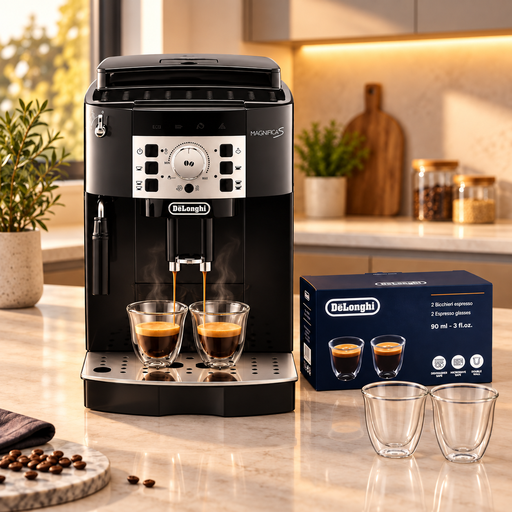
Why this choice suits this profile: This automatic machine combines a fairly straightforward setup, a 1.8 litre tank and a pair of 90 ml double-walled glasses. It’s ideal for anyone looking to switch to beans and make two coffees at once.
The conical burr grinder is adjustable, the machine accepts both beans and pre-ground coffee, and a descaling programme is included. So you’re not limited to just one type of coffee.
Stated 15-bar pump, Thermoblock system, steam wand and dual-cup preparation.
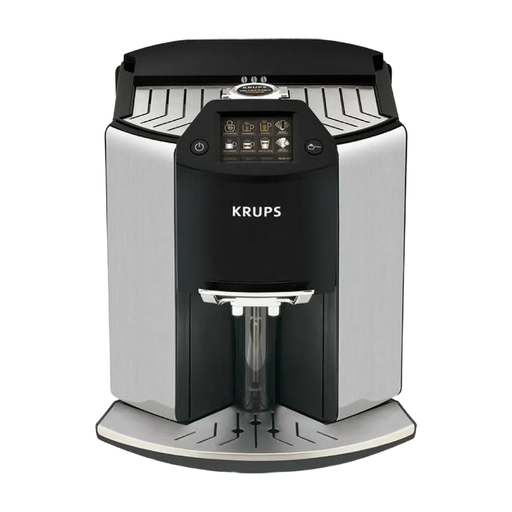
Why this choice suits this profile: Its TFT touchscreen, 17 stated speciality drinks and adjustable strength and temperature settings are aimed at households that enjoy varying their beverages without lots of extra effort.
Rinse, cleaning and descaling programmes are built in, with maintenance alerts. The milk system also features an automatic rinse cycle.
1.7 l water tank, 280 g bean hopper, dual-cup function and integrated milk nozzle.

Why this choice suits this profile: With six stated drinks, 15 grind levels, a 4.3-inch touchscreen and a dual heating system, this machine is aimed at households that make coffee after coffee or switch between espressos and milk-based drinks.
Coffee and milk volumes can be customised and saved. The integrated cleaning system makes daily maintenance easier, as long as you follow the instructions in the manual.
1.5 l tank, conical burr grinder adjustable to 15 levels and stated power of 1,350 W.
We’ve put together a full list, updated in real time, of products that meet these demanding selection criteria and UK safety regulations.
An automatic machine doses, grinds and extracts the coffee at the touch of a button. A more manual espresso bean-to-cup machine gives you greater control over the tamping, grind and milk foam texture. The former suits users who value simplicity; the latter is for those who want to be more hands-on with the preparation.
The cost depends mainly on the price of the beans, the amount used per cup, the water and the cleaning products. You also need to factor in any filters, descaling solution and replacement parts. To keep costs down, use the right dose, empty the containers regularly and stick to the recommended cleaning cycles.
Use fresh water, clean the nozzle or carafe after every milk-based drink and empty the grounds container before it overflows. Run the descaling cycle when the appliance prompts you, and never put caramelised or flavoured beans into the grinder unless the manufacturer explicitly says you can. These simple habits reduce the risk of build-up and help keep your machine in good shape over time.