
Livraison le jour même ou le lendemain

Qualité garantie

Débloquez vos offres de bienvenue: Livraison GRATUITE | Jusqu'à -80 % | 30 jours d'essai gratuits à JoyPlus
Téléchargez l'application
Whether you’re removing a wheel, working on a lorry or tackling a seized bolt, a 1,000 Nm cordless impact wrench can save you valuable time and effort. But a big number on the box doesn’t guarantee that the tool will meet your needs.
Some models quote their maximum torque for loosening only. The power available also depends on the battery, the impact mechanism and the condition of the fastener. And while some kits come with plenty of accessories, they don’t always specify whether the sockets are suitable for the wheel nuts used on vehicles in the UK. Here are the features to check before choosing a 21 V impact wrench.
The torque figure in newton metres sometimes refers to the maximum loosening torque, rather than the force actually applied when tightening. These two figures aren’t interchangeable. For example, a tool might claim 1,000 Nm for loosening and 800 Nm for tightening, as with the SeeSii model featured below.
When refitting a wheel, use the impact wrench to run the nut down, then finish with a torque wrench set to the vehicle manufacturer’s recommended setting. This way, you won’t have to rely blindly on the maximum figure advertised.
A cordless impact wrench becomes less effective as its battery runs low. Check the voltage, capacity in amp-hours and whether a spare battery is included. A model supplied with 2 batteries is much more convenient for repeated jobs: one can power the tool while the other charges.
The “21 V” label isn’t enough to compare the run time of two tools. Capacity in Ah, the charger supplied and protection against overheating also play an important part.
For wheels and most automotive jobs, the 1/2-inch square drive is a very common size. You’ll also need to check which sockets are included: sizes 17, 19, 21, 22 or 24 mm won’t necessarily cover every vehicle or application.
Work on lorries and some maintenance jobs may require impact-rated sockets. The included accessories are a useful starting point, but they’re never a guarantee of universal compatibility.
Choose a high-power impact wrench to suit the work you intend to do. For car wheel nuts, high torque makes it easier to remove rusty or stuck fasteners. Lorries place considerably greater demands on the tool, and a consistent impact mechanism matters just as much as the figure shown in the specifications.
No-load speed, measured in revolutions per minute, affects how quickly the tool can run a nut down. The number of impacts per minute indicates how often the hammer strikes, but it doesn’t replace the most important figure: the torque actually available. Multiple power settings also let you work more gently on delicate fasteners.
The 1/2-inch square drive suits a wide range of automotive jobs. Before ordering, check how the sockets are retained, whether an extension is included and whether the tool is compatible with the accessories you already own.
A cordless impact driver with a hex bit holder can’t replace an impact wrench with a 1/2-inch square drive. The former is mainly for driving screws and working on small fixings, while the latter is designed for nuts and removing wheels.
If you’ll be using the tool regularly, check the quality of the materials used for the square drive, hammer and housing. An anti-slip handle, a work light and a manageable weight all make the tool easier to control.
Before using the tool for the first time, check that it comes with instructions, warnings and any relevant EU compliance information. Wear safety glasses and hearing protection if the job could send debris flying or produce high noise levels. Always remove the battery before changing a socket or cleaning the tool.
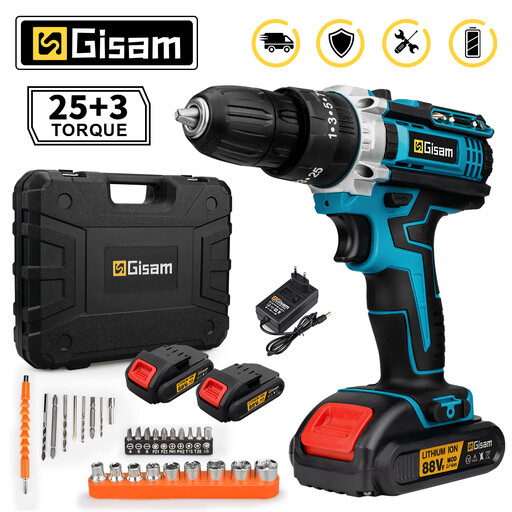
Why it suits this user: This kit is ideal for home repairs, assembling furniture and smaller jobs that don’t call for the torque of a proper lorry impact wrench.
Its 25 torque settings and two speeds reduce the risk of overtightening small fasteners.
Claimed maximum torque of 25 Nm, two 1.3 Ah batteries and a storage case with accessories.
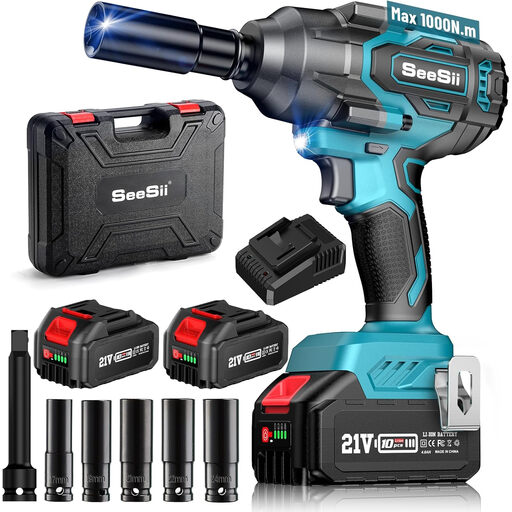
Why it suits this user: This kit is for anyone looking for a 1,000 Nm cordless impact wrench for wheels, vehicle maintenance and demanding fastening jobs.
The specifications clearly distinguish between 1,000 Nm for loosening and 800 Nm for tightening, making the advertised power easier to interpret.
1/2-inch square drive, three speeds up to 2,400 rpm, two 21 V 4 Ah batteries, a fast charger and five sockets from 17 to 24 mm.
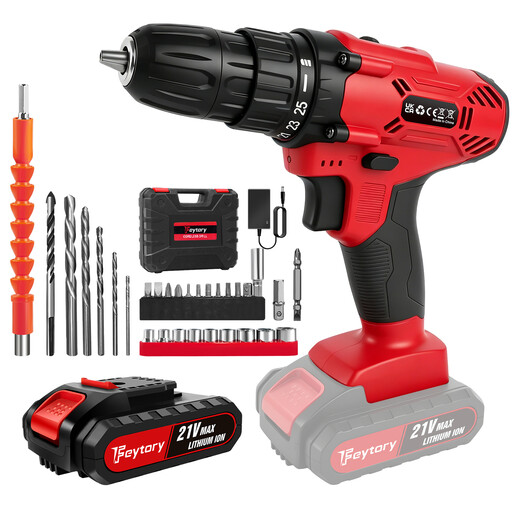
Why it suits this user: This drill driver is aimed at tradespeople and DIYers who switch between drilling, screwdriving and everyday repairs, rather than those removing wheels all day.
Its 25+1 settings mean you don’t have to approach every job as if it needs maximum power.
Claimed torque of 45 Nm, two speeds, integrated light, a 1.5 Ah battery and a case with 29 accessories.
Before you start, secure the vehicle properly and fit a socket designed for impact tools. Avoid standard chrome sockets unless they’re rated for this use. Use a moderate speed to run the nut down, then check the final tightening with the right tool.
After each job, remove the battery, wipe dust from the housing with a dry cloth and inspect the square drive. Store batteries in a dry place at a moderate temperature, following the manufacturer’s charging instructions. Repeatedly working on badly seized nuts can accelerate wear to the impact mechanism.
We’ve put together a comprehensive, regularly updated selection of products that meet these demanding criteria and European safety requirements.
Yes, this level of torque can make removing wheels easier, but it’s far more than every car needs. Final tightening must follow the value specified by the manufacturer and be checked with a torque wrench.
It depends on the battery capacity, how tight the nuts are and how often the tool strikes. Two 4 Ah batteries will generally let you work for longer without stopping than a single low-capacity battery. However, it’s impossible to give one run-time figure that applies to every job.
No. Check the drive size, socket compatibility and recommended torque for each fastener. An impact wrench designed for lorries may be too powerful for small screws and could overtighten them if the power isn’t set correctly.