
Livraison le jour même ou le lendemain

Qualité garantie

Débloquez vos offres de bienvenue: Livraison GRATUITE | Jusqu'à -80 % | 30 jours d'essai gratuits à JoyPlus
Téléchargez l'application
You want to make an espresso, a long coffee or a cappuccino from freshly ground beans, without all the faff? An automatic bean-to-cup coffee machine can seriously simplify your routine. But you need to look past the marketing hype and focus on the right criteria before you buy.
A pump rated at 15 or 20 bars doesn't, on its own, guarantee a better coffee. The grind fineness, the dose used, the temperature, the pre-infusion and the consistency of the extraction all play a part in the final result. So the stated pressure should be considered alongside all the settings on the automatic espresso machine.
A bean-to-cup coffee machine with a milk function, like an automatic cappuccino machine, needs regular cleaning of the milk circuit, the steam wand or the carafe. Automatic rinsing makes daily life easier, but it doesn't replace taking apart and washing the removable parts.
A large water tank means fewer refills, but it often makes the machine deeper and heavier. Also think about access to the grounds container, the water tank and the drip tray. On a kitchen worktop, these details can matter far more than the number of recipes advertised.
A coffee machine with an integrated grinder grinds the beans on demand, just before extraction. The number of settings doesn't tell you everything, but it does give a good idea of the flexibility available to you. According to their spec sheets, the models featured here offer between 3 and 30 grind levels.
To start with, a few well-chosen settings can be more than enough. Enthusiasts who like to vary their roasts will benefit from a wider range. However, avoid changing the grind fineness abruptly: make small adjustments, following the manufacturer's recommendations.
For one person, a 1.4 to 1.8 l tank should be fine. A household of several people or a small office might be better off with a capacity of 2.2 to 2.8 l. The bean hopper varies too: the models selected hold around 150 to 300 g.
The stated capacity doesn't directly tell you how many cups you'll get. The dose, automatic rinses and drink volumes all affect water and coffee consumption.
Make the distinction between drinks available at the touch of a button and those that require navigating several menus. A steam wand gives you more control over the milk texture, but takes a bit of practice. An integrated carafe or a system like LatteGo focuses on one-touch preparation and simpler cleaning of the removable parts.
Also check the electrical compatibility: in the UK, look for a 220–240 V, 50 Hz supply, along with clearly detailed safety and maintenance instructions.
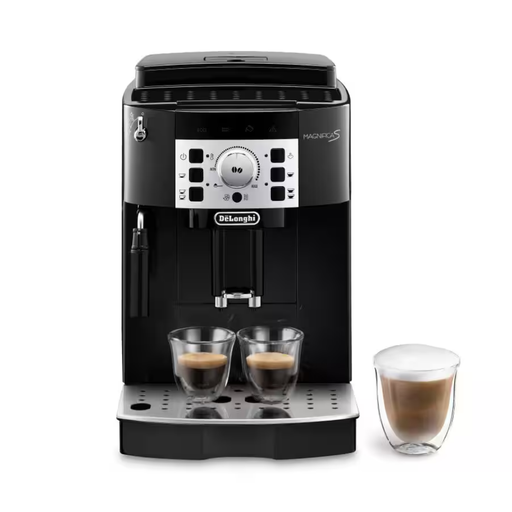
Why this choice suits this profile: Its ability to use coffee beans or ground coffee, its capacity to make two cups and its steam wand cover everyday needs, without a complicated interface.
The 1.8 l water tank, the water filter and the descaling programme reduce repetitive tasks, without pretending that maintenance doesn't exist.
Integrated grinder, 15-bar pump, two-cup preparation and steam wand.
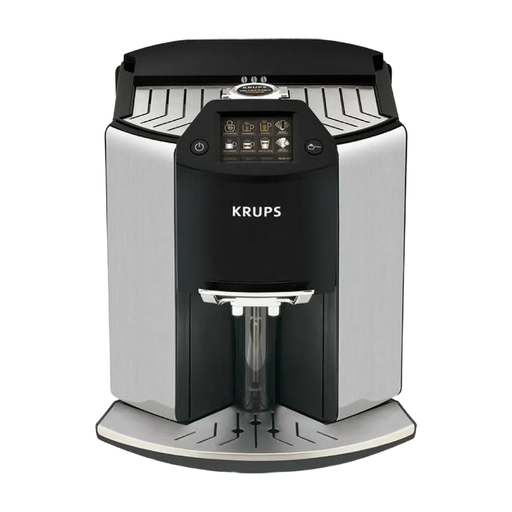
Why this choice suits this profile: Its 17 speciality drinks accessible from the touchscreen will suit households that happily switch from espresso to americano, latte or cappuccino.
Automatic rinsing and descaling come with alerts, while the milk system has its own rinse cycle.
17 drinks, 1.7 l water tank, 280 g bean hopper and TFT touchscreen.
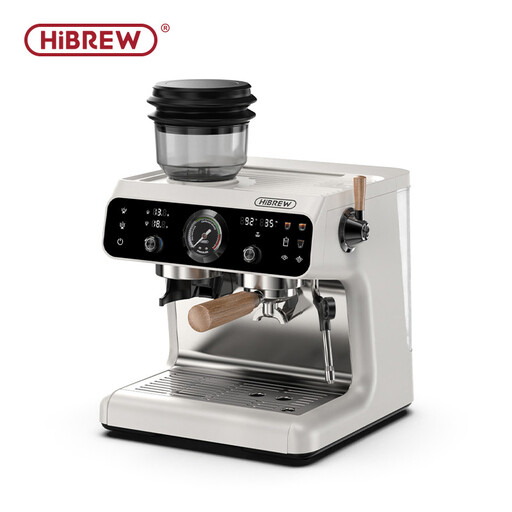
Why this choice suits this profile: Its 2.8 l water tank, 250 g bean hopper and dual boiler system are built for repeated use and milky drinks.
The 30 grind levels and 7 temperature settings let you fine-tune the parameters, rather than relying on a pre-set recipe.
Dual boiler, colour touchscreen, independent hot water outlet and stated power of 2,800 W.

Why this choice suits this profile: The LatteGo system and touch controls let you make milky coffees without having a multitude of parts to take apart.
The two-part carafe, the dishwasher-safe components and the removable brew group make maintenance easier to understand and carry out.
1.8 l water tank, 275 g bean hopper, 12 grind levels and 4 stated drinks.
We've put together a comprehensive, regularly updated selection of products that meet these exacting criteria, while complying with European safety regulations.
It depends on the power, the heating time, the standby mode and the number of rinses. Where the function exists, activate the automatic shut-off and turn the machine off after a long period without use. A high power rating can speed up certain functions, but it isn't enough to estimate overall consumption.
Longevity depends on how often you use it, the hardness of your water, the quality of the beans and how well you follow the cleaning programmes. Empty the grounds container regularly, clean the brew group or removable parts and run a descaling cycle as soon as the machine asks for it. Also check the warranty terms and the availability of spare parts.
A fully automatic machine will suit those who want to get their drink quickly, especially a cappuccino or latte. The steam wand requires more effort, but gives you better control over the milk texture. For recreating the feel of a professional coffee machine at home, this option offers more interaction, in exchange for more thorough daily maintenance.