
Livraison le jour même ou le lendemain

Qualité garantie

Débloquez vos offres de bienvenue: Livraison GRATUITE | Jusqu'à -80 % | 30 jours d'essai gratuits à JoyPlus
Téléchargez l'application
Whether you're a mechanics enthusiast, a cautious driver, or an everyday commuter, having the right equipment is essential for maintaining your vehicle and handling the unexpected. The problem is, the automotive and motorcycle gear market is flooded with gadgets that make alluring marketing promises but are often disappointing in practice. Sorting the essential from the superfluous isn't just about saving money: it's a guarantee of safety for you and your vehicle.
Before you pull out your credit card, let's review the common pitfalls to avoid so you don't end up with a tool that will fail you at the worst possible moment.
To make an informed choice, it's best to focus on a handful of technical specifications that don't lie. They are the true indicators of an equipment's quality and reliability.
In car or motorcycle mechanics, adhering to the manufacturer's recommended torque specifications isn't an option—it's a requirement.
A battery booster must be reliable. Two points should be scrupulously checked.
For an LED bike helmet or an LED motorcycle headlight, compliance with standards and real-world performance should always take precedence over mere aesthetics.
To each use, its own gear. Here are our recommendations, chosen for their relevance to different profiles.

Why we chose it: This is the ideal device for anyone looking for a complete and reliable safety kit. It combines a jump starter, a 150 PSI compressor, a power bank, and a flashlight, all built around battery technology that's designed to last.
It directly tackles the "phantom battery" syndrome. Its sodium-ion technology has such a low self-discharge rate that it can remain operational for years without a recharge, unlike conventional lithium models. It also avoids the pitfall of a subpar all-in-one by integrating a genuinely effective compressor.
Its thermal stability (from -40 °C to 80 °C) and near-zero self-discharge make it an emergency tool you can truly count on, even after being forgotten for months in a boot, in scorching heat or freezing cold.
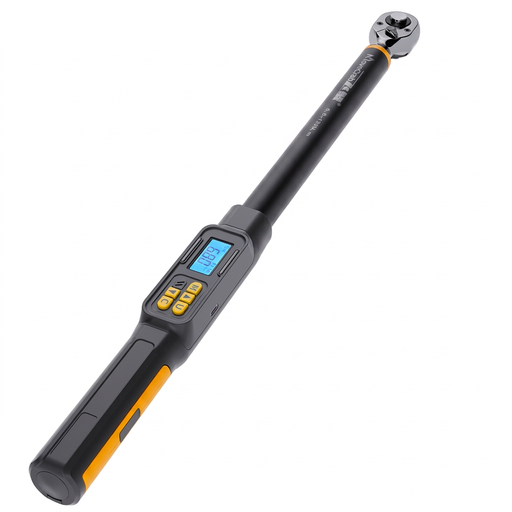
Why we chose it: Perfect for DIY mechanics who perform routine maintenance on their vehicle (changing wheels, brake pads...). Its torque range is versatile and its digital screen offers reassuring precision, especially for non-professionals.
It sidesteps the "illusory precision" trap with its certified accuracy of ±2% and its triple alert system (audible, visual, and vibration) that unambiguously signals when the target torque is reached, making over-tightening impossible.
The real-time digital display, choice of measurement units (N·m, ft-lb, etc.), and preset modes radically simplify the process and reduce the risk of error compared to a traditional mechanical wrench.
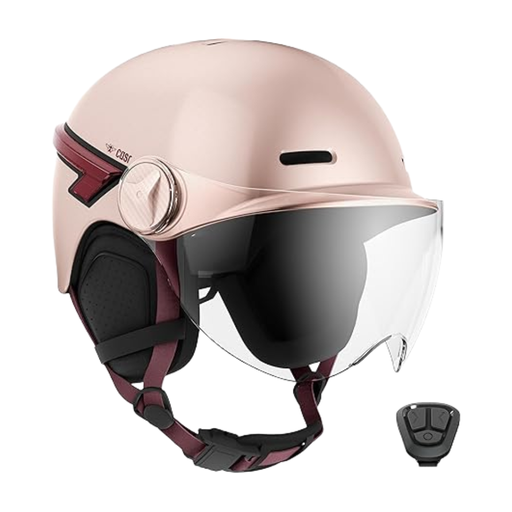
Why we chose it: On a bike or electric scooter, visibility is the number one safety priority. This helmet doesn't just offer passive protection; it integrates a complete active lighting system to ensure you're seen by everyone, in all conditions.
No more impractical external lights that are easy to forget or get stolen. This helmet integrates an all-in-one solution that is both elegant and functional, without ever compromising on its primary mission: protecting your head.
Its 180° rear lighting, combined with turn signals controlled by a wireless handlebar remote, allows you to clearly signal your intentions in traffic. A major boost for the active safety of any cyclist or scooter rider.
Explore our full selection of products that meet our selection criteria and current safety standards.
It depends on two main factors: the number of charge/discharge cycles the battery can withstand and its technology. A standard lithium-ion model will typically last between 400 and 800 cycles. Newer sodium-ion models, however, can exceed several thousand cycles. Their very low self-discharge also preserves the battery's health over the long term, even with infrequent use. It's recommended to recharge a lithium booster every 3 to 6 months. A sodium-ion model, on the other hand, can hold its charge for several years.
Not necessarily. A high-quality mechanical wrench that is well-maintained and used correctly can be extremely accurate. However, a digital wrench is often easier for an amateur to use. Reading the torque on a mechanical vernier scale can lead to interpretation errors. A digital torque wrench eliminates this risk with a direct display and alerts (audible, visual, vibration) that leave no room for doubt, thereby reducing the risk of improper tightening.
Most modern LED motorcycle headlight kits are designed to be "plug-and-play." They use standard connectors (like H4), which makes installation very simple. However, on some motorcycle models, a wiring adapter (sometimes included) may be necessary. The crucial point to check before buying is dimensional compatibility: the headlight's diameter (e.g., 5.75 inches) and especially the depth available in your headlight housing. LED optics are often deeper than the original halogen bulbs.