
Livraison le jour même ou le lendemain

Qualité garantie

Débloquez vos offres de bienvenue: Livraison GRATUITE | Jusqu'à -80 % | 30 jours d'essai gratuits à JoyPlus
Téléchargez l'application
A cordless stick vacuum with an automatic-emptying station can make everyday cleaning easier, especially in a family home, a multi-storey property or a household with pets. However, product specifications can sometimes be packed with figures that are difficult to put into perspective: suction power, stated battery life, filtration, laser detection or UV sterilisation.
Before you buy, three common pitfalls deserve your attention.
Motor power, expressed in watts, is not enough to assess a vacuum cleaner’s performance. A 590 or 600 W motor tells you about the appliance’s energy consumption or rated power, but not directly how effectively it can pick up dust.
When comparing high-performance cordless vacuums, focus instead on the available figures for suction pressure and suction power. A value of 220 AW and a stated level of 30 to 31 kPa provide indications that are more directly linked to performance, although measurement methods may vary from one brand to another. The supplied brush, airflow and intended use — hard floors, carpets or rugs — are just as important.
A battery life of 100 minutes generally applies to a specific mode, often with reduced power and a particular attachment. As soon as you switch to intensive mode, the runtime can drop quickly.
For an area of up to 300 m², also check:
An all-in-one station reduces the amount of handling required, but it does not eliminate maintenance altogether.
A base equipped with UV sterilisation can be useful when storing and emptying the vacuum. However, its effectiveness depends on the exposure time, the station’s design and the conditions of use. Figures such as 99.99% mite removal or 99.97% filtration should be read as claimed performance figures provided in the product specifications, based on a particular testing protocol. They are neither a medical guarantee nor a promise that applies to every household.
For people who are sensitive to dust, the overall design matters more: a sealed air circuit, correctly fitted filters, emptying that limits exposure and regular maintenance.
In a home with carpets, thick rugs, crumbs and pet hair, a stated power of 220 AW can be a useful benchmark. Suction pressure of 30 kPa or more indicates strong suction capability, but it does not tell you everything about how the appliance performs. The brush plays a decisive role.
A multi-surface brush lets you move from hard floors to carpets without constantly changing attachments. An anti-tangle design intended for long hair and pet hair also means you do not have to clean the roller by hand — one of the inconveniences that can appear after a few weeks of use.
A vacuum with laser dust detection may project a green light or use a sensor to highlight certain particles on poorly lit floors. This feature is particularly useful under furniture, along skirting boards and in areas where dust blends into the flooring.
The Deerma T50W XT Station product specifications mention 18X green-light detection. This describes a feature of the detection system, not a universal measurement of the amount of dust actually removed.
6-stage filtration, or comprehensive appliance filtration, can help limit the release of particles into the room — provided the filters are clean and correctly refitted. Check how often they need washing, how long they take to dry and the price of replacement consumables.
An automatic-emptying station is particularly worthwhile if you want to avoid emptying the dust container after every cleaning session. The Deerma T50W XT has a 0.6-litre dust container and a 2-litre station bag. However, how long these capacities last depends on the amount of dust collected, the volume of pet hair and how often the vacuum is used.
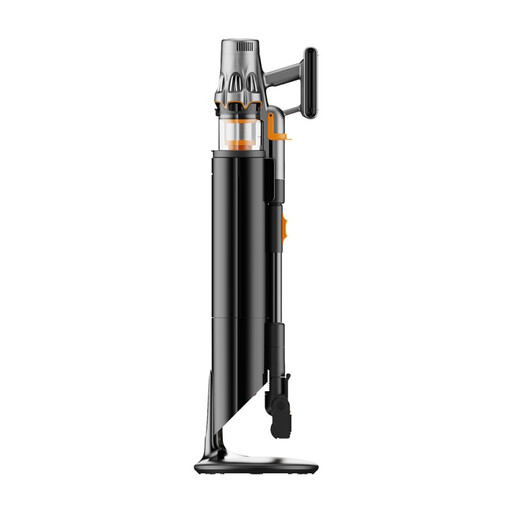
Why this choice suits this profile : With automatic emptying and integrated charging, the station is designed for users who want to minimise handling after each cleaning session, particularly in a large home or family flat.
The specifications distinguish motor power from suction data and mention a base that handles emptying, charging and UV sterilisation.
Stated suction power of 220 AW, up to 100 minutes of battery life, green-light detection and multi-stage filtration.
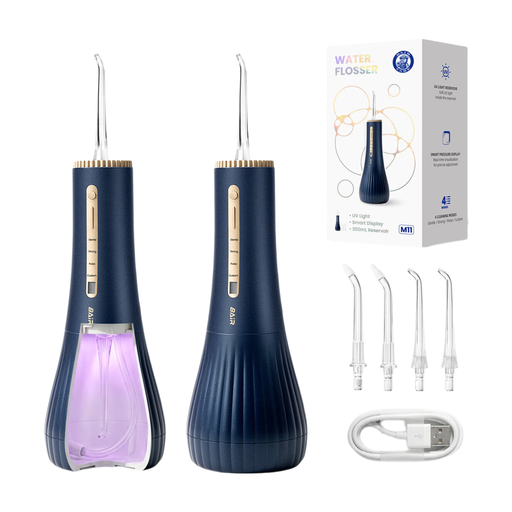
Why this choice suits this profile : This product is not a replacement for a stick vacuum. It meets an entirely different need related to oral hygiene and should not be confused with a floor-cleaning appliance.
Above all, it avoids a category mistake : a compact appliance designed for personal care cannot meet a home’s vacuuming needs.
A 360 ml reservoir, USB-C charging and an IPX8 water-resistance rating, as stated in the product name.
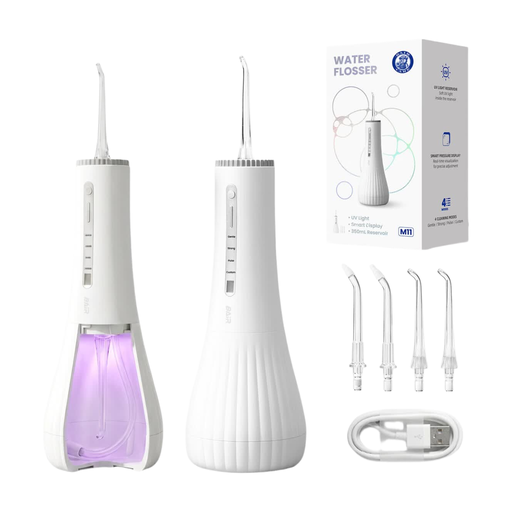
Why this choice suits this profile : This model meets a very specific need and is not a replacement for a vacuum designed for large homes, floors, carpets or pet hair.
It highlights that a UV function or rechargeable battery alone does not turn an appliance into a stick vacuum.
Four cleaning modes, a stated battery life of 30 days and storage for the attachments, according to the product specifications.
We have put together a comprehensive, real-time updated selection of products that genuinely meet these demanding criteria and European safety standards.
Install the base on a stable floor, near a power socket and in a sufficiently clear space so that the vacuum can align with it correctly. Avoid thick rugs and narrow passages in front of the station.
To keep costs under control, keep an eye on:
Even with an anti-tangle system, regularly remove hair that builds up around the ends of the roller. A washable filter must be completely dry before it is put back in place.
It depends on the layout of the property, the type of flooring and the suction mode used. A stated maximum battery life of 100 minutes may be enough for several sessions, but a large home will benefit more from a station that can recharge the appliance automatically and a dust container with sufficient capacity.
No. It helps you spot particles that are difficult to see and better monitor areas that have already been cleaned, but it does not replace regular cleaning or reaching difficult-to-access areas. Results also vary depending on the lighting, surface and brush used.
The budget mainly depends on the bags, filters and battery. Before buying, check the availability of consumables and how often they need replacing. A station reduces contact with dust, but it generally involves ongoing costs compared with a vacuum whose dust container is emptied manually.