
Livraison le jour même ou le lendemain

Qualité garantie

Débloquez vos offres de bienvenue: Livraison GRATUITE | Jusqu'à -80 % | 30 jours d'essai gratuits à JoyPlus
Téléchargez l'application
A portable power station can charge a laptop, run a cool box, power a lamp or keep several devices going while you’re enjoying the great outdoors. At home, it can also provide backup power during an outage. The problem is that specifications can sometimes blur the lines between capacity, peak output and real-world running time. So, a model advertised as powerful may turn out to be completely unsuited to your needs.
Here are the key points to consider when choosing a portable power station for hiking, van life, working remotely or home use.
A power station rated at 600 W continuous output and 1,200 W peak output can’t supply 1,200 W all the time. Peak output is available only for a very short time and is generally useful when starting certain devices.
A few hundred watts is usually enough for a laptop, phone or lamp. However, a coffee machine, heater or power tool may need much more. In that case, check the rated output rather than relying on the prominently displayed peak figure.
The battery’s capacity in Wh tells you how much energy it stores. Actual running time then depends on the device’s power consumption, the inverter’s efficiency and the energy lost during conversion.
The basic calculation is to divide the capacity by the power consumption. However, a 230 Wh power station running a 50 W device won’t necessarily last 4 h 36. Some of the energy is used by the power station’s internal circuits.
Portable solar charging depends on the panel’s output, sunlight, its orientation and connector compatibility. The advertised solar input is the maximum limit, achievable in ideal conditions — certainly not a speed you can expect to maintain throughout the day.
Before buying a panel, check the accepted voltage range, maximum input and connector type. A power station can also be charged from the mains or a 12 V car socket, which is handy if you’re often on the move.
For lighter use, a high-capacity portable power bank of 150 to 250 Wh is usually enough to charge phones, a tablet, a camera or a laptop. A 300 to 600 Wh model is a better fit for camping, where you might want to power a cool box, several electronic devices or lights for an evening.
For a van, motorhome or longer-lasting home backup, a capacity of around 1,000 Wh gives you more headroom. The trade-off is that the power station will be heavier and bulkier.
Models with a LiFePO4 battery are particularly appealing for their stated cycle life and good thermal stability. Standard lithium-ion batteries can be more compact or lighter at the same capacity. In either case, check the charging requirements, temperature range, stated cycle life and warranty period carefully.
A stated cycle life doesn’t mean the battery will retain exactly its original capacity for its entire lifespan. It’s a useful way to compare models, not a promise of endless running time.
Start by listing the outputs you’ll actually need:
A display, app or Bluetooth connection makes it easier to monitor the charge, but these features don’t replace checking the available output. At home, a UPS function can keep a device powered temporarily during an outage. It doesn’t turn the power station into a permanent electrical installation and is no substitute for a consumer unit.
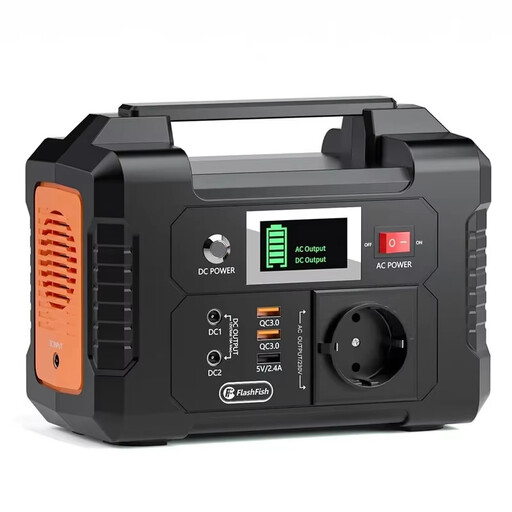
Why it suits this type of user : Its 151 Wh capacity and light weight make it a good choice for your first trips, short journeys and charging electronic devices.
Its capacity and 200 W output are clearly stated, so you won’t be tempted to use it to power devices that need too much energy.
151 Wh, AC output, USB ports and solar charging compatible with a 15 to 24 V panel.
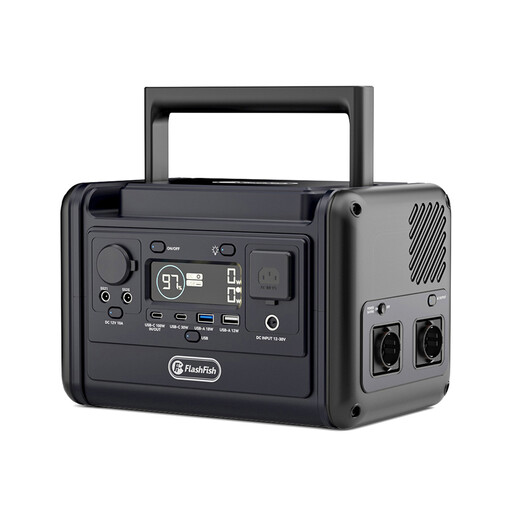
Why it suits this type of user : Its nine outputs and LCD screen make it easy to use several devices at once in a tent, van or while working remotely.
The screen shows the charge level, as well as the inputs and outputs. Its 230 Wh capacity also makes it easier to estimate how much running time you have available.
230 Wh LiFePO₄ battery, 300 W output, nine outputs and solar input of up to 120 W.
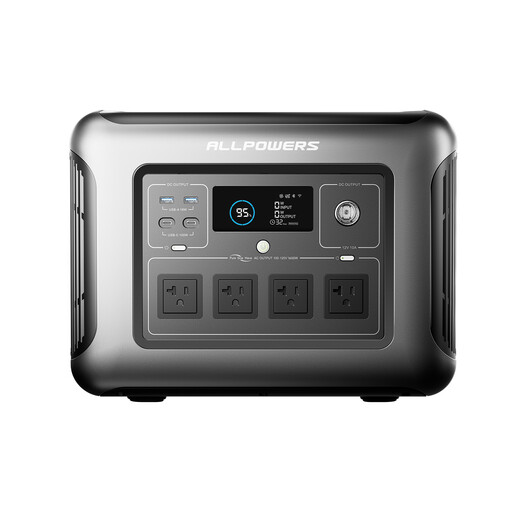
Why it suits this type of user : Its high capacity is designed for motorhome and campervan owners, or households looking for a mobile energy reserve.
Its 1 056 Wh capacity and 1 600 W continuous output are clearly distinguished from its 3 200 W peak output.
LiFePO₄ battery, 1 200 W mains input, 600 W solar input, Wi-Fi and UPS function.
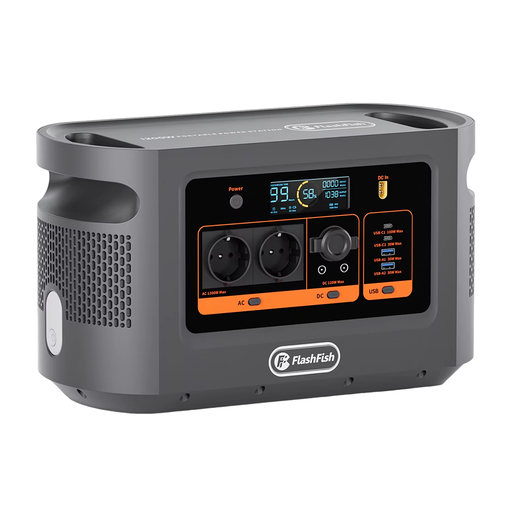
Why it suits this type of user : Its 1 200 W output is a good fit if you carry several devices and want a substantial power reserve for your motorhome or home.
The specifications distinguish between its 1 008 Wh capacity, 1 200 W continuous output and 2 400 W peak output. This makes it easier to check whether each device is compatible.
LiFePO₄ battery, mains charging in around 1.5 h, solar input up to 600 W and built-in LED light.
We’ve brought together a comprehensive, up-to-date selection of products that meet these demanding criteria and comply with European safety regulations.
150 to 250 Wh may be enough to charge phones, a speaker and a few lights. If you plan to power a cool box, laptop and several accessories, go for 300 to 600 Wh instead. A motorhome or home backup setup may call for a capacity of over 1,000 Wh.
It runs without fuel and is very quiet during normal use. However, it won’t replace a generator in every situation: its capacity is limited, solar charging depends on the weather and you mustn’t exceed its maximum output. For each device, check the voltage, power requirements and intended running time.
Use the charger supplied or recommended by the manufacturer, keep the power station away from moisture and extreme temperatures, don’t block its vents and store it at the charge level specified in the instructions. Before each trip, take a few seconds to check the cables and connectors too.