
Livraison le jour même ou le lendemain

Qualité garantie

Débloquez vos offres de bienvenue: Livraison GRATUITE | Jusqu'à -80 % | 30 jours d'essai gratuits à JoyPlus
Téléchargez l'application
Choosing a PC power supply is often an afterthought when assembling a new build. However, it's a critical component that ensures the stability, safety, and longevity of all your other hardware. With the arrival of new graphics cards and standards like ATX 3.0, making an informed choice, far from sometimes misleading marketing claims, has become essential. As a Product Recommendation Manager at Joybuy, my role is to provide you with clear guidelines to help you select a power supply that fits your actual needs.
Before looking at specific models, it's helpful to understand the criteria that truly matter. Here are a few key points to guide your decision.
The ATX 3.0 standard (and its ATX 3.1 update) was introduced to meet the demands of next-generation components, particularly powerful graphics cards. The latter can cause very brief but intense power spikes (known as power transients).
An ATX 3.0 PC power supply is designed to handle these spikes without faltering, thus preventing unexpected shutdowns or system instability. It natively integrates the 12VHPWR connector (or its successor, the 12V-2x6 on the ATX 3.1 standard), which is essential for PCIe 5.0 graphics cards. Opting for such a model ensures compatibility and peace of mind for years to come.
The 80 Plus certification (Bronze, Silver, Gold, Platinum, Titanium) is more than just a sticker. It guarantees a level of energy efficiency. An 80 Plus Gold power supply, for example, ensures at least 87?% efficiency at 100?% load (and 90?% at 50?% load). In practical terms, this means?:
Modularity is another convenience factor. A modular PC power supply allows you to connect only the cables you absolutely need. The result is a cleaner build, simplified cable management, and, most importantly, better airflow inside the case.
Taking these criteria into account, we have identified a few options that stand out for their technical specifications and market positioning.
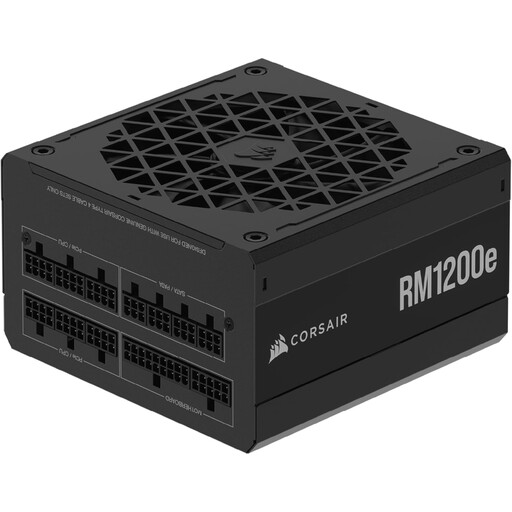
Why we recommend it
This 1200W power supply is designed for the most demanding configurations. Its compliance with the ATX 3.1 standard and its native 12V-2x6 connector make it ready for the most powerful graphics cards of today and tomorrow. Its Cybenetics Platinum certification (an alternative to 80 Plus) attests to its very high efficiency, while its 140 mm fan ensures discreet cooling.
Advantages
Who is this product for? For enthusiasts and professionals building a high-end machine (for example, with a graphics card like the RTX 4090 or its successors) who want to make no compromises on power and reliability.
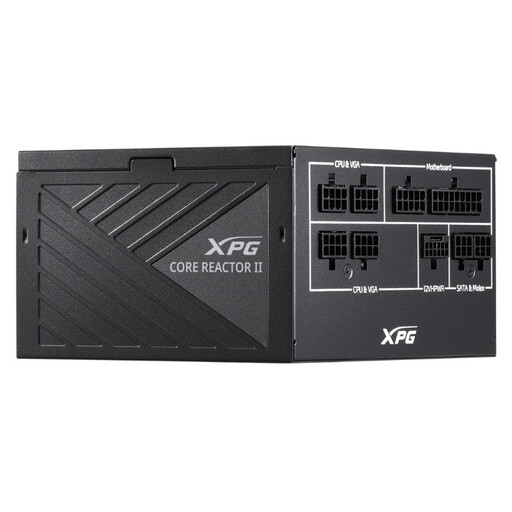
Why we recommend it
The 750W power supply XPG Core Reactor II represents an excellent balance point. It offers all the benefits of the ATX 3.0 standard and a native 12VHPWR connector in a compact form factor and at a power level suitable for most gaming rigs. Its dual 80 Plus Gold and Cybenetics Gold certifications confirm its excellent energy efficiency.
Advantages
Who is this product for? For gamers and PC builders constructing a high-performance rig (with a mid-range or high-end graphics card) who are looking for a modern, reliable, and quiet power supply without needing extreme wattages.
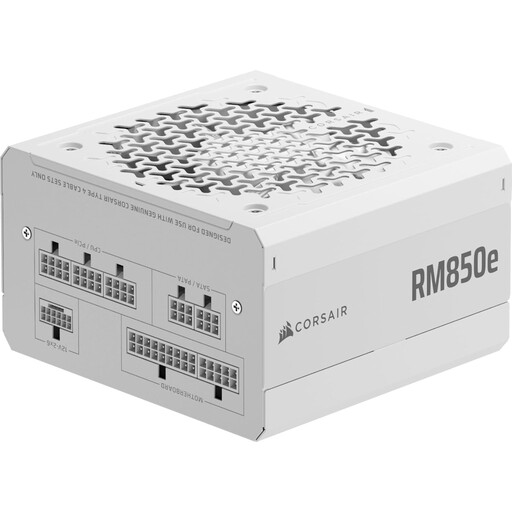
Why we recommend it
This version of the Corsair RM850e combines the latest technical standards with sleek aesthetics. An 850W power supply is the de facto standard for many advanced gaming setups. This model stands out with its white color and matching sleeved cables, perfect for a themed build. Compliant with ATX 3.1 and PCIe 5.1, it is also at the cutting edge of technology.
Advantages
Who is this product for? For users who value the aesthetics of their machine as much as its performance. It's a prime choice for a powerful, modern, and quiet white PC build.
A quality power supply is your components' first line of defense against power grid fluctuations. However, it can't do anything against a sudden power outage, which can corrupt data or, in rare cases, damage hardware. For complete protection, it may be wise to pair your PC with an uninterruptible power supply (UPS).
If you are building a new PC in 2026 with a recent graphics card (NVIDIA RTX 4000/5000 series or AMD equivalent), the answer is yes. An ATX 3.0 PSU is specifically designed to handle the power spikes of these cards and includes the necessary 12VHPWR connector, avoiding the use of unreliable adapters. For upgrading an older PC with less power-hungry components, a quality ATX 2.x model may still be sufficient.
ATX 3.1 is a minor revision of the ATX 3.0 standard. The main improvement concerns the PCIe power connector. The 12VHPWR connector from ATX 3.0 is replaced by the 12V-2x6 connector in ATX 3.1. The latter is mechanically improved to ensure a more secure and stable connection, reducing the risk of overheating. Both connectors are backward compatible, but ATX 3.1 offers added safety.
This depends entirely on your system's components. Here is a general estimate?: