Hosts entertaining a small group
You want to serve a hot soup as a starter or side dish. The key thing to consider is how many portions you can prepare, rather than just the apparent size of the pack.


For an Asian-themed evening, a pack of instant soup sachets is no substitute for a tin of ready-to-serve soup or a large dish to share. The three-sachet Royco packs featured by Joybuy and Auchan make three 20 cl portions. Choose according to how many bowls you need, then compare the recipe and the information on the packaging, particularly allergens and salt per portion.
You want to serve a hot soup as a starter or side dish. The key thing to consider is how many portions you can prepare, rather than just the apparent size of the pack.
You want to tell the difference between a noodle and vegetable soup, a curry and chilli recipe, and a vegetable and coriander version. The word “Asian” alone doesn’t tell you what each soup will taste like.
Before serving several guests, you need to be able to check the allergens, any possible traces and the amount of salt in each prepared portion. Check this information for every recipe.
First, decide what role the soup will play in the meal. Three small bowls may be enough for a starter, but that doesn’t make it a family-sized dish. Then compare the recipes and their labels.
| What to consider | What to check | Who should consider this? |
|---|---|---|
| Number of portions | Number of sachets and the volume prepared from each one; choose the number of packs to match how many bowls you want to serve. | If I’m serving soup to several guests, I want to be able to give everyone a bowl without mistaking three sachets for a large dish. Around 46% of consumers put the number of portions at the top of their list of priorities. |
| Choice of recipe | Whether it contains chilli or coriander, and which ingredients are listed, such as noodles, vegetables or chicken. | When the group has different tastes, I’d rather choose the recipe before buying several sachets of the same flavour. The flavour profile is the priority for around 36% of consumers. |
| Allergens and salt | Ingredients and traces listed on the pack you’re buying; salt per prepared portion. | If I’m cooking for people with dietary requirements, I need to check each recipe before serving it. These checks come first for around 18% of consumers. |
A soup may be stocked in this aisle but still be dehydrated and sold in sachets. It needs to be prepared, unlike soup in a tin that’s ready to serve.
Read the product name and instructions, then check how much soup you’ll have once it’s prepared.
A pack of three 20 cl portions makes three small bowls. If soup is going to be a more substantial part of the meal, don’t judge this format by the number of sachets alone.
Work out how many portions you’ll need before buying, and consider serving other dishes alongside the soup, depending on the menu.
The recipes featured by Auchan don’t all contain the same ingredients: one lists curry and chilli, while another contains vegetables, noodles and coriander.
If you’re choosing between a spicy recipe and one with coriander, ask your guests what they prefer.
An individual sachet may contain ingredients that some guests need to avoid. It’s also worth comparing the salt content per prepared portion.
Check the packaging for each recipe you buy, including any warnings about traces and the nutritional information per portion.
These brands give you a few options for comparing sachet soups or adding to the meal. They are not equivalent family-sized formats.
Royco offers instant soups including noodle and vegetable, curry and chilli, and vegetable, noodle and coriander recipes.
E.Leclerc’s range of sachet soups includes a 48 g instant Chinese noodle broth.
E.Leclerc lists cupboard staples under this brand to help you put together the rest of the meal, including rice noodles, coconut milk and instant noodles.
These Joybuy products are soups that need to be prepared: two noodle soups with Asian-inspired flavours, and a Royco soup with noodles, carrot and mushrooms whose product name doesn’t specify an Asian style. None of these formats is equivalent to ready-to-serve tinned soup.
 Image unavailable
Worth considering if you’d like to serve a small number of portions of Thai-style noodle and mushroom soup. This is a dehydrated soup that needs cooking, so check the allergens on the packaging before serving.
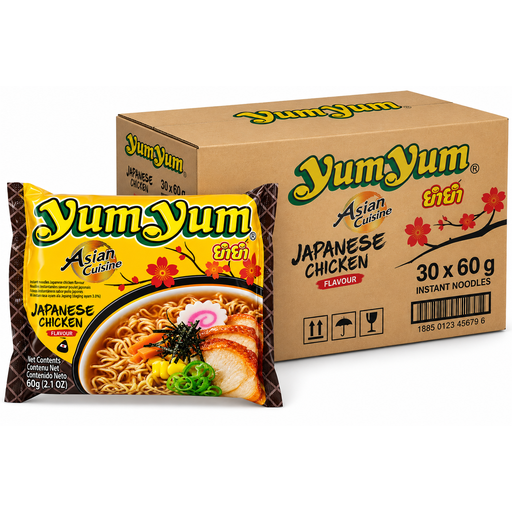 Image unavailable
This pack of individual sachets lets you prepare several portions of shoyu chicken soup. To work out how many bowls you can serve, check the amount of water and the prepared volume given for each sachet. Also check the allergens on the pack you buy.
 Image unavailable
This format is a good fit if you’re planning three small portions of hot soup to go with the meal. The three sachets make around 600 ml once prepared; the product name doesn’t specify a particular Asian recipe. Check the allergens on the packaging.
It makes three 20 cl portions, if everyone has a small bowl. If you’re serving more people or larger portions, work out how much soup you’ll need before choosing how many packs to buy or what other dishes to serve.
Follow the instructions for the recipe you’ve bought rather than using the same amount of water for every product. The Royco 20 cl products featured here make one portion per sachet when prepared with 200 ml of water. Check the pack for the steps, preparation time and storage instructions.
Read the ingredients list and any warnings about traces on the exact packaging you’re going to serve. For prepacked food sold in France, the DGCCRF says allergenic ingredients must be highlighted. The recipe name is no substitute for checking the label.
Yes. If salt content is one of your priorities, compare it per prepared portion, not just by volume of soup. Consider the other items on your menu too, and don’t assume that a small sachet necessarily contains little salt.