
Livraison le jour même ou le lendemain

Qualité garantie

Débloquez vos offres de bienvenue: Livraison GRATUITE | Jusqu'à -80 % | 30 jours d'essai gratuits à JoyPlus
Téléchargez l'application
An Asian tofu snack might seem easy to pick: a bold flavour, a small packet and the promise of plant-based protein. In reality, the differences are huge between a firm dried tofu, a soft bite or a crunchy snack made mostly of flour and oil. To avoid unpleasant surprises, it's worth taking a close look at the ingredients, the format and the nutritional values before you order.
The word "tofu" doesn't guarantee that soya is the main ingredient. Some recipes mix water, starch, vegetable oil and soya protein. Others also contain wheat or gluten, like the Be&Cheery five-spice tofu strips.
Check the ingredients list, which is presented in descending order. The proportion of soya, soya protein or mushrooms gives you a much clearer idea of the texture and how much tofu is actually in the recipe.
Mala, barbecue, soy sauce and spicy recipes often rely heavily on salt, sauces and flavour enhancers. For example, Jin Zai Spicy Flavor contains 1.28 g of sodium per 100 g, while HAO BA SHI Nanxi Tofu lists 6 g of salt per 100 g. These two figures aren't directly comparable: sodium and salt are two different units.
If you plan to eat them regularly, compare the nutritional values per 100 g rather than relying solely on the packet weight. The mentions E621, E635 or E202 are also worth noting if you want to limit certain additives.
A 368 g bag can be great for regular snackers, but it's less easy to slip into a school bag or for a break at the office. On the other hand, individual 16 g portions and 50–70 g packets are easier to carry and help you control your portions.
After opening, follow the instructions on the packaging. Some products need to be eaten quickly or stored in the fridge. "Ready to eat" doesn't necessarily mean the tofu can stay open for several days.
Dried tofu is generally denser and firmer than fresh tofu. The cut also affects the eating experience: thick slices offer more chew, while thin strips and small bites hold the seasoning better.
Products like Laoli Slow Cooked Dried Tofu boast a soya content of at least 75% and a firm texture. Meanwhile, Jin Zai Roasted Tofu focuses on a thick cut and comes in five individual packets. These are concrete details, often more telling than a simple promise of "authentic texture".
Soya snacks can be a good source of plant-based protein, but their nutritional profile varies a lot from one product to another. Laoli Five-Spice Dried Tofu claims 24.4 g of protein per 100 g, compared to 8.6 g for Yan Jin Pu Zi Shiitake Beef Flavour. However, this comparison is limited to the values provided for each product.
Also remember to check for soya, wheat, sesame, milk or other allergens. Recipes inspired by Asian cuisine may contain soy sauce, gluten or flavourings associated with animal-derived ingredients. A "beef" or "chicken" flavour doesn't tell you what's in the product: only the ingredients list is definitive.
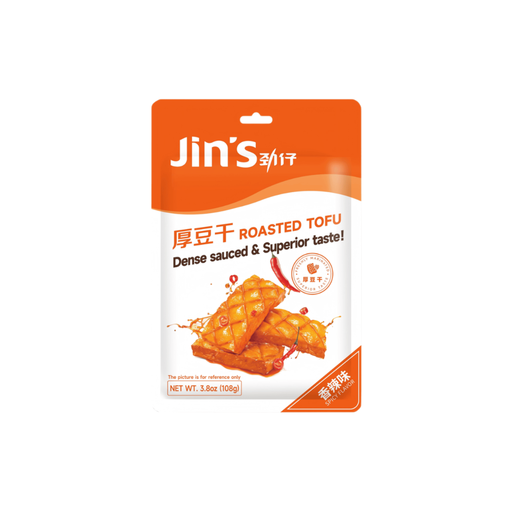
Why this suits this profile: The five small packets let you try spicy tofu without opening the whole bag at once. A handy format for students and office breaks alike.
The individual format reduces waste and lets you gradually try a recipe described as spicy.
108 g total, five portions, 18.2 g of protein and a thick cut, according to the product page.
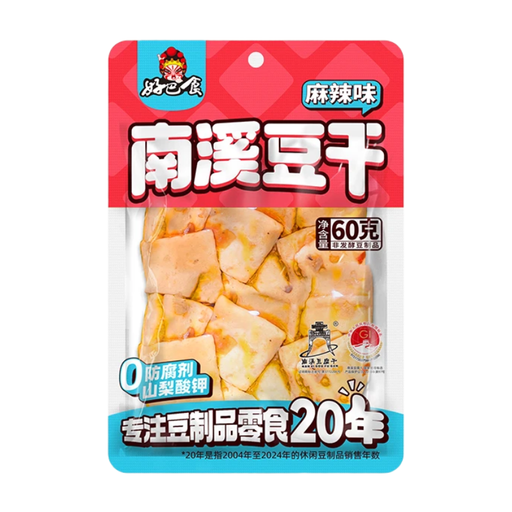
Why this suits this profile: This product offers a dried tofu inspired by Nanxi, spiced up with chilli, Sichuan pepper and several other spices.
The 60 g bag lets you try a pronounced mala flavour without ending up with a large stock at home.
A texture described as firm, a soya content and a spicy profile enhanced by Sichuan pepper.
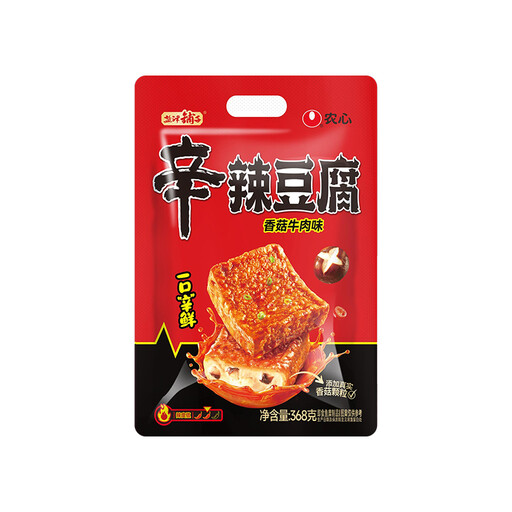
Why this suits this profile: This large format is aimed at those who regularly eat tofu bites or want to serve them as a side dish with a meal.
The weight is clearly stated and the recipe specifies 12% shiitake pieces and 7% soya protein product.
368 g, a ready-to-eat product, a texture described as soft and chewy, with 8.6 g of protein per 100 g.
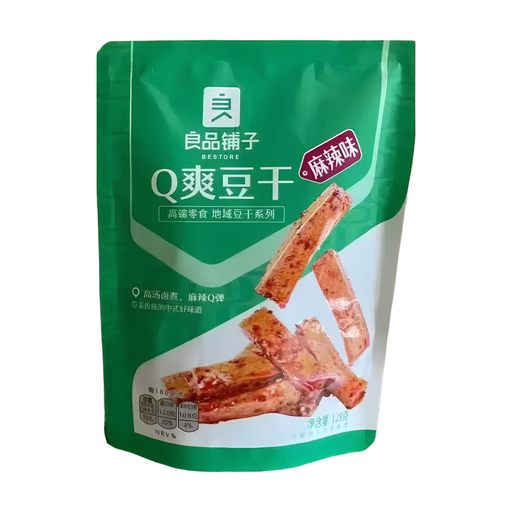
Why this suits this profile: Its seven individual packets are ideal for commutes, school days and anyone who wants to ration their Asian snack stash.
The individual packaging stops you from leaving a large bag open and helps you keep track of how much you've eaten.
128 g, seven packets, Sichuan pepper and 12 g of protein per 100 g, according to the product page.
We've put together a comprehensive, real-time updated selection of products that meet these exacting criteria and European safety standards.
Yes, the products featured here are labelled as ready to eat. However, do check the instructions, the best-before date and any guidance for after opening. Some packaging recommends eating the product quickly or storing it in the fridge.
Before opening, keep it in a cool, dry place away from light, following the instructions on the label. After opening, seal the bag carefully. If the manufacturer recommends refrigeration, that advice takes priority over general guidelines.
Not necessarily. Soya is present in most recipes, but some also contain wheat, sesame, dairy products or animal-derived flavourings. If you follow a vegetarian or vegan diet, or if you have an allergy, read the full ingredients and allergens list carefully before buying.