
Livraison le jour même ou le lendemain

Qualité garantie

Débloquez vos offres de bienvenue: Livraison GRATUITE | Jusqu'à -80 % | 30 jours d'essai gratuits à JoyPlus
Téléchargez l'application
Asian rice crackers are loved for their light texture, wide range of seasonings and handy sizes that slip easily into a bag. But the packaging doesn’t always make it easy to tell a Japanese senbei from a Chinese rice cracker or a Korean rice snack that truly suits your habits.
To avoid unpleasant surprises, three common pitfalls keep cropping up:
Start by looking at the ingredients list, which is ordered by weight. For crispy rice crackers, the proportion of rice is a good first indicator, even though it varies a lot from one recipe to another.
The WANT WANT Boring Pie Crunchy Senbei Rice Crackers contains 60.91% rice, while the WANT WANT Thick Roasted Seaweed Rice Crisps has 70%. Other recipes rely more on corn starch, wheat flour or millet. The Wo Long Rice Crackers Mala Flavour, for example, contains at least 65% millet, which gives it a denser texture and a quite different profile from a traditional senbei.
If you have allergies or avoid certain ingredients, check the highlighted mentions: wheat, gluten, soya, sesame, milk, fish or egg. A seaweed rice cracker may, for instance, contain bonito or soy sauce. If a recipe changes, always rely on the list on the packaging you receive.
Different names don’t all mean the same eating experience:
For a family, an assortment of rice crackers or individual portions lets everyone enjoy different flavours without having to open several large bags at once.
A 500 g bag is great for sharing, but you’ll need a plan for keeping it fresh once opened. The PanPan Xiao Bei Original Flavor 500 g is marketed as a family size to store in a cool, dry place. However, it does contain wheat and soya, despite the rice flour being highlighted in its description: so check the full label before buying.
For the office, university or on the go, smaller sizes are more practical. The WANT WANT Mini Crispy Bites Original Flavour 60 g and Cheongwoo biscuits, individually wrapped, limit exposure to moisture. According to the product information, Cheongwoo is sold in a pack of 18 units of 107.5 g. It’s therefore better suited for sharing or building up a snack stash.
Nutritional values are usually given per 100 g. This makes comparisons easier, but it doesn’t necessarily match the amount you actually eat. As a guide, products in this category tend to be around 400 to 550 kcal per 100 g, with salt and fat levels varying depending on the seasoning.
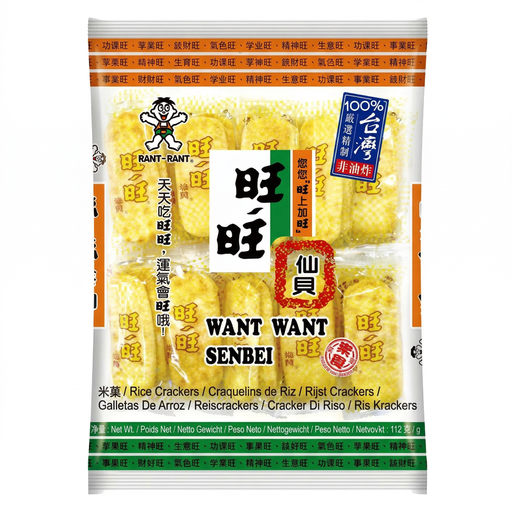
Why this suits this profile: At 112 g, this pack lets you try a sweet-and-salty Japanese senbei without committing to a large size.
The limited quantity reduces the risk of a large bag going soft after opening. Its original recipe is also approachable for palates not used to spicy flavours.
A ready-to-eat biscuit, packed in pairs, with 73.1 g of carbohydrates and 2 g of salt per 100 g according to the product sheet.
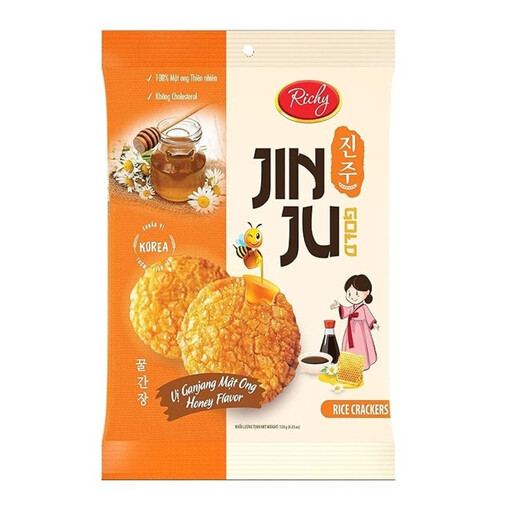
Why this suits this profile: The recipe combines Japanese japonica rice, honey and soy sauce, all in individually wrapped portions.
Individual wrapping helps keep the crunch and stops the whole pack being exposed to air after each snack.
A well-defined honey-soy flavour, 100 g per pack and 0 g of trans fats according to the nutritional information.
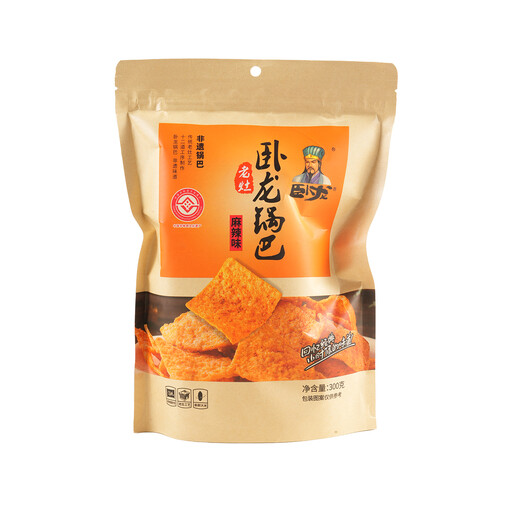
Why this suits this profile: Its 300 g bag and mala seasoning are aimed at fans of bold flavours and those who like to have a snack stash to share.
The stated millet content and the fact it’s baked rather than fried help you understand what really sets the recipe apart, rather than relying on the word “crispy” alone.
A 300 g bag, 65% millet as stated and 1.1 g of salt per 100 g according to the available data.
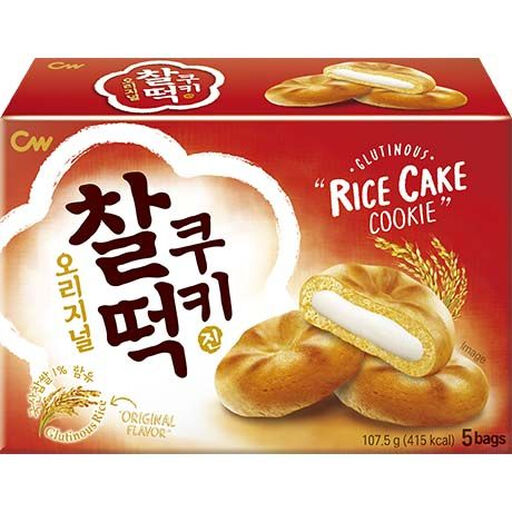
Why this suits this profile: The individual portions are easy to pop into a lunchbox, take to a gathering or enjoy over time at home.
Separate wrapping stops the rest of the batch going soft and lets you hand out biscuits without having to handle the whole pack.
A recipe based on rice flour, no declared allergens on the sheet and 0.2 g of salt per 100 g according to the available information.
We’ve put together a full, real-time list of products that meet these strict selection criteria and European safety regulations.
A Japanese senbei is typically a baked or grilled rice cracker, often seasoned with soy sauce, salt or seaweed. However, recipes sold in the UK may contain wheat, corn, soya or sesame. The ingredients list is therefore the most reliable guide – far more so than the product name.
Seal the bag carefully or transfer the crackers to an airtight container. Keep them in a cool, dry place away from sunlight. Avoid the fridge: moisture can ruin their crunch. For larger bags, individual portions offer better protection.
It depends on everyone’s tolerance for chilli, Sichuan pepper and salty seasonings. For a first try, it’s best to start with a plain or sweet-and-salty recipe, then check the allergens and salt content on the label. Seaweed products may also contain fish or soy sauce.