
Livraison le jour même ou le lendemain

Qualité garantie

Débloquez vos offres de bienvenue: Livraison GRATUITE | Jusqu'à -80 % | 30 jours d'essai gratuits à JoyPlus
Téléchargez l'application
Asian prawn crackers are loved for their light texture, seafood notes and convenient formats. But not all products are suited to the same purpose. Some are ready to eat, while others need to be fried. Some contain a precise amount of prawn, whereas others rely mainly on flavouring or seasoning.
Before buying prawn crackers, shrimp crackers or prawn crackers, there are three pitfalls that are particularly easy to avoid.
The term "prawn crackers" can refer to two very different products:
A pack of raw krupuk udang usually needs to be immersed in oil heated to between 160 and 190 °C, depending on the manufacturer's instructions. An incorrect temperature will result in crackers that are too hard or unevenly cooked. For the office, a journey or a quick snack on the go, it's better to choose a ready-to-eat product.
The presence of prawn may be indicated as a percentage, powder, extract or simply within the composition of a seasoning. These mentions are not all equal. Some products, for example, state 5.6 % or 6.2 % prawn, while others merely claim a crustacean flavour.
Take the time to read the ingredients list and the quantitative declaration, where available. This way, you can tell the difference between a recipe based on tapioca and prawn, and a simple flavoured potato crisp.
Crustaceans are among the allergens that must be declared by law. Depending on the recipe, the product may also contain wheat, soya, milk, mustard, sesame or sulphites. As the composition can vary by country and batch, always check the label on the pack you receive.
Weight also affects usage: a 40 to 80 g bag is suitable for a single portion, while a 200 g pack or a carton of several kilograms is aimed at sharing, parties or catering.
For a snack with no preparation required, choose products clearly marked "ready to eat" or "prêts à consommer". Already fried or puffed crackers are perfect for students, work breaks or movie nights.
Uncooked versions offer more flexibility to accompany a curry, soup or salad. However, they require very hot oil and careful attention – the discs puff up in just a few seconds.
Recipes based on tapioca starch generally produce a well-puffed, airy texture after frying. Wheat-based versions are more like crunchy sticks or biscuits. Look in particular at:
Fans of spicy prawn crackers should check for red chilli, paprika or chilli oil rather than relying on the colour of the packet alone.
Compare the values per 100 g, not just those for the portion stated on the packaging. Puffed crackers are still snack products – depending on the recipe, they can be quite high in calories, fat or salt.
After opening, reseal ready-to-eat bags carefully. For uncooked crackers, store them in an airtight container away from moisture. Otherwise, they may not puff up as well and could lose their crunchy texture.
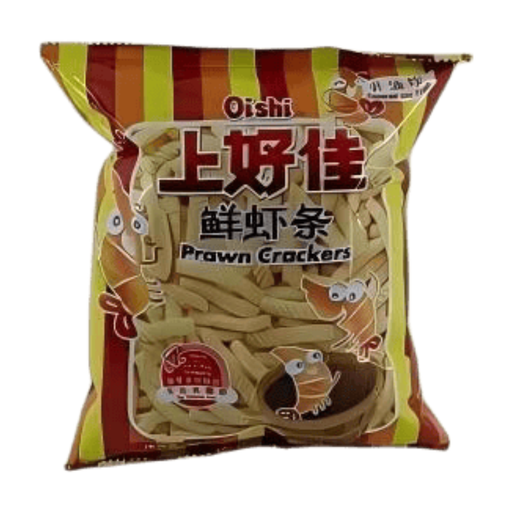
Why this choice suits this profile: At 40 g, this bag lets you try the product without committing to a large stock. It's ready to eat and the product page states 5.6 % prawn.
The small size reduces the risk of leaving a large pack open, and no frying is needed.
Individual 40 g bag, ready to eat, with wheat and crustaceans clearly labelled.
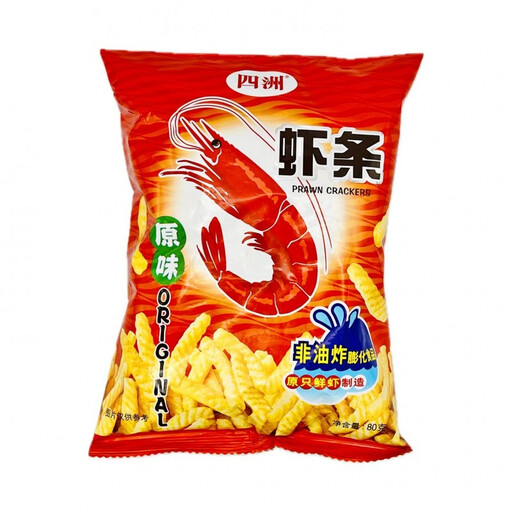
Why this choice suits this profile: This recipe uses a tapioca base and contains 10 % prawn. The 80 g size is ideal for a refined snack or as an accompaniment with a dip.
The stated prawn percentage makes it easy to compare with products that only mention a flavouring.
10 % prawn, light and crunchy texture, with storage recommended in an airtight container after opening.
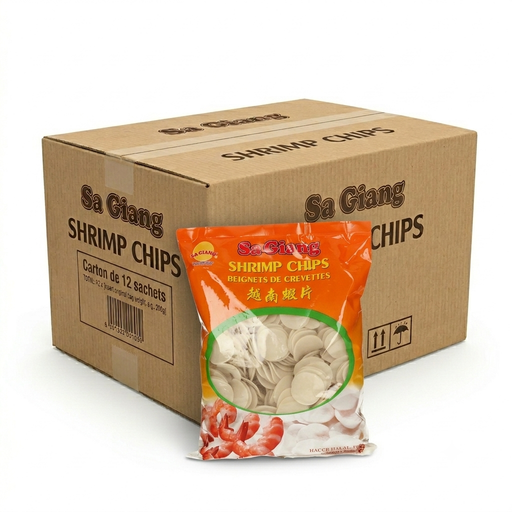
Why this choice suits this profile: This carton of 12 packs of 1 kg is aimed at catering professionals, associations and organisers of large events.
The total quantity is clearly stated, making it easy to calculate requirements and manage stock.
Uncooked crackers for frying, with 10 % white prawn, suitable for serving in large quantities.
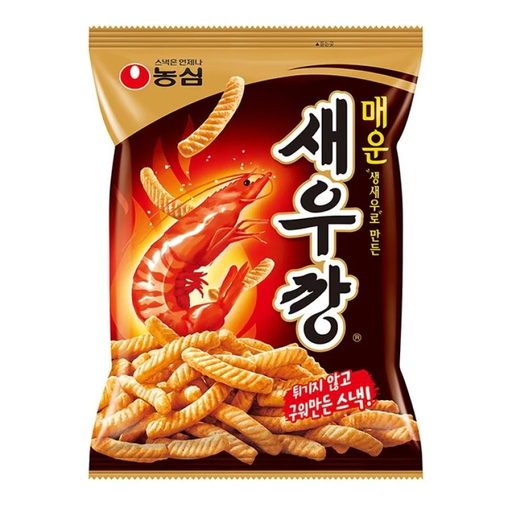
Why this choice suits this profile: This ready-to-eat bag combines a wheat base, 5.7 % declared prawn and punchy ingredients like red chilli, garlic and onion.
The ingredients list details what provides the heat, rather than leaving the spice level to be guessed from the packet alone.
75 g format, ready to eat, with wheat, prawn, soya and lactose listed among the allergens.
We've put together a comprehensive, real-time selection of products that meet these exacting criteria, in compliance with European food safety regulations.
No. Already puffed crackers, such as several Nongshim or Oishi products, can be eaten straight away. Uncooked versions, often sold in 200 g, 1 kg or 2 kg bags, need to be fried following the manufacturer's instructions.
Keep them in a cool, dry place. Ready-to-eat products should be resealed carefully and consumed promptly. For uncooked discs, use an airtight container to protect them from moisture. Also remember to check the best-before date on the packaging.
For a few guests, an 80 to 200 g bag is usually enough. For regular or professional use, a 12 × 1 kg case allows you to build up a substantial stock, provided you have a dry storage space and suitable frying equipment.