
Livraison le jour même ou le lendemain

Qualité garantie

Débloquez vos offres de bienvenue: Livraison GRATUITE | Jusqu'à -80 % | 30 jours d'essai gratuits à JoyPlus
Téléchargez l'application
Asian pickled vegetables add a salty, tangy, spicy or umami note to rice, noodles and stir-fries. They make it easy to put a meal together quickly, but not every product is suitable for the same uses. Ready-to-eat kimchi is not used in the same way as Chinese pickled mustard greens intended for cooking. Likewise, a pickled radish can have a very different profile from a dried, seasoned vegetable.
Before making your choice, keep three points in mind.
Read the ingredients list rather than relying solely on the product name or photograph. Pickled Chinese cabbage may contain chilli, garlic, ginger, sugar, vinegar or lactic acid. Some kimchis also contain fish, fish sauce or prawns.
If you are vegetarian or vegan, check carefully for fish, shellfish, fish sauce, soya, sesame and sulphites. Claims such as “no declared allergens” or “vegan” should be checked on the label of the product you receive, as this remains the definitive reference.
The nutrition table makes it possible to compare products on a common basis of 100 g. For example, Cock Brand Sour Mustard contains 6.1 g of salt per 100 g, compared with 5 g for WU JIANG Pickled Radish Cubes. Green Deer King Snow Vegetable, meanwhile, lists 12 g of salt per 100 g.
These differences directly affect how you cook with the product. A very salty Chinese mustard can be rinsed quickly before being added to a stir-fry. Well-seasoned kimchi is better served in a small portion alongside a bowl of rice. Rinsing reduces the surface salt, but it also changes the texture and some of the aromas.
The 60 g × 4 sachets of WU JIANG make portioning easy and save you from opening a large quantity all at once. A 300 to 500 g pack is better suited to family meals, recipes prepared regularly or professional kitchens.
Always check the storage instructions :
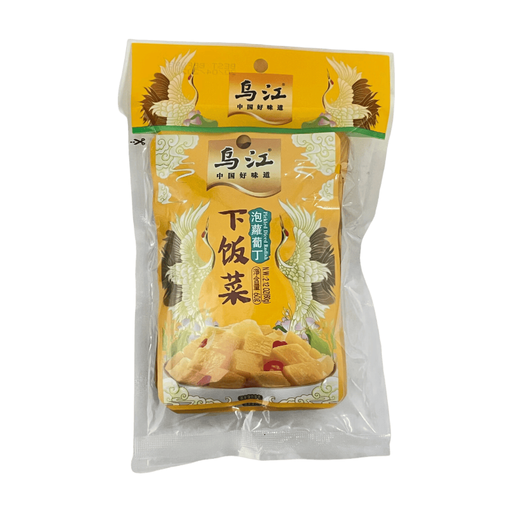
Why this product suits this profile : The four 60 g portions are ideal for trying the product or serving individually with rice, porridge or noodles.
The portioned format limits leftovers after opening and makes it easier to measure than a large bag.
The product contains 93 % radish and can be enjoyed straight from the pack, with a mildly spicy flavour.
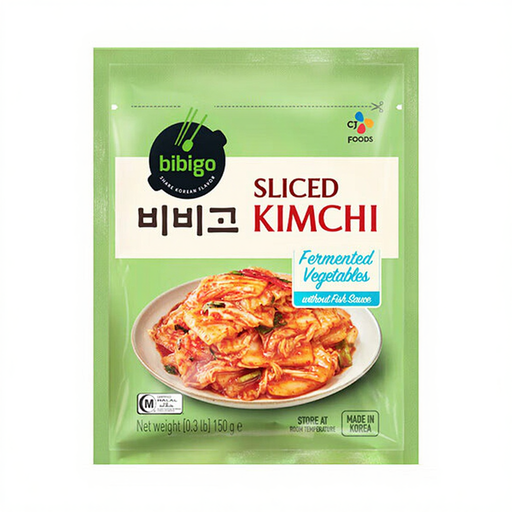
Why this product suits this profile : This Chinese cabbage and radish kimchi fits easily into a Korean meal, stir-fried rice or a noodle dish.
The product details list the ingredients, the absence of declared allergens and storage at room temperature before opening.
The recipe is described as plant-based and combines cabbage, radish, red chilli and garlic. The product can be enjoyed cold or as an accompaniment.
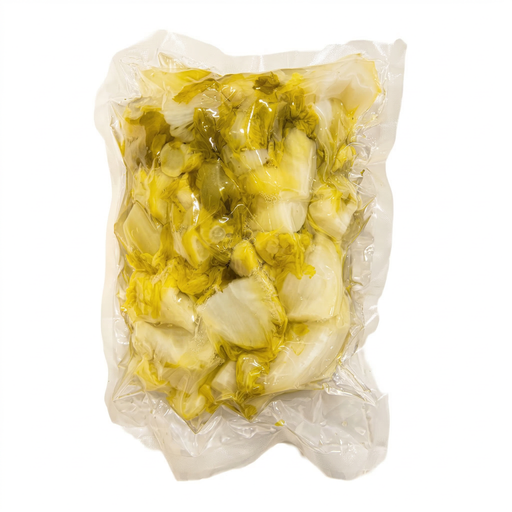
Why this product suits this profile : Its one-kilogram pack is suitable for families, regular meal preparation and professional Asian restaurants.
The quantity lets you plan several recipes instead of building up a collection of small packs.
The product details list 98 % pak choi, a lightly salted preparation and a wide range of uses : soup, hotpot, stir-fries or eating cold.
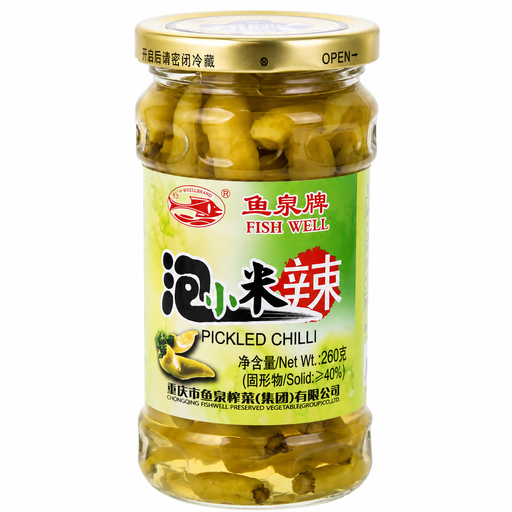
Why this product suits this profile : These pickled peppers are ideal for anyone who wants to add instant heat to a Sichuan- or Hunan-inspired stir-fry, soup or stew.
The description indicates a moderate level of heat and direct use : there is no need to buy several spices for a single recipe.
The 260 g jar is ready to be chopped and added to hot oil or directly to the cooking liquid.
We have put together a complete, real-time updated list of products that meet these demanding selection criteria and European safety regulations.
To preserve their texture, serve pickled radish, takuwan or kimchi directly with rice, noodles or dumplings. In a stir-fry, add pickled mustard greens, pickled bamboo shoots or peppers towards the end of cooking to retain some of their crunch.
Asian fermented vegetables can also add flavour to a soup, broth or sandwich filling. Taste before adding salt : the brine and seasonings often already contain a considerable amount. Bamboo shoots, such as Aroy-D Bamboo Shoot Slices, are convenient in curries, soups and sweet-and-sour dishes. After opening, place them in the refrigerator and follow the manufacturer's instructions.
No. Some, including several varieties of kimchi, are fermented. Others are simply preserved in brine, vinegar or an acidified solution. Check the preparation method stated on the label, along with the ingredients list.
It depends on the product. In most cases, it should be kept in the refrigerator and eaten soon after opening. The time limit stated on the packaging should be followed. Do not use a product if its lid is bulging or loose, or if it is leaking.
Drain them, rinse them briefly under cold water, then taste them before adding them to your recipe. This method is particularly suitable for pickled mustard greens and some Chinese vegetables, but it can also reduce their acidity and aromas.