
当日/次日达

品质保障

开启新人专享福利: 全场免邮 | 低至 2 折 | 免费试用 30 天 JoyPlus 会员
下载 Joybuy
Asian instant noodles meet a very practical need: preparing a meal or snack quickly, or keeping a supply at home without making a mess in the kitchen. However, a packet of ramen, a cup of noodle soup and a block of Chinese noodles for stir-frying offer different experiences, different costs per serving and different levels of satiety.
Before placing your order, three mistakes are particularly common:
The individual packet is easy to store and lets you vary your meals: chicken, pork, prawn, beef or curry noodles. However, you will generally need a bowl and boiling water.
The ready-to-prepare cup is particularly convenient at work, in student accommodation or when travelling. UNIF Noodles Roasted Beef, for example, comes in a 110 g cup: simply add hot water by following the instructions on the packaging. The container means you do not need to get any crockery out, although it takes up a little more space in a cupboard.
The multipack is suitable for regular consumption. However, take the time to calculate the price per portion and check the actual number of packets. The Indomie pack shown as “8 x 5 x 75 g” contains 40 portions of 75 g, or 3,000 g in total. This is essential information for comparing offers accurately.
Chinese noodles in blocks, such as J.B Chinese Noodle Blocks 400 g, can be prepared in several ways: stir-fried in a wok with vegetables, meat or fish, in a soup or in a salad. They cook in boiling water for four minutes, then should be rinsed in cold water.
Instant ramen, as well as Thai and Vietnamese noodles, often come with one or more seasoning sachets. Some products are ready in three minutes after boiling water has been added; others need to be cooked in a saucepan. The “Cooking required” notice and the instructions printed on the packaging should therefore be taken seriously.
For a quick meal at work, a packet that simply needs rehydrating is usually the easiest option. At home, a block of plain noodles gives you greater flexibility: you can control the amount of sauce, add whatever vegetables you have available and choose your own source of protein.
In France, the allergen list must be checked directly on the label. The products presented here contain wheat or gluten; some also contain soya, sesame, milk, fish or crustaceans.
For guidance, the information provided for the UNIF Roasted Beef cup states that, per 100 g, it contains 420 kcal, 16 g of fat and 3.5 g of salt. MAMA pork noodles contain 448 kcal and 5.5 g of salt per 100 g. These figures cannot be compared like-for-like without taking the product’s total weight and the amount of seasoning used into account.
You should also check the best-before date, storage conditions and whether separate sachets are included. For anyone with allergies, the packaging received remains the definitive reference: ingredients and precautionary statements may change.
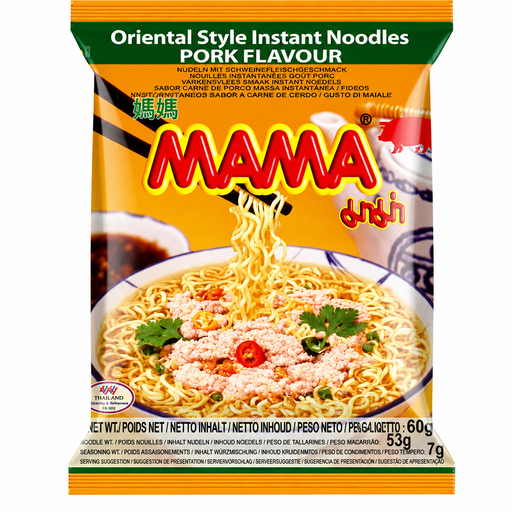
Why this choice suits this profile: The 60 g packet is ideal for trying the brand or enjoying a snack without immediately building up a large stock. Preparation requires around 400 ml of boiling water and three minutes of standing time.
The net weight and preparation method are clearly stated. The allergen list mentions wheat, soya and sesame; check the packaging for any other possible traces.
Individual 60 g format, three-minute preparation and a savoury pork flavour enhanced with spices and dehydrated onion, according to the product details.
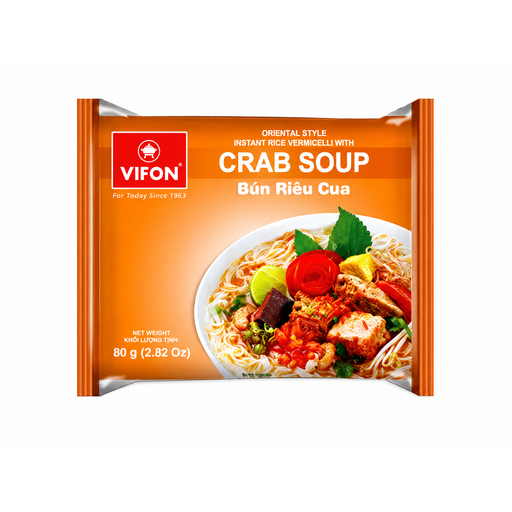
Why this choice suits this profile: This Vietnamese product combines rice vermicelli with a braised crab soup sachet and a dedicated seasoning mix. It is aimed at those who enjoy more sophisticated preparations than a simple powdered stock.
The ingredients list distinguishes between the vermicelli, soup base and crab preparation. The presence of crustaceans is clearly indicated.
Rice vermicelli, a crab soup sachet, fried shallots and preparation in around three minutes.
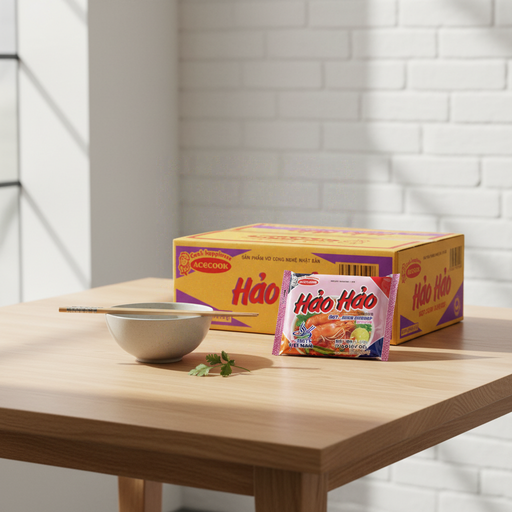
Why this choice suits this profile: This box of 30 portions of 77 g is ideal for households, associations, offices or large-scale consumers who want to keep a supply of Vietnamese noodles readily available.
The number of portions, the weight of each packet and the presence of wheat, fish and prawns are detailed. This makes it easy to calculate the stock you need and monitor allergens.
Box of 30 units, hot and sour prawn flavour, and three-minute preparation with a soup base and oil.
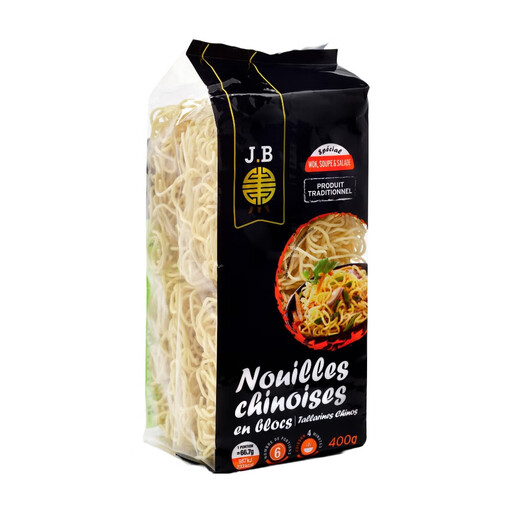
Why this choice suits this profile: These plain Chinese noodle blocks let you prepare a stir-fry, soup or salad using the ingredients available in your cupboards and fridge.
You are not tied to a single seasoning sachet: you decide how much sauce to use and choose the accompaniments yourself. The 400 g pack is advertised as making six portions.
Four-minute cooking time, rinsing in cold water and a composition stated as 89 % wheat flour, with salt and water.
To prepare noodle soup, use the recommended amount of water, cover the container and follow the stated cooking time. Too little water will produce a more concentrated flavour and a different texture; too much water may leave the stock tasting bland. Products that require cooking should be prepared in water brought to the boil.
Store instant noodles in a cool, dry place away from light. Once opened, follow the instructions specific to each product. To compare prices, divide the pack price by the number of portions, then compare equivalent quantities. A multipack can reduce the unit price, provided you use the portions before their best-before date.
Most of the products featured are ready in three to four minutes after boiling water has been added. J.B blocks require four minutes of cooking, followed by rinsing. In all cases, check the instructions on the packaging of the product you receive.
Before opening, instant noodles can generally be stored at room temperature in a dry place until the date shown on the packet. Once prepared, they should be eaten immediately. For an opened packet, follow the manufacturer’s specific instructions.
Choose an individual packet if you want to try a flavour or vary your meals. A multipack is more suitable for families, students and working people planning several meals. Compare the number of portions, total weight, allergens and price per portion rather than focusing only on the displayed price.