
Livraison le jour même ou le lendemain

Qualité garantie

Débloquez vos offres de bienvenue: Livraison GRATUITE | Jusqu'à -80 % | 30 jours d'essai gratuits à JoyPlus
Téléchargez l'application
Buying Asian food online lets you discover Chinese, Korean, Japanese and Vietnamese specialities without having to visit multiple shops. But attractive photos and claims like “traditional”, “natural” or “premium” aren’t enough to help you pick the products that will genuinely suit your household.
Before you fill your basket, there are three pitfalls worth watching out for.
A product described as a fruit snack can contain a significant amount of sugar, syrup or concentrate. To compare Asian snacks, look at the ingredients list, which is ordered by descending weight, and the nutritional information per 100 g.
The Bestore Prebiotic Dried Tangerine Peel and Hawthorn Strip, for example, states 55 % hawthorn, 8 % dried tangerine peel and 5 % prebiotic fibre. That’s far more useful than a vague promise of a traditional recipe.
Frozen dim sum, frozen Chinese dumplings and steamed bites must be kept at −18 °C or below. So check the delivery conditions, whether the packaging is suitable, and whether you can get the products into your freezer quickly.
A product that has thawed should generally not be refrozen. Also read the instructions for each item: steaming, pan-frying, boiling or simply reheating.
Recipes containing prawns, fish, squid, wheat, soya or sesame aren’t necessarily suitable for everyone in the household. Check the allergen list before you buy, even if you’re already familiar with the product.
Weight matters too. A 1 kg bag of gyoza might be great if you eat them regularly, but far too much for someone living alone. By contrast, a 340 ml drink or a 105 g snack is better suited to an occasional treat.
For imported foods, make sure the information is legible in English or that the labelling is compliant, including:
These details don’t guarantee you’ll like the product, but they help you make a more informed decision while respecting consumer information rules.
In savoury specialities, the percentage of prawns, fish or vegetables gives you a concrete idea of the recipe. The TCT Siu Mai With Shrimp, frozen 500g states 25 % prawns and 18.7 % fish. The TCT Ha Kao With Seafood 700g specifies 32 % prawns, 15 % squid and 10 % fish paste.
For steamed prawn bites, compare the ingredients rather than the size of the pictures. For seafood gyoza, also check for wheat, soya and sesame in both the pastry and the filling.
A pre-cooked, frozen product can save you time in the kitchen, but you still need to follow the preparation instructions. Spring rolls and bites must reach a high enough temperature all the way through, as stated on the packaging.
The TCT Spring Roll Stick With Shrimp 500 g is pre-fried and frozen. It contains 30 % prawns and can be reheated before serving. The TCT Gyoza With Seafood 660 g can be pan-fried, steamed or boiled; its product page states storage at −18 °C and a quantity of 1 kg. These details help you choose between a quick appetiser, a family meal or a stock-up for several occasions.
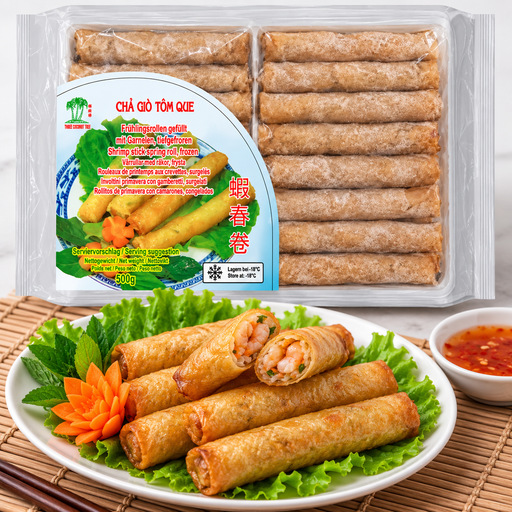
Why this suits this profile: Its 500 g size is ideal for a first purchase of savoury snacks to share. Preparation is straightforward, whether for an aperitif or a starter.
The product page states the proportion of prawns, net weight, allergens and storage at −18 °C.
30 % prawns, vegetables and a pre-fried product that just needs reheating.
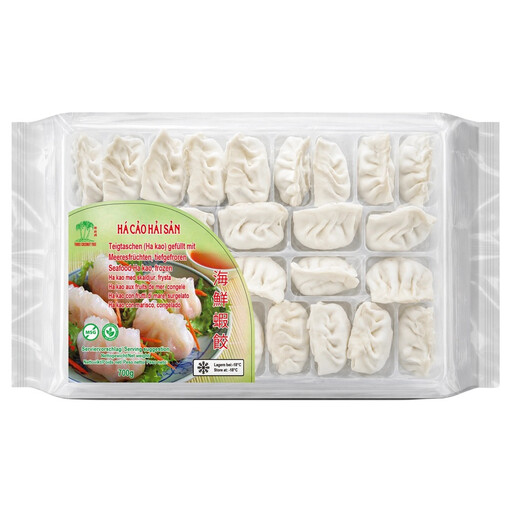
Why this suits this profile: This product is aimed at those looking for a more refined steamed bite, with a filling that combines several types of seafood.
The ingredients clearly distinguish the prawns, squid, fish and the components of the wrapper.
700 g size, 32 % prawns and steamed preparation.
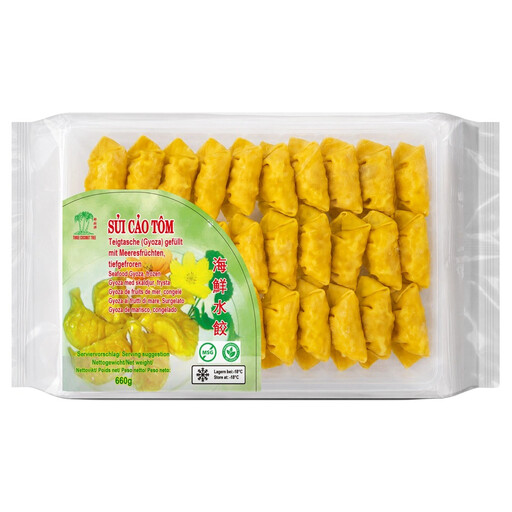
Why this suits this profile: Households that regularly cook frozen Chinese dumplings will appreciate this versatile option, available in a large pack size.
The weight, cooking methods and allergens are all listed, which reduces the risk of unpleasant surprises on delivery.
Filling made with 28 % fish paste and 12 % prawns, with three cooking methods.
To round off your order, several categories can suit different cravings:
Frozen exotic fruit requires a bit more planning than dry snacks: check you have enough freezer space, that the cold chain is maintained, and how soon the product needs to be used after opening.
We’ve put together a full, real-time updated list of products that meet these strict selection criteria and European safety regulations.
Check the ingredients list, allergens, best-before date, storage conditions and the name of the responsible operator in the European Union. For frozen products, also make sure the delivery is carried out under suitable conditions, and put them in your freezer at −18 °C or below as soon as possible.
It depends on the date on the packaging and the manufacturer’s instructions. Seal the bag carefully, avoid temperature fluctuations and never refreeze a product that has thawed. For items that need to be kept in the fridge after defrosting, follow the time stated on the label.
The total price depends on the pack size, delivery charges and the costs of refrigerated or frozen transport. Larger formats can reduce the price per portion, but only if you use the product before its best-before date and your freezer has enough space.