Hosts of a small Asian-themed evening
If you’d like to serve a hot starter in several bowls without making stock from scratch, check the stated serving sizes. Carrefour describes the Knorr Chinese and Thai soups as making two bowls each.


For a starter to share that fits the theme, choose a soup whose recipe mentions noodles and Asian flavours: the two Knorr varieties described by Carrefour each make two bowls. An individual portion is more suitable if everyone is preparing their own; a classic soup can be handy to keep in the cupboard, but may not deliver the flavour you’re looking for. In all cases, check the allergens, serving sizes and instructions for the product you choose.
If you’d like to serve a hot starter in several bowls without making stock from scratch, check the stated serving sizes. Carrefour describes the Knorr Chinese and Thai soups as making two bowls each.
If each guest needs to prepare their soup separately, distinguish individual sachets from soups intended to be shared out. Auchan lists these formats in different categories.
For a shared meal, check the ingredients for each flavour before adding it to the menu. Carrefour’s product details list different allergens for the two Knorr recipes.
Choose this: if you want a hot starter for two bowls that fits the theme of the meal.
Bear in mind: the Chinese and Thai Knorr recipes described by Carrefour need to be cooked in a saucepan and contain different allergens.
Choose this: if everyone needs to prepare and serve their own portion.
Check: depending on the product, it may be instant soup or instant noodles; individual portions may not be a suitable replacement for a shared starter.
Choose this: if having soup on hand matters more than matching the theme.
Remember: the Maggi and Royco products listed by Auchan have different flavours; check the recipe before adding them to your menu.
| Factor | What to check | Who is it for? |
|---|---|---|
| Flavour and noodles | Read the product name and ingredients to choose between the recipes available. | I want the starter to fit the rest of the evening, rather than serving a vegetable soup that doesn’t go with the menu. Around 31% of consumers prioritise this kind of match. |
| Ingredients and allergens | Check the ingredients and allergens listed for the specific flavour. | If a guest needs to avoid certain ingredients, I need to be able to rule out a recipe before serving it. This is the top priority for around 25% of consumers. |
| Portions and preparation | Compare the number of bowls, the amount of water needed and the cooking instructions. | When making several bowls, I want to plan for enough sachets and organise the serving without relying on the dry weight alone. This is a priority for around 25% of consumers. |
| Storage and salt | Check the date and storage instructions; compare salt content on a like-for-like basis, particularly per 100 ml of reconstituted soup when this information is shown on the packaging. | If I’m stocking up the cupboard, I check the storage information and nutritional details before choosing. Around 19% of consumers put these checks first. |
The Knorr recipes described by Carrefour don’t contain the same allergens: the Chinese soup lists wheat, egg and soya, among other ingredients; the Thai soup also lists milk and mustard.
Before buying for a group, read the ingredients and allergens for each product and have another option ready if needed.
The Knorr Chinese and Thai soups each state that they make two portions, but their instructions call for 500 ml and 700 ml of water respectively.
Work out how many sachets you need from the stated number of bowls, then follow the water measurements and use a suitable pan for the recipe you’ve chosen.
Preparing several sachets may require a larger pan or more than one batch.
Lidl’s page for Vitasia Asian soup listed a sales period dated 30 September 2026.
If this recipe is important to your menu, check whether it’s available at your local store or in its app before planning your meal around it.
A value given for the dry product can’t be compared directly with one for reconstituted soup. E.Leclerc’s product details for Regal Soupe Chinese broth state 0.8 g of salt per 100 ml when reconstituted.
To compare two recipes, look for the ‘salt’ value for the same quantity of prepared product, and take account of the instructions for each one.
Carrefour describes two noodle soups with Chinese and Thai recipes; the Thai variety is also listed on Joybuy.
E.Leclerc lists a 48 g instant Chinese noodle broth.
Auchan’s soup range includes vegetable and vermicelli soup, as well as tomato and vermicelli soup.
Auchan lists a range of Royco instant soups in individual portions, including tomato, vegetable and leek and potato flavours.
Lidl has sold a soup under this brand described as Asian-style.
For a starter to share, the Knorr noodle soup states that it makes two portions. Hikari miso soup and MAMA instant noodles are better suited to individual servings. If you’re specifically looking for a dehydrated soup to divide between bowls, check their product category and preparation method.
 Image unavailable
This soup is stated to make two portions, so it’s a good option for serving noodle soup to two people. Joybuy’s product details specify 700 ml of water and five minutes’ cooking time in a saucepan. Check the allergens on the sachet before serving.
 Image unavailable
This instant tofu miso soup is suited to individual portions, and the pack contains eight units. Check the pack for preparation instructions and allergens before serving it to your guests.
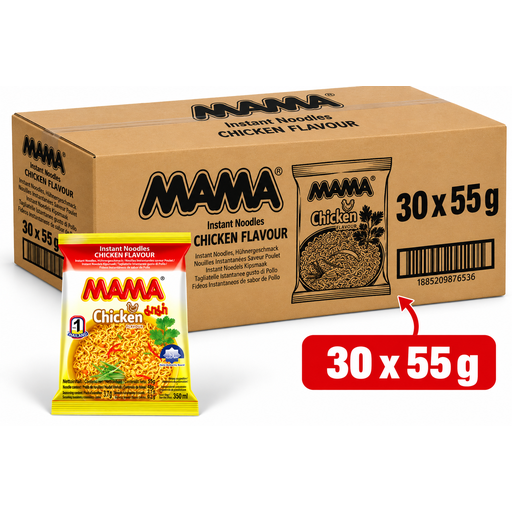 Image unavailable
This box of instant noodles may suit you if everyone is preparing their own portion, but it isn’t a substitute for dehydrated soup to share. Before serving, check the sachets for the amount of water, preparation time and allergens.
Choose based on the ingredients and flavour you want to serve, not just the picture on the packet. Carrefour’s product details describe the Chinese and Thai Knorr soups as different recipes, so compare them with the rest of your menu.
As a rule, allow for two sachets of the same variety if you’re serving the stated number of portions. Carrefour says that both the Chinese and Thai Knorr soups make two bowls; then follow the water measurements for the recipe you’ve chosen.
Allergenic ingredients vary from one recipe to another. Carrefour lists wheat, egg and soya among the ingredients in the Knorr Chinese soup, and milk and mustard in the Thai variety. Check the labelling on the packet you buy before serving.
No. Passing a best-before date doesn’t, by itself, mean that the soup is unsafe to eat. Distinguish this from a use-by date, then check the condition of the packaging and whether it has been stored as instructed.
No. For a direct comparison, check the ‘salt’ line in the nutritional information. Use the same basis for both products, such as per 100 ml of reconstituted soup when these values are provided.