
Livraison le jour même ou le lendemain

Qualité garantie

Débloquez vos offres de bienvenue: Livraison GRATUITE | Jusqu'à -80 % | 30 jours d'essai gratuits à JoyPlus
Téléchargez l'application
Asian beverages are winning over consumers with flavours of lychee, melon, plum and peach. However, they are not all suited to the same occasions. A can intended to accompany a Korean meal should not be chosen in the same way as a multipack for a party, while alcoholic beverages require a few additional checks.
Before placing an order, three pitfalls come up frequently: a flavour highlighted on the packaging despite a limited juice content, a format poorly suited to the number of guests, and confusion between a non-alcoholic drink, a fermented soda and a spirit. Here are the key criteria to consider when comparing the products available in France.
The mention “lychee” on a label does not necessarily mean that the drink contains a high proportion of juice or purée. The percentage can vary considerably from one product to another. NAWON Lychee Drink with Basil Seeds contains 30% lychee juice, while YEO’S Lychee Drink 300 ml contains just 2%, according to its product details.
That does not automatically make one drink better than the other. The desired taste may be more floral, sweeter or, on the contrary, lighter. This information is primarily useful for avoiding disappointment between the flavour suggested by the name and the product actually purchased.
A 750 ml bottle of makgeolli can be perfectly suitable for sharing over a meal, but it does not replace a supply of individual cans. For a Korean barbecue or an event, Asian beverage multipacks make serving easier and avoid having to open numerous bottles.
Conversely, a pack of 24 cans purchased for occasional consumption may take up unnecessary space. Estimate the number of people, the available storage space and when the drinks are likely to be consumed.
Before opening, these drinks are generally best stored in a cool, dry place. Instructions may change once a bottle or can has been opened. Some products must be refrigerated and consumed promptly.
Fermented products such as makgeolli require particular care. Check the label, the best-before date or applicable use-by date, as well as the recommended storage conditions.
For an alcoholic beverage, also check the alcohol by volume (ABV). The soju featured below is listed at 12% vol., while KSD Rice Makgeolli Peach has an alcohol content of 3% vol.
Compare the ingredient list and nutritional values per 100 ml, rather than relying solely on the can size. A lychee drink may contain juice, purée, sugar, sweeteners, acidifiers or flavourings.
If you are monitoring your sugar intake, the figures shown on the packaging provide a useful basis for comparison. NAWON lists 10 g of sugars per 100 ml, compared with 4.9 g per 100 ml for YEO’S Lychee Drink. These figures are provided for guidance only and should be checked against the label on the product received, which is the authoritative source.
Also consider allergens. KSD Rice Makgeolli Peach lists peach, while several of the featured sodas indicate that no allergens have been declared. In the event of an allergy or intolerance, always refer to the European labelling on the product.
An Asian sparkling beverage can be as carbonated as a classic soda, lightly sparkling or completely still. Peach makgeolli is described as lightly sparkling, with a softer, creamier texture resulting from fermentation.
Texture also matters for drinks containing seeds. NAWON combines lychee juice with 9% basil seeds. Gently shake the bottle before serving to distribute the seeds evenly, then refrigerate it after opening.
Origin, volume and packaging format make it easier to plan your purchases. The available products include beverages from Vietnam, Malaysia, Singapore, South Korea and France. For a meal, match the flavour profile to the menu:
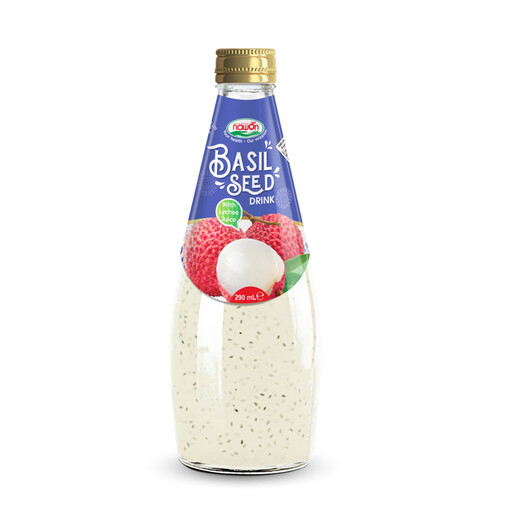
Why this is a good fit: A compact format for discovering a lychee drink and its distinctive texture without committing to a large case.
The product details clearly state 30% lychee juice and 9% basil seeds. Shake before serving and refrigerate the bottle after opening.
290 ml format, 42 kcal and 10 g of sugars per 100 ml according to the information provided.
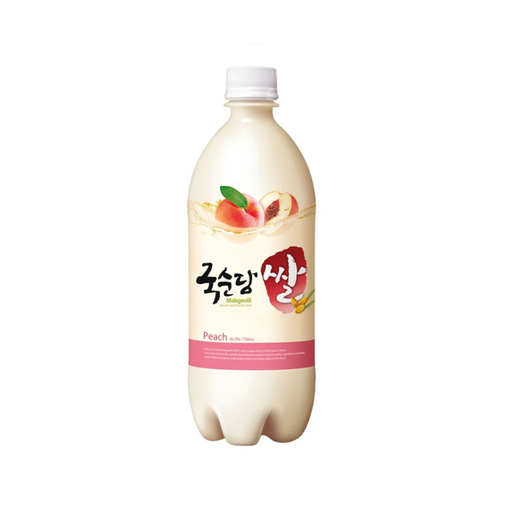
Why this is a good fit: A bottle designed for sharing over a Korean meal, combining rice fermentation, peach flavour and gentle effervescence.
The product is presented as makgeolli at 3% vol. Do not confuse it with a non-alcoholic Korean soda.
750 ml bottle, rice and yeast in the ingredients, recommended well chilled and to be refrigerated after opening.
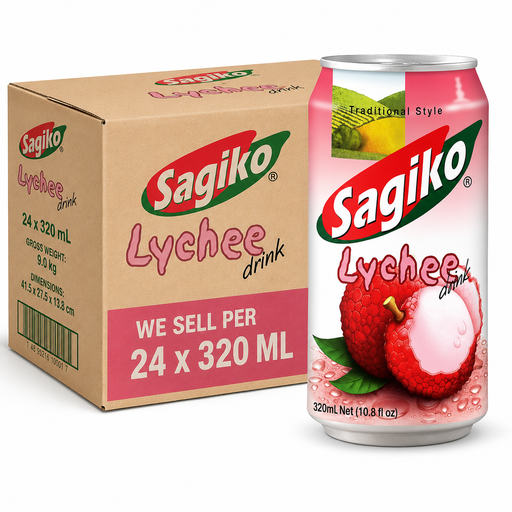
Why this is a good fit: A case designed for households, community groups, restaurants or meal organisers who want to serve individual cans.
The total volume is clearly stated: 24 cans of 320 ml, or 7.68 litres. This makes it easy to check whether the stock matches the number of guests.
Lychee drink in cans, 44 kcal and 11 g of sugars per 100 ml according to the product details; serve chilled or use as a mixer.
We have brought together an up-to-date selection of products suited to different occasions, along with their storage information. Explore our sikhye beverage range too, and broaden your discovery.
Japanese and Korean beverages are chosen according to factors including sugar content, carbonation level and alcohol content. Among the non-alcoholic options, SFC Korean Sweet Melon Soda 350 ml offers a sweet melon flavour and a lively, carbonated texture. According to its description, SFC Korean-Style Plum Soda 350 ml combines plum notes with light carbonation.
For adults, the OPPA Soju Apple Yogurt pack contains 20 bottles of 360 ml at 12% vol. It is better suited to those looking to build a supply for several people. The 7DROPS Soju discovery pack brings together several fruity flavours, including lychee, mandarin, peach and yoghurt.
Soju and makgeolli contain alcohol: they are prohibited for minors and not recommended during pregnancy. Follow French drinking guidelines and never drive after consuming alcohol.
Less familiar flavours are also worth exploring. According to its product details, SAGIKO Wintermelon Drink contains 51 kcal and 12.2 g of sugars per 100 ml. A Korean melon drink or a basil-seed beverage can therefore round out an assortment without multiplying the number of lychee variations.
A small non-alcoholic format lets you discover a new flavour without ending up with an oversized stock. Lychee, melon and plum generally pair easily with a meal or are best served chilled. For a more distinctive texture, a basil-seed drink offers a different experience.
Always follow the instructions on the label. For KSD Rice Makgeolli Peach, the product details recommend refrigerating it before serving and after opening, then consuming it promptly. Gently shake the bottle before serving to restore an even texture.
A multipack can be particularly practical for a barbecue, party or restaurant. However, it depends on the volume you are likely to consume and the storage space available. Before ordering, compare the price per can, total volume, date shown on the packaging and storage requirements.