
Livraison le jour même ou le lendemain

Qualité garantie

Débloquez vos offres de bienvenue: Livraison GRATUITE | Jusqu'à -80 % | 30 jours d'essai gratuits à JoyPlus
Téléchargez l'application
Choosing arts and crafts pens and markers involves more than simply counting the colours shown on the box. Watercolour markers, dual-tip markers, brush pens, fineliners and acrylic markers each serve specific creative needs.
Whether you enjoy colouring, drawing, manga, lettering, journaling or DIY projects, the wrong choice can quickly lead to crushed nibs, ink bleeding through the paper or colours that are difficult to organise. Here are the key criteria to consider before buying, along with a selection designed for different uses.
A 60-colour set may look unbeatable on paper. However, it will not necessarily replace a smaller assortment equipped with several nib types. For fine details and precise drawing, a 0.4 mm fine tip is often more suitable than a brush tip. In lettering, flexibility and line-width variation generally matter more than the number of shades.
Be sure to check the following:
The label waterproof pens generally means that the ink resists water once dry. It does not guarantee that the line will remain perfectly intact on every type of paper, fabric or surface. Durability can also vary depending on drying time and the porosity of the material.
For an illustration or notebook project, test the pen on a sheet similar to the one you intend to use. With markers designed for wood, glass or ceramic, also check adhesion on a small, inconspicuous area.
Even with the cap securely replaced, a pen can lose its smooth flow if it is stored near a radiator, in direct sunlight or in a poorly closed pencil case. Some acrylic markers should be stored horizontally, while dual-tip sets need to be capped carefully after every use.
Caps are also small parts that may be swallowed. Products containing them must be kept out of reach of children under 3 years of age.
The nib has a direct influence on the finished result:
The stated size—for example, 0.05 mm, 0.5 mm or 1.0 mm—refers to the theoretical line width. Pressure applied and paper texture can nevertheless affect the result.
Drawing pens with water-based ink are often suitable for paper, notebooks and colouring. Some can be diluted with water on sufficiently thick paper to create watercolour-style effects.
Acrylic markers, also known as paint pens, are better suited to decorative projects on metal, wood, glass, stone, ceramic or canvas, according to the product details. Water-based ink is generally easier to clean before it dries, but that does not mean it will disappear completely from a porous surface.
For nail art pens, read the instructions carefully: nails should be clean and dry, drying times must be observed, a top coat may be required and additional precautions may apply to damaged nails. These products are intended for external use and must not come into contact with the eyes or be swallowed.
Even ink marketed as unlikely to bleed through paper can leave a shadow on a thin sheet. For adult colouring, choose heavyweight paper or place a protective sheet beneath the page.
For journaling, water-based highlighters are often better suited to thin notebooks than highly pigmented markers. For watercolour techniques, heavier paper helps minimise warping and makes it easier to create smooth gradients.
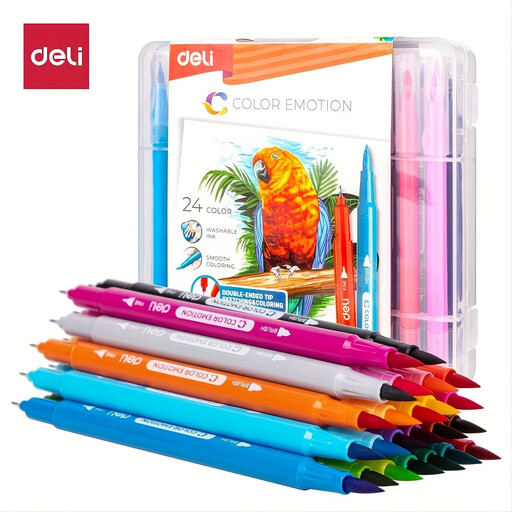
Why this is a good fit: a compact set for getting started with drawing, colouring and watercolour effects without having to purchase multiple products.
The dual tip offers two uses in every pen, avoiding the need to purchase several products separately. The product details mention 24 assorted colours and watercolour-style use.
A dual-tip format and a 24-shade palette for drawing, creative cards and creating your first gradients.
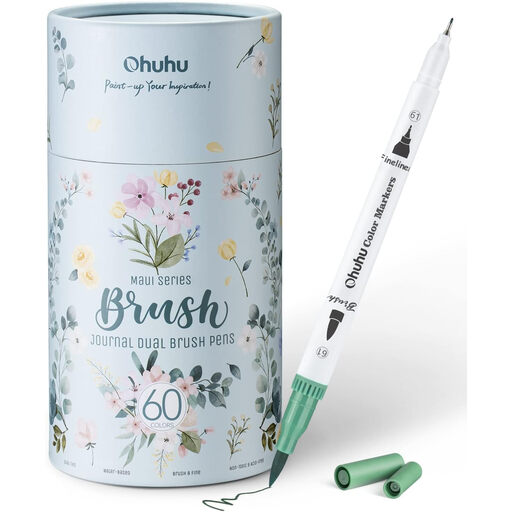
Why this is a good fit: the two tips cover precision work, colouring, sketching and calligraphy in a single set.
The 0.4 mm fineliner tip removes the need to buy a separate detail pen. The product details also mention replacement tips.
60 colours, a flexible 1–6 mm brush tip, a colour swatch card and water-based ink.
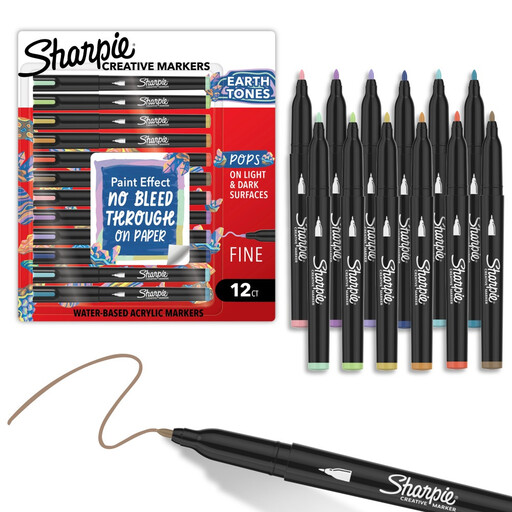
Why this is a good fit: a paint-like ink designed for use on multiple surfaces, including wood, glass, metal, stone, ceramic and canvas.
The fine tip is better suited to detailed work than a broad tip. Even so, test adhesion on an inconspicuous area before decorating a delicate surface.
12 assorted colours, water-based ink and the stated ability to layer shades without them blending immediately.
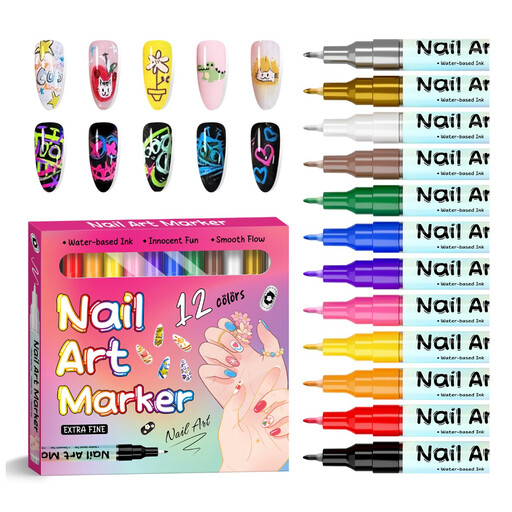
Why this is a good fit: the 0.5 mm tips are well suited to fine lines, patterns and detailed designs on clean, dry nails.
The 0.5 mm diameter provides a concrete guide rather than a vague promise of precision. The design must still be left to dry, followed by a top coat if recommended in the instructions.
12 shades, fast drying as advertised and dotting tools included for creating a variety of designs.
We have put together an up-to-date selection of products that meet these criteria and the requirements applicable in France and the European Union.
It depends entirely on the amount of water used and the thickness of the paper. On a thin sheet, the ink may leave a mark on the reverse. Place a protective sheet beneath your page and, for washes, choose paper designed for wet techniques.
Lifespan varies according to frequency of use, ink type and how securely the caps are closed. To help prevent drying out, recap every pen immediately after use, keep it away from heat sources and follow the storage instructions provided by the manufacturer—horizontally for certain acrylic markers.
No. Even when product details mention glass, wood, metal or ceramic, the result depends on the finish and porosity of the surface. Always test on an inconspicuous area. Do not use these markers on surfaces intended for food contact unless the manufacturer explicitly states that they are suitable.