
Livraison le jour même ou le lendemain

Qualité garantie

Débloquez vos offres de bienvenue: Livraison GRATUITE | Jusqu'à -80 % | 30 jours d'essai gratuits à JoyPlus
Téléchargez l'application
Choosing the right artistic pens and markers is not simply a matter of counting how many pieces come in a set. Whether you draw, illustrate, create manga, practise calligraphy or enjoy creative journaling, the tip, ink and surface you use all have a direct impact on the final result.
Some highly colourful sets, however, include nibs that are poorly suited to precision work. Others promote “permanent” ink without specifying its water resistance, drying time or compatibility with watercolour markers. Here are the key criteria to review before buying, along with a selection designed for a range of creative applications.
A set of 20 or 30 pens may look like a great deal, but it can contain numerous near-identical shades and very few tip variations. For technical drawing or comic-book outlines, three carefully selected widths will often prove more useful than a large assortment of colours.
Water-based ink is generally suitable for colouring and flexible lettering, but it may bleed when it comes into contact with a wash. By contrast, pigment ink pens are often favoured for their more water- and light-resistant lines, depending on the characteristics stated by the manufacturer.
It is also important to distinguish between ink that becomes water-resistant once dry and ink that is genuinely waterproof in every situation. Testing it on the paper you intend to use remains the best precaution.
An ultra-fine tip can catch on textured paper and wear out quickly. A flexible brush tip, on the other hand, will deliver better results on a sufficiently smooth surface, particularly for hand lettering. Always check the recommended paper type: watercolour paper, Bristol board, sketchbook paper or a surface specifically designed for markers.
For black fineliners, the stated width in millimetres provides a useful point of reference:
References such as 005, 01 or 03 do not always correspond to exactly the same width from one brand to another. When the measurement is provided, it is therefore best to rely on the millimetre specification.
Pigment ink can be a valuable choice for manga inking, sketches intended for long-term preservation or illustrations that you plan to enhance with watercolour. Dye-based inks, such as those used in some watercolour markers, often produce transparent colours that are easy to dilute, but their response to light and moisture can vary.
For white gel pens, look for an opaque formula and a tip suited to the level of detail you require. A fine tip works well for precise highlights, while a medium tip creates more visible accents on black or coloured paper.
A cap that is not properly closed can cause the tip to dry out, particularly with gel pens and brush markers. The best habits are simple: recap each tool immediately after use, store pens horizontally when recommended by the manufacturer and rinse the reservoir of a water brush after use.
With permanent inks, also remember to place a protective sheet beneath your drawing. They can bleed through some notebooks or stain your desk.
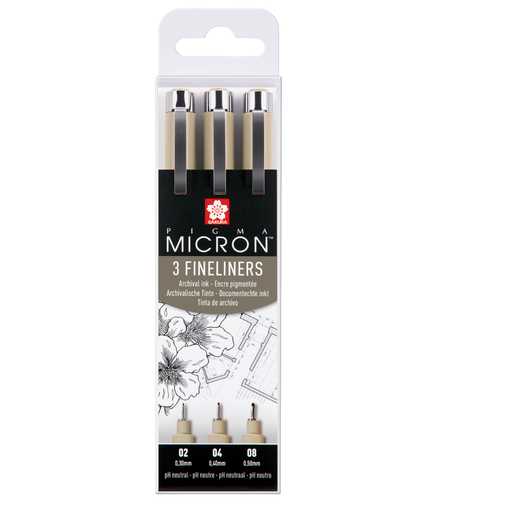
Why it stands out: the three widths—0.30, 0.40 and 0.50 mm—cover the everyday needs of a journal, an illustration or a first comic-book project.
The set focuses on clearly differentiated widths rather than an excess of colours with limited value for inking.
Pigment-based black ink advertised as water- and fade-resistant, with three tips whose widths are clearly specified.
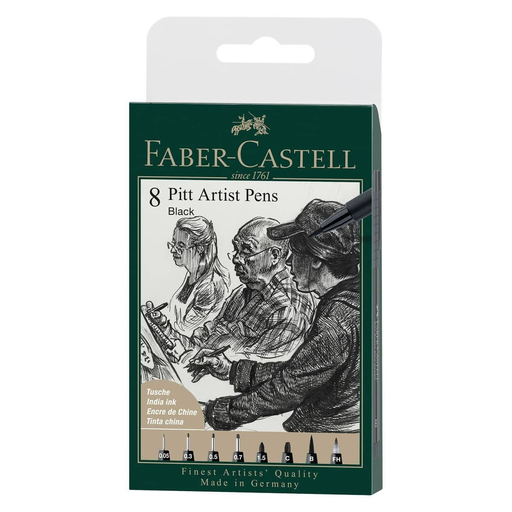
Why it stands out: the range of tips covers illustration, calligraphy, manga and comic-book outlines.
The set clearly identifies the different tip families, making it easier to choose between fine hatching, outlines and brush-style strokes.
Black India ink advertised as permanent and water-resistant, making it suitable for mixed-media techniques once dry.
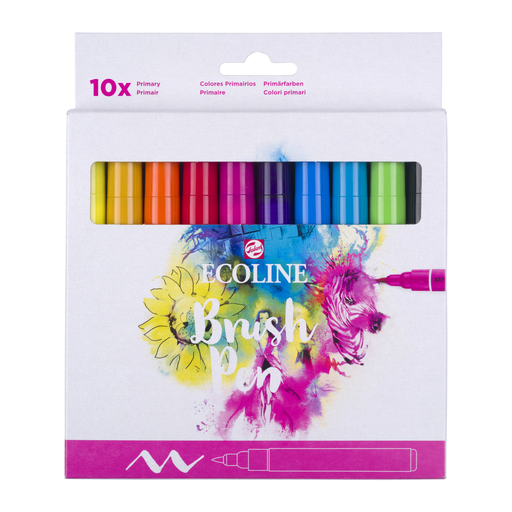
Why it stands out: the flexible brush tips are ideal for lettering with pressure-sensitive line variation, as well as cards and creative journaling.
The formula is clearly presented as water-soluble and transparent, making its behaviour more predictable than that of an undocumented ink.
Ten dye- and gum-arabic-based colours that blend with water on light paper.
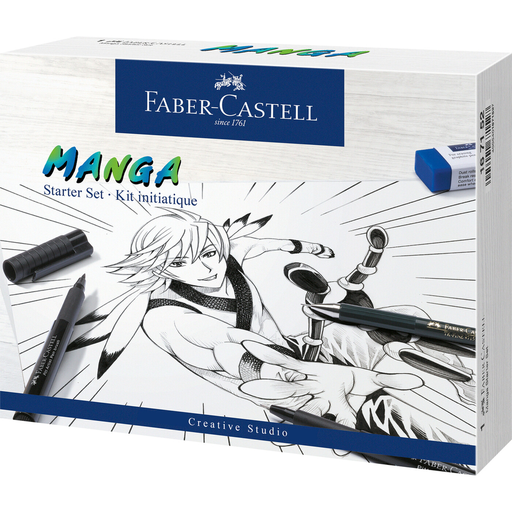
Why it stands out: the set supports every stage, from rough sketch to final linework. A practical way to begin a character or manga-page project.
It brings together pencils, pens and accessories, avoiding the need to make multiple purchases before you understand your manga-drawing preferences.
An assortment dedicated to sketching, inking and detail work, with inks advertised as water- and fade-resistant.
White gel pens are perfect for adding highlights to eyes, stars, light effects or lettering on dark paper. The Sakura Gelly Roll Basic Set Fine Bright White includes three fine-tip pens, with a 0.5 mm ball and a stated line width of 0.3 mm. The True White model uses a medium 0.8 mm tip and has a stated line width of 0.4 mm, making it better suited to accents and clearly visible outlines.
For particularly fine technical linework, the Sakura Pigma Micron Design Set offers three tips rated at 0.20, 0.25 and 0.35 mm. The Faber-Castell Ecco Pigment set, meanwhile, includes widths of 0.1, 0.3, 0.5 and 0.7 mm. These differences matter more than the simple number of pens printed on the packaging.
Discover a regularly updated selection of creative supplies and compare the available formats according to your approach to drawing, lettering or creative hobbies.
A small set of black fineliners in three widths provides a versatile foundation for outlines, details and annotations. You can then add brush markers or white gel pens depending on the techniques you want to explore.
Its lifespan depends on the ink, frequency of use and storage conditions. Recapping the pen immediately, storing it according to the manufacturer’s recommendations and keeping it away from heat will slow down drying. However, the tip may still wear quickly on rough paper.
Yes, but the order of application matters. Allow the ink to dry completely before adding a wet layer, and always test the result on a separate sheet. With acrylic paint, white gel pens are best reserved for finishing details. Pigment ink pens, meanwhile, may be suitable for outlining an illustration created using multiple techniques, depending on the surface and the manufacturer’s recommendations.