
Livraison le jour même ou le lendemain

Qualité garantie

Débloquez vos offres de bienvenue: Livraison GRATUITE | Jusqu'à -80 % | 30 jours d'essai gratuits à JoyPlus
Téléchargez l'application
A set of artistic pens and markers can seem appealing because of its number of colours or promises such as “smudge-proof”, “water-resistant” or “versatile”. However, these claims do not always help you find the right product for your paper, technique or chosen surface.
To avoid a disappointing purchase, focus on three key points: the nib, the type of ink and compatibility with the surface. A pen designed for journaling will not necessarily meet the demands of a DIY project on glass. An acrylic marker, meanwhile, may be too opaque for colouring on thin paper.
A generously sized set is not necessarily the most practical. If the shades are too similar, you may end up with several colours that are difficult to tell apart. Conversely, a smaller but well-balanced palette can prove far more useful for everyday projects.
For adult colouring, check that the set includes light, dark and mid-tone shades. For journaling, a few easy-to-read colours and a fine nib will often be more useful than a large, poorly organised palette.
A brush nib lets you vary the line thickness according to the pressure applied. It is particularly suitable for calligraphy and soft broad strokes. A fine nib makes details and outlines easier, while a chisel nib is mainly used for highlighting or creating two different line widths.
Double-tipped pens offer excellent versatility, but they need to be stored carefully and recapped after every use. A very fine nib can also wear out quickly if it is used on a rough surface.
Water-based inks are generally suitable for paper and are easier to clean, but they can bleed through thin sheets. Acrylic markers are designed to provide a more opaque finish on surfaces such as wood, metal, ceramic, glass and canvas. Nevertheless, testing on an inconspicuous area is still essential.
The terms “waterproof” or “water-resistant” should be interpreted according to the intended use. They do not automatically guarantee resistance to washing, rubbing or prolonged outdoor exposure.
Before placing your order, match the nib to your project:
Drawing pens and fineliners are particularly useful for outlining shapes before filling areas with a broader marker.
On paper, choose an ink with a drying time that suits the way you work. A quick-drying formula reduces smudging while you draw, but gives you less time to create blends. Watercolour pens can be worked with a damp brush on paper that is sufficiently thick. Paper that is too lightweight may buckle or allow the colour to show through on the reverse.
For decorating objects, acrylic markers generally provide good coverage, including on light and dark surfaces. However, test the adhesion and durability of the finish before working on an important item. Do not use these markers on surfaces intended for contact with food unless the manufacturer expressly states that they are suitable for this purpose.
Replace the cap immediately after each use and store the markers in accordance with the manufacturer’s recommendations. Some acrylic models should be stored horizontally, while water-based pens mainly need to be protected from heat and direct light.
For children, check the recommended age: caps and replacement nibs may present a choking hazard. Even when an ink is described by the manufacturer as non-toxic, it must not be swallowed and contact with the eyes should be avoided.
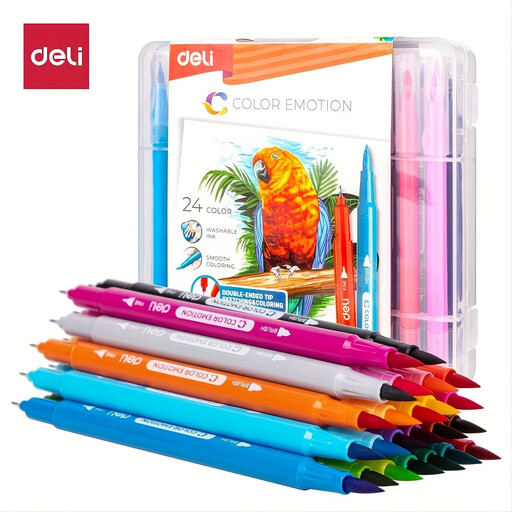
Why this choice suits this profile : This set combines two types of nib with 24 colours, making it easy to get started with drawing, colouring or your first watercolour effects without having to buy multiple sets.
The double tip means you do not have to buy a set limited to broad strokes or, conversely, one suited only to details. However, test it on the paper you plan to use.
24 assorted colours and two nibs for colouring, drawing and water-based colour transitions on suitable paper.
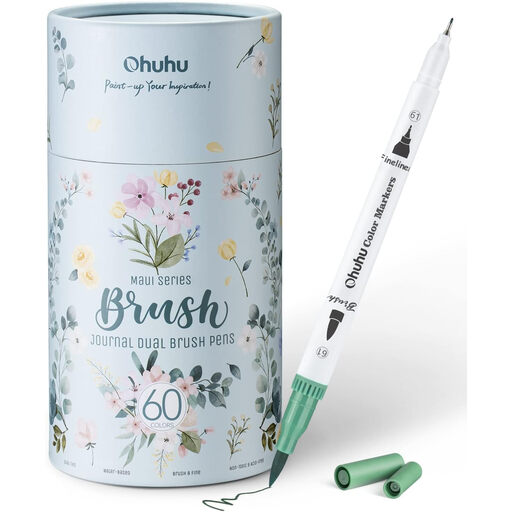
Why this choice suits this profile : Amateur artists who want to build an extensive palette get a 1 to 6 mm brush nib and a 0.4 mm fineliner on every pen.
The colour chart helps you identify the actual shades instead of relying solely on the colour of the cap.
60 numbered colours, five replacement nibs and a brush-and-fineliner duo for drawing, journaling and calligraphy.
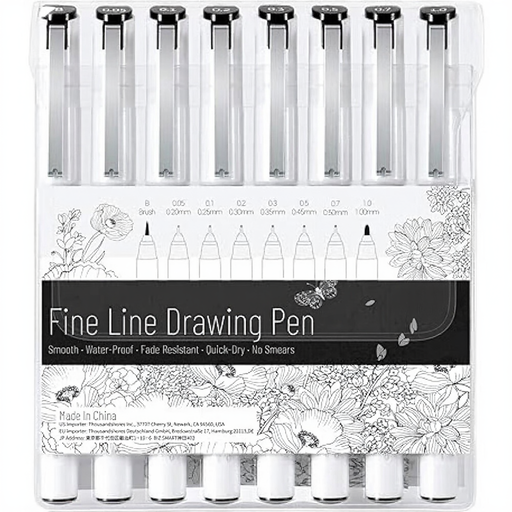
Why this choice suits this profile : People who draw regularly, annotate notebooks or practise manga have seven fine nibs and one brush nib to choose from.
The 0.05 to 1 mm diameters are clearly differentiated. This lets you quickly choose the right line thickness and avoid duplicate sizes in the set.
0.05, 0.1, 0.3, 0.5, 0.7 and 1 mm nibs, plus a brush nib; black ink described as water-resistant and quick-drying.
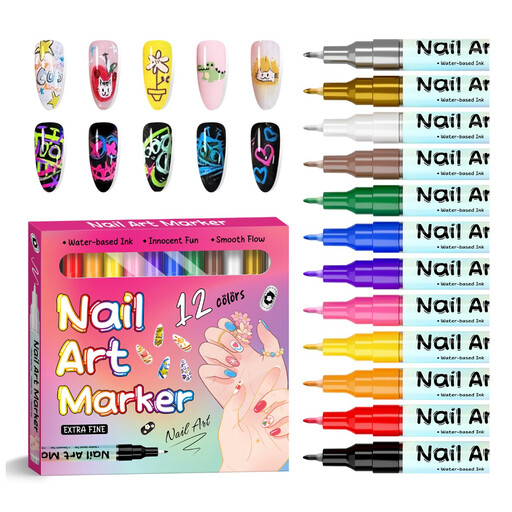
Why this choice suits this profile : DIY enthusiasts who want to create precise designs on their nails get 12 colours and dotting tools.
The 0.5 mm nib is suitable for detailed lines and designs. Apply the ink to clean, dry nails, then let it dry before adding a top coat.
Quick-drying acrylic ink, advertised raised-effect finish and dotting tools included. For external use only.
We have compiled a complete, real-time updated list of products that meet these demanding selection criteria and European safety regulations.
For adult colouring, choose a nib that lets you fill areas without tiring your hand. Sharpie acrylic markers with a brush nib are suitable for variable-width strokes and warm shades. A conical nib, meanwhile, offers a more consistent width for larger areas.
For journaling, journaling highlighters with a chisel nib make it easy to draw broad or fine lines. The WRITECH set offers eight colours, a contoured barrel and a flexible nib. You can view it here.
Creative projects on wood, glass or ceramic require DIY markers with opaque ink. Sharpie Acrylic Markers with a fine nib are designed for use on several surfaces, but testing them beforehand is still recommended.
Finally, if your selection of accessories also includes something to help you enjoy a moment of relaxation, the ZEN Nile foot spa offers a bubble bath, rollers, vibrations, an infrared function and a removable pumice stone. Follow the recommended usage time and stop the session at the first sign of discomfort.
Choose paper that is sufficiently thick and test the pen on a separate page. Water-based inks can also bleed through thin sheets. For colouring, place a protective sheet underneath the page you are using and avoid pressing too hard.
Waterproof fineliners help keep outlines sharp when you add water, but their resistance varies depending on the formulation and drying time. Let the ink dry completely, then test it with a damp brush before using it on an important illustration.
Replace each cap after use, protect the pens from heat and direct light, and follow the recommended storage instructions. With double-tipped pens, use the nib suited to the surface to limit wear. Cleaning surfaces and using suitable paper will also help preserve your supplies.