
Livraison le jour même ou le lendemain

Qualité garantie

Débloquez vos offres de bienvenue: Livraison GRATUITE | Jusqu'à -80 % | 30 jours d'essai gratuits à JoyPlus
Téléchargez l'application
A set of artistic colouring pens can seem particularly appealing thanks to the number of shades on offer or its promises of versatility. Yet some purchases disappoint from the very first use: a tip that flattens, ink that bleeds through the paper, colours that are difficult to blend, or impractical storage. Whether you are drawing, trying your hand at lettering, personalising objects, or enjoying adult colouring, the most important thing is to choose a technology that suits your needs.
A set of 60 colours is not necessarily more useful than a well-chosen assortment of 12 or 20 shades. A very extensive palette can multiply near-identical hues, whereas a smaller but balanced set covers the essentials: warm tones, cool tones, neutrals, and accent colours.
Also check whether the stated number actually corresponds to distinct colours, or whether it includes several pens with different tip types.
A fine tip is ideal for outlines and details, but it can become tedious for filling in a large area. Conversely, a broad or chisel tip sometimes lacks precision in a notebook or on a detailed drawing. Fine-tip pens, brush-tip pens, and dual-tip pens therefore do not meet the same needs.
Water-based ink often works well on paper and allows you to create watercolour effects, but the result depends heavily on the weight of the paper. Acrylic markers, on the other hand, deposit a more opaque colour on various surfaces. As for storage, a poorly designed set quickly leads to lost lids and pens that are hard to find.
Water-based ink markers are very popular for drawing, bullet journal pens, mandalas, and adult colouring pens. They can be used on standard paper, with a risk of show-through that varies depending on the paper and the amount of ink applied.
Watercolour pens allow you to lay down colour and then dilute it with a damp brush. For even washes, it is best to use thick paper or paper specially designed for watercolour. The technique does require some skill, though: too much water can buckle the paper or cause the pigments to migrate.
Acrylic markers are in a different league. Their ink is generally more opaque and can be suitable for paper, wood, glass, ceramic, metal, or stone, depending on the manufacturer's instructions. Always test on an inconspicuous area, and do not use them on surfaces intended for food contact unless explicitly stated.
For a creation intended to last, look for a mention of lightfastness or permanence, carefully checking the product details. This feature does not guarantee identical preservation under all exposure conditions.
A robust tip, a ventilated lid, and an airtight seal all help to extend the life of your pens. Water-based inks are generally easy to clean, but they can still stain fabrics. Young children should not handle small parts without supervision, in line with the manufacturer's warnings.
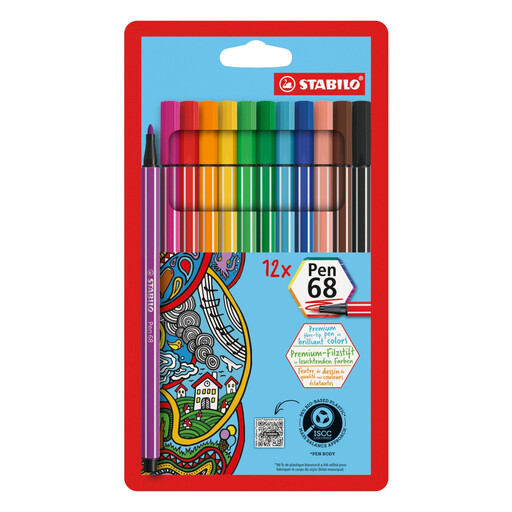
Why this choice suits this profile: This compact set lets you get started with drawing, colouring, or bullet journaling without stockpiling too many references. Its 1 mm tip is suitable for consistent lines and small to medium fill areas.
With 12 colours, duplicates are limited, while the robust tip reduces the risk of deformation during your first projects.
Water-based ink, 1 mm tip, and technology claimed to resist drying out for 24 hours without the cap.
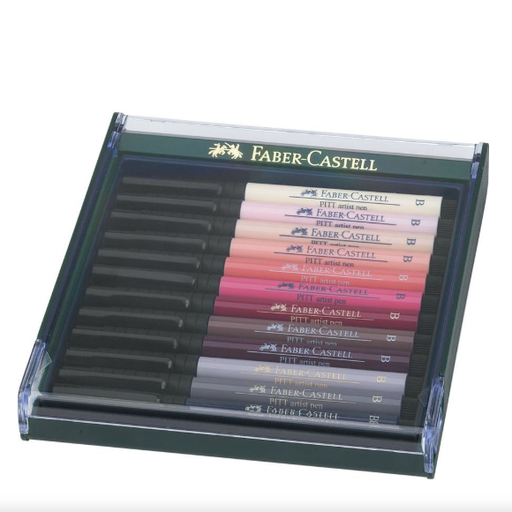
Why this choice suits this profile: Illustrators and lettering enthusiasts looking for a more expressive line can make the most of the flexible brush tip, particularly for portraits, characters, and graphic compositions.
The flexible tip adapts to the pressure you apply, rather than forcing the same line for every task.
The manufacturer states a pigmented, water-resistant and lightfast ink, along with a brush tip designed to vary line width.
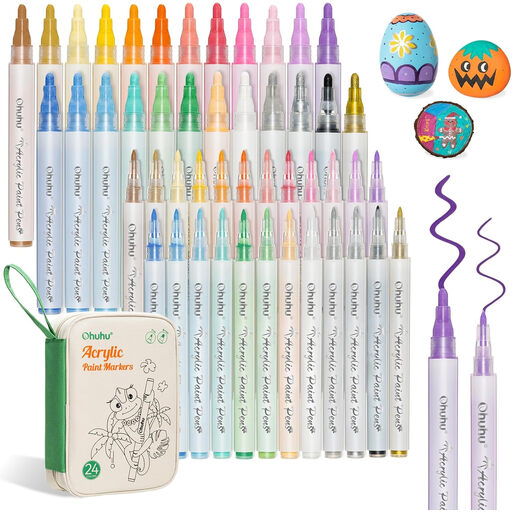
Why this choice suits this profile: This set is aimed at mixed-media projects and creations on stone, wood, glass, ceramic, plastic, fabric, or paper, with two tip sizes for each colour.
The reversible fine tips of 0.7 mm, available in round or chisel versions, save you from buying separate markers for drawing and tools for flat areas.
48 markers, 24 colours offered in two tip sizes, and a water-based acrylic ink claimed to be opaque, water-resistant, and lightfast.
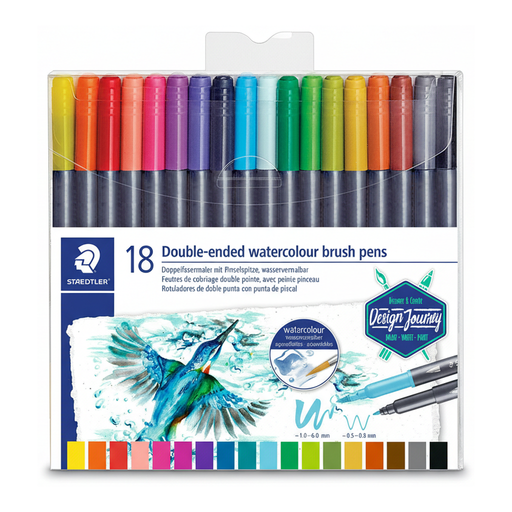
Why this choice suits this profile: Those who switch between illustration, creative writing, and watercolour effects get two tips per pen, without having to carry multiple sets.
The dual-tip format covers both details and washes, whereas a set limited to a single width quickly shows its limitations.
A flexible brush tip and a fine tip per pen, with water-based ink designed for blending and dilution.
We have put together a comprehensive, real-time updated selection of products that meet these demanding criteria and European safety regulations.
For adult colouring, a 1 mm tip works well for both outlines and medium areas. If you enjoy creating gradients, choose watercolour pens or water-based ink markers, paired with paper that is thick enough to limit ink bleed-through.
They allow you to create washes and blends, but their behaviour depends on the amount of ink, water, and paper used. They offer a portable and precise solution, without replicating all the possibilities of a traditional watercolour palette.
The lifespan depends on how often you use them, the pressure you apply, and how well you close the lids. Proper storage, use on the recommended surface, and immediate capping help to prevent drying out and premature tip wear.