
Livraison le jour même ou le lendemain

Qualité garantie

Débloquez vos offres de bienvenue: Livraison GRATUITE | Jusqu'à -80 % | 30 jours d'essai gratuits à JoyPlus
Téléchargez l'application
A set of artistic colouring pens and markers can quickly become cumbersome if the nibs, ink and colours do not suit your needs. Between oversized assortments, claims of long-lasting performance and markers promoted as versatile, some purchases disappoint from the very first session.
Buyers in France regularly fall into three traps:
To buy with confidence, it is therefore best to examine the nib, ink type, set format and compatible surfaces.
Fine-tip pens of around 0.4 mm are suitable for outlines, annotations, maps and mandala details. Medium nibs, measuring approximately 0.7 to 1 mm, produce more visible lines, making them practical for colouring, headings and filling small areas.
Brush pens offer a variable line width depending on the pressure applied. They are particularly well suited to lettering, gradients and more expressive strokes. Dual-tip markers generally combine a fine nib with a brush or broad nib: a practical way to reduce the number of tools you need to carry, although their barrels can sometimes be bulkier.
For calligraphy, check that the set contains genuine calligraphy pens with calibrated nibs, rather than simply decorative pens with two ends. Both the finish and the handling can be very different.
Water-based ink pens are very common for drawing, colouring, notes and bullet journalling. They are generally easy to use and can create watercolour effects on sufficiently thick paper. It is still essential to check whether the ink is described as ‘washable’, ‘permanent’ or ‘water-resistant’, depending on your project.
Acrylic markers deposit a more opaque colour, particularly on wood, glass, ceramic, stone or canvas. Always test them on an inconspicuous area: adhesion and ease of cleaning can vary from one surface to another. Permanent markers are also not suitable for every surface or every school-related use.
For creations on dark paper, metallic gel pens can be used to add gold, silver or white highlights. Their fine nib is ideal for details, but allow the ink to dry thoroughly before layering other colours.
A rigid case or metal tin protects the nibs and makes organisation easier. For sets intended for bullet journalling, a colour chart also makes it easier to identify shades quickly and avoid duplicates.
Recap the pens carefully after every session. Storing them horizontally is often recommended to maintain a consistent ink flow. For children over 3 years old, check the recommended age on the packaging, keep caps out of reach of younger children and prioritise supervised use.
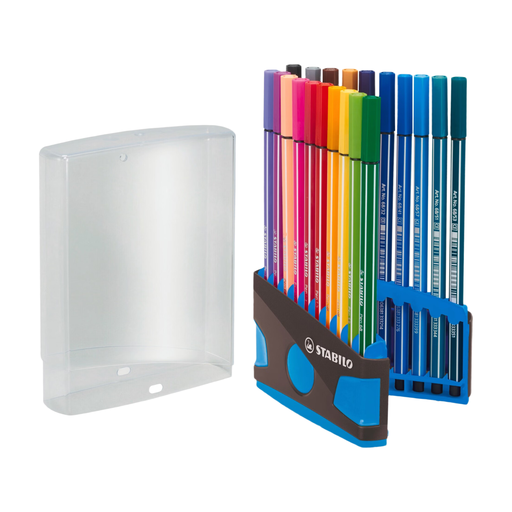
Why this choice suits this profile : With its 20 colours, this set provides a versatile foundation for drawing, colouring, mandalas and your first bullet journalling projects. Its rigid case can be reused every day.
Its 1 mm bullet nib helps you avoid choosing an assortment without a clear purpose, while the water-based, odourless ink and case support well-organised everyday use.
20 shades, 1 mm nib, odourless water-based ink, ColorParade case and barrel made from 96 % certified ISCC PLUS bio-based plastic.
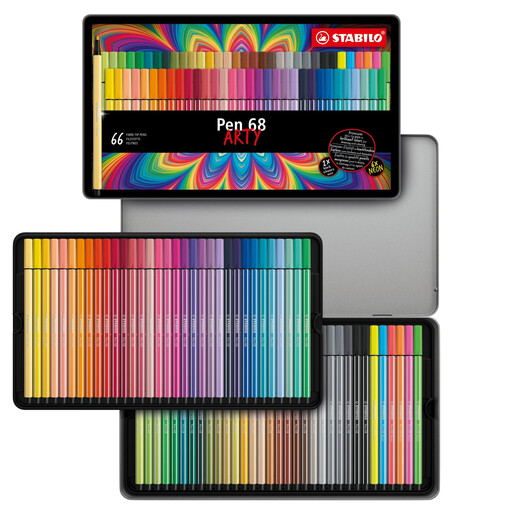
Why this choice suits this profile : Fans of extensive palettes get 65 colours in a metal tin designed for easy organisation and transport.
The complete palette reduces the risk of running out of shades, while the metal tin protects the pens better than soft, poorly organised storage.
65 colours, 1 mm M nib, odourless water-based ink and an anti-drying function claimed to last for up to 24 hours without the cap.
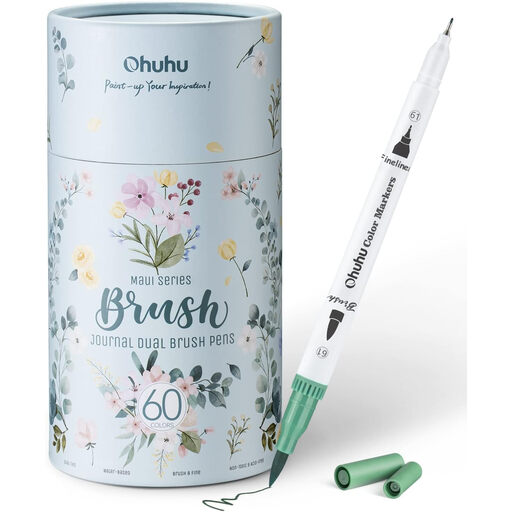
Why this choice suits this profile : Creators who switch between precision, colouring, drawing and calligraphy benefit from two nibs per pen and a palette of 60 numbered colours.
The 0.4 mm fineliner nib complements the 1 to 6 mm brush nib: one set covers both fine details and broad strokes, without the need to buy multiple products.
60 colours, colour chart, five replacement nibs and water-based ink designed to blend on suitable paper.
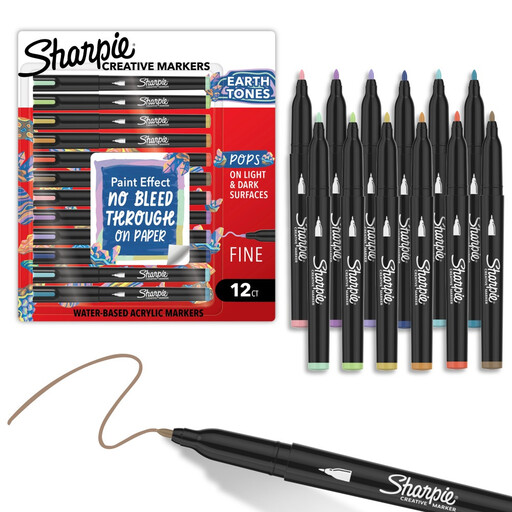
Why this choice suits this profile : This set is designed for personalisation projects, creative hobbies and drawing on surfaces such as wood, metal, ceramic, glass or canvas.
The product details specify the compatible surfaces and state that the ink is water-based acrylic; testing it beforehand is still recommended on delicate or treated surfaces.
12 assorted colours, fine tip, opaque finish and the option to layer shades, in line with the manufacturer's guidance.
We have put together a complete, real-time updated selection of products that meet these demanding criteria as well as European safety standards.
For writing, drawing borders and creating small illustrations, pair STABILO point 88 fineliners in 0.4 mm with water-based colouring pens. Test them on a less visible page to check that the ink does not bleed through the paper.
A brush pen has a flexible nib designed to vary the line thickness. A dual-tip marker generally combines two uses, such as a fine nib and a brush nib. This configuration is practical for lettering and drawing on the go, but each nib must be capped carefully.
Replace the caps immediately, store the pens horizontally when recommended by the manufacturer, and keep them away from heat and direct sunlight. For acrylic or permanent markers, protect your work surface as well: stains can be difficult to remove.