
Livraison le jour même ou le lendemain

Qualité garantie

Débloquez vos offres de bienvenue: Livraison GRATUITE | Jusqu'à -80 % | 30 jours d'essai gratuits à JoyPlus
Téléchargez l'application
The promise of an artificial plant? Year-round greenery without the hassle of watering, sunlight, or maintenance. But disappointment is common: from colours that fade in the sun to a cheap plastic appearance, it's easy to regret your purchase.
As a product expert at Joybuy, my mission is to help you navigate the options. Here are the key things to watch out for and the essential criteria for finding realistic fake plants that will transform your spaces for years to come.
To avoid buyer's remorse, learn to spot the flaws that separate a good investment from a disappointment.
To ensure an aesthetic result and excellent longevity, examine these three key points.
The visual appeal of an artificial plant depends above all on the quality of its materials.
If your plant is intended for a balcony, garden, or entryway, the "UV-treated" label is essential. This treatment, infused directly into the material during manufacturing, prevents pigments from degrading under sunlight. Without it, your investment will lose all its vibrancy in just a few months. This is a critical criterion for outdoor artificial plants and privacy screens.
A quality plant should adapt to your space, not the other way around.
To illustrate these criteria, here are a few models that meet specific needs.

Why we chose it: Ideal for wedding or party decor, this garland instantly dresses up a table runner, arch, or wall. Its 2-metre length offers great arrangement flexibility.
The silk fabric roses and textured eucalyptus leaves bypass the cheap "plastic" look. The result is elegant and realistic, even up close.
Ready to use and reusable, it's a budget-friendly and sustainable alternative to fresh flowers, perfect for recurring events.
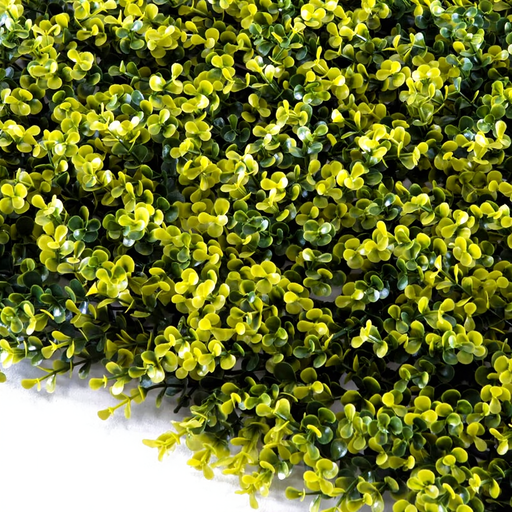
Why we chose it: Perfect for creating a green privacy screen on a balcony, patio, or for concealing a drab wall. Its dense foliage provides effective screening and an immediate lush effect.
Made from UV-treated polyethylene, this panel guarantees a colour that won't fade in the sun, unlike entry-level models.
Its modular structure allows you to easily assemble multiple panels to cover any surface. Installation is a breeze thanks to the interlocking system.

Why we chose it: For those who want an elegant floral touch without the maintenance. This bouquet of 10 roses will fit perfectly in a vase, on a console table, or on a desk.
The 50 cm stems are reinforced with metal wire, which solves the problem of fragility. You can cut or bend them to fit any vase and create a custom arrangement.
The silk fabric petals offer a much more realistic look and feel than plastic. The UV treatment also ensures excellent colour retention, even near a window.
For a special occasion like a wedding, it's the details that make all the difference. We've selected products for you that meet our strictest quality criteria.
1. How do I clean an artificial plant without damaging it? For a simple dusting, a feather duster or a soft, dry cloth will do the trick. For a deeper clean, a slightly damp cloth or a hairdryer on a cool setting will dislodge dust from every nook and cranny. Above all, avoid harsh chemical products that could damage the colours and materials.
2. Do outdoor artificial plants really withstand frost and rain? Most high-quality outdoor artificial plants are designed to withstand the elements, including rain. Polyethylene (PE) is an inherently waterproof material. As for frost, they handle it much better than natural plants. Their main enemy remains the sun, which is why the UV treatment is so crucial.
3. What's the difference between a silk plant and a plastic (PE) one? Plastic (PE) is mainly used for structured foliage (boxwood, eucalyptus, green plants) for its rigidity and durability. Polyester silk, on the other hand, is reserved for more delicate parts like the petals of artificial flowers to achieve a finer, more realistic look. The best products often combine both materials for an optimal result.