
Livraison le jour même ou le lendemain

Qualité garantie

Débloquez vos offres de bienvenue: Livraison GRATUITE | Jusqu'à -80 % | 30 jours d'essai gratuits à JoyPlus
Téléchargez l'application
Who doesn't dream of enjoying their balcony, terrace, or garden away from prying eyes? But between trimming, watering, and treatments, a natural hedge can quickly become a headache. That's where the artificial hedge comes in: a practical and durable solution for creating a green sanctuary, without the drawbacks of its living counterpart.
In this guide, we'll break down the key criteria for choosing an artificial privacy screen and present a selection of products tailored to every need, whether you're looking to dress up a fence, decorate a wall, or secure the privacy of a balcony.
To ensure you make the right choice, here are the essential points to check before you buy.
The first decision to make is the format.
The realism of a synthetic hedge primarily depends on the quality of its artificial foliage. The leaves can mimic various species (ivy, laurel, boxwood, photinia...), making the choice largely a matter of taste.
Two technical details make all the difference:
Your project will directly guide your choice.
To help you decide, here are three models that stand out for their features and applications.
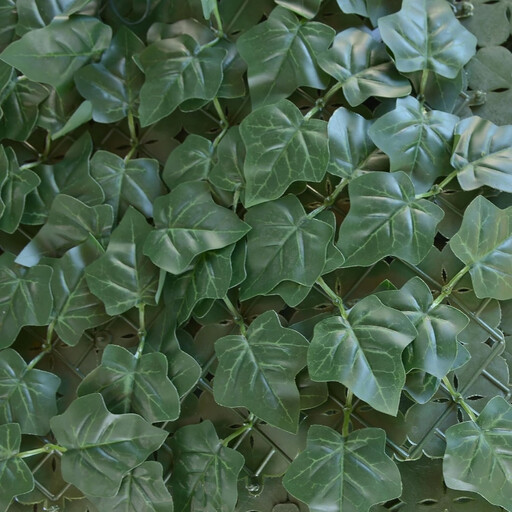
Key Feature This roll model mimics ivy foliage with stunning realism. The polyethylene leaves are attached to a flexible backing that provides near-total screening while remaining attractive from both sides. A major advantage for balcony dividers or shared fences.
Advantages
Who is it for? For those seeking a fast, elegant, and effective screening solution for a standard-sized balcony, terrace, or fence. Its artificial hedge roll format makes it especially practical.
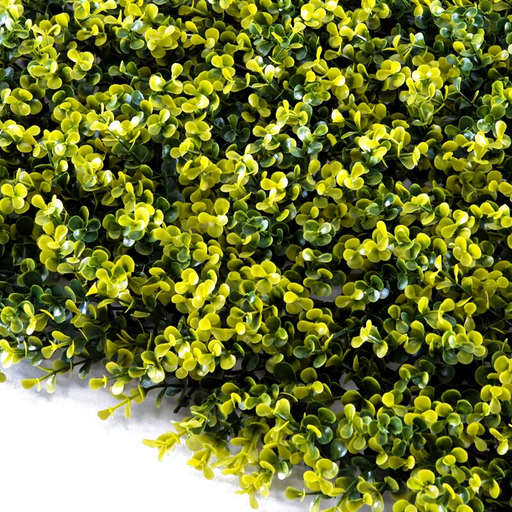
Key Feature This product comes in interlocking modular panels. Its main asset is its 3D boxwood foliage, which adds volume and a very natural effect from any angle. The plastic grid structure allows for complete modularity, with each panel even being cuttable into smaller sections.
Advantages
Who is it for? For creative minds looking to design decorative green walls, conceal specific areas, or create custom vertical gardens. Its modularity is a real bonus for out-of-the-ordinary projects.
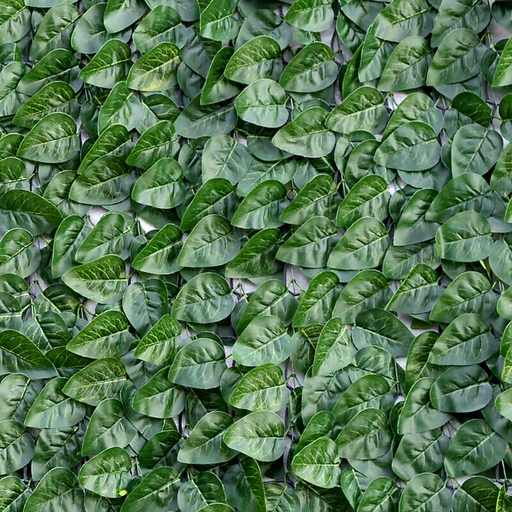
Key Feature This large-format roll (1.5 x 3 m) is designed to quickly cover large areas. Its foliage, mimicking laurel, is made of high-density polyethylene (HDPE), a material known for its durability. It provides a dense and long-lasting screening solution for large fences or unsightly walls.
Advantages
Who is it for? For garden owners who want to install an artificial fence over a long distance or hide large, unsightly features. Its sturdiness and size make it an incredibly practical option for large-scale projects.
An artificial hedge is perfect for creating privacy. But if your project also includes real, low-maintenance plants, take a look at our dedicated selection to enhance your outdoor space.
? Discover our selection of Ornamental Grasses and Conifers
The longevity of a synthetic hedge depends primarily on the quality of its materials and its UV protection. A well-made product, crafted from UV-treated polyethylene (PE) or HDPE, can maintain its appearance and properties for 5 to 10 years, or even longer, even when exposed to direct sunlight and harsh weather.
Installation is usually very simple. For roll models, just unroll them along the support (wire fence, railing) and secure them at regular intervals with zip ties or plastic-coated wire. For panels, they clip together before being attached to the wall or support with screws or ties. Be sure to pull the product taut to prevent it from catching the wind.
Yes, quality artificial hedges are designed to withstand outdoor conditions. Their open-work structure (often a plastic grid) allows air to pass through, which reduces wind load. The UV treatment and rot-proof plastic protect them from both rain and sun. The secret to their long-term durability? A solid installation with closely spaced attachment points to stand up to strong gusts.