
Livraison le jour même ou le lendemain

Qualité garantie

Débloquez vos offres de bienvenue: Livraison GRATUITE | Jusqu'à -80 % | 30 jours d'essai gratuits à JoyPlus
Téléchargez l'application
Beautiful all year round and never needing a drop of water, artificial flowers are a fantastic solution for adding greenery to our homes, balconies, and even for special occasions. Be careful, though—the market is a jungle where the best sits alongside the worst. To avoid disappointment, you need to know how to read between the lines of marketing descriptions and understand the true quality criteria that guarantee a stunningly realistic look and excellent durability.
As the Head of Product Selection at Joybuy, my mission is to help you see things more clearly. Forget the jargon and empty promises; it's time for facts to help you make a truly informed choice.
Before you take the plunge, keep an eye out for these three common pitfalls that can quickly turn an exciting purchase into a bitter disappointment.
To be sure of the quality of your future artificial flowers, carefully examine these three key points.
The visual effect depends above all on the material. There are three main types:
For a balcony, a terrace, or for decorating a gravesite, UV resistance isn't an option—it's the number one criterion. Without this specific treatment, even the most beautiful arrangement will lose its vibrancy in just a few months. Explicitly look for "UV-treated" or "UV-resistant" in the product description. This is your only guarantee for artificial flowers for cemeteries or gardens that will last through the seasons without losing their beauty.
A quality stem must have a wire core. This structure is what allows you to bend, curve, and adjust each flower to create a harmonious and lively artificial flower bouquet. It's essential for your DIY projects, centrepieces, or simply for adjusting the height of the flowers to your vase. Avoid 100% plastic stems, which are often too stiff or brittle.
To put theory into practice, here are a few products that perfectly illustrate these criteria, for different uses and projects.
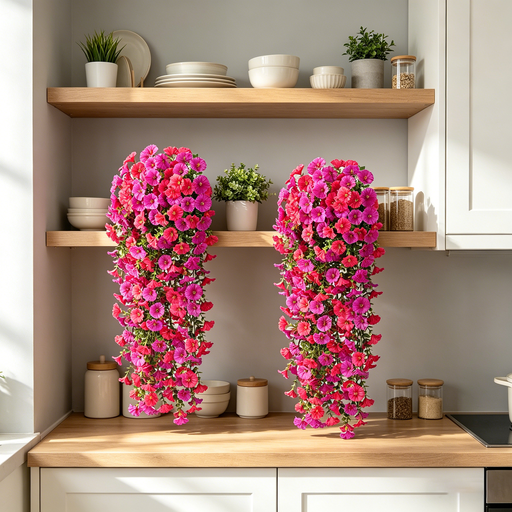
Why we love it: Specially designed for hanging planters, these trailing plants generously adorn a porch, balcony, or pergola. They inject a dose of lush colour where maintaining real plants is a headache.
The materials are advertised as weather- and fade-resistant. A major plus for combating premature ageing, the Achilles' heel of low-end outdoor models.
With a single set, the 4 very dense branches (nearly 128 flowers in total) create a spectacular, full effect. You get all the volume with none of the maintenance.
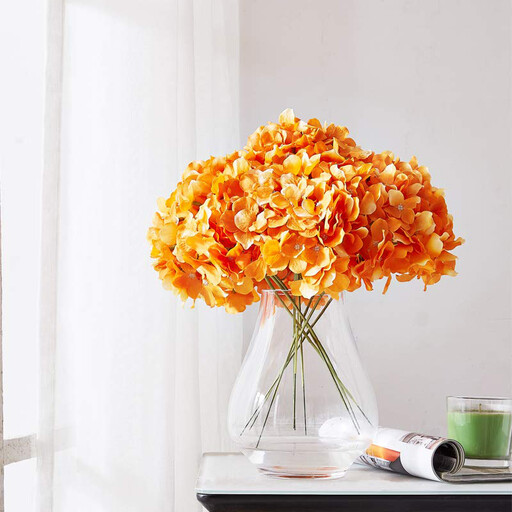
Why we love it: The perfect ally for DIY enthusiasts and event planners. These hydrangeas are ideal for creating custom centrepieces for wedding floral decor, unique bouquets, or home arrangements.
The stems, delivered separately, include a wire core. Say goodbye to the trap of rigid, brittle flowers! You can cut and shape them as you wish for total creative control.
The quality silk fabric and generous hydrangea heads ensure a strong visual impact and a realistic look, light-years away from the dreaded plastic effect.
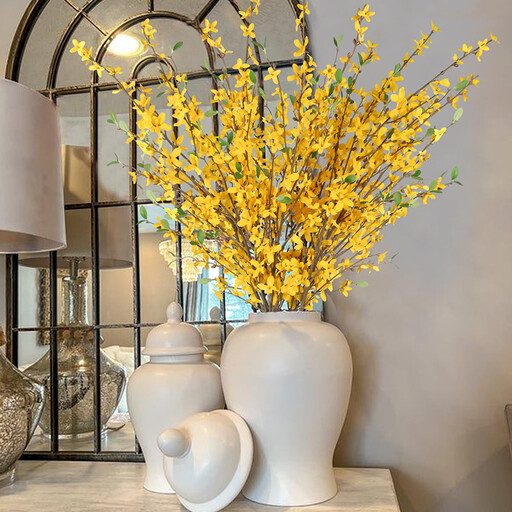
Why we love it: With their long, slender stems, these forsythia branches create a dramatic focal point in a large vase, whether placed on the floor or on a console table. A touch of nature and a burst of colour to liven up a contemporary interior.
The high-quality silk fabric replicates the delicate look of real flowers, banishing the plastic effect. Thanks to their flexible stems, you can give them a natural and graceful curve.
Their tall size (1 metre) is a rare advantage. It allows for spectacular vertical arrangements worthy of a professional designer's installation.
We've put together a complete selection of products that check all the boxes in our guide.
For simple dusting, a blast from a hairdryer on the 'cool air' setting at low power is sufficient. For a deeper clean, gently wipe with a slightly damp microfibre cloth. Above all, do not use any harsh chemical products: they could damage the colours and the material.
It all depends on their quality and sun exposure. Well-made, UV-treated outdoor artificial flowers can remain flawless for several seasons. Conversely, a low-end, untreated model is likely to fade after the first summer.
The secret is in the mix! Combine different varieties of flowers and foliage to play with textures and volume. Don't hesitate to bend the stems at different angles for a less uniform, more organic look. The ultimate trick? Use an opaque vase to hide the stems, or a clear vase filled with clear-setting resin to simulate water.