
Livraison le jour même ou le lendemain

Qualité garantie

Débloquez vos offres de bienvenue: Livraison GRATUITE | Jusqu'à -80 % | 30 jours d'essai gratuits à JoyPlus
Téléchargez l'application
An artificial Christmas tree can make your festive decorating much simpler – provided you check a few details before buying. A flattering photo, an advertised height or the word "realistic" isn't always enough to judge a model's quality.
The most common issues relate to stability, the actual volume of the branches and storage once the festivities are over. Here are the criteria to consider when choosing a tree for your home, office or business.
A 150 cm artificial tree can work perfectly well in a compact living room, bedroom or office. But once the branches are spread out, its width is just as important. Conversely, an 180 cm artificial tree makes more of a statement, but requires a high enough ceiling and a clear area around it.
So, check:
A realistic tree owes its appearance to branch density, shape and how well you can arrange them. A very compact model in its box can look sparse if the branches aren't distributed well enough.
The presence of PVC branches, a metal frame and a separate stand should be clearly stated. This information helps you understand the product's construction, without guaranteeing it will look exactly like a real tree.
A stand that's too light or poorly fixed can make the tree unstable, especially once it's loaded with tinsel and baubles. Similarly, a dismantlable Christmas tree that's difficult to fold away can take up a lot of space for the rest of the year.
Before ordering, choose a tree with a stable stand and removable sections. In a small home, a foldable Christmas tree can also make transport and storage easier. However, do check its fixing system and the sturdiness of its base.
For a medium-sized space, the following sizes suit different uses:
Leave a gap between the top of the tree and the ceiling. This way you can place a star or decoration on top without squashing the branches.
Models that mention a combination of PVC, metal and plastic give you a good idea of the construction. PVC usually forms the branches, metal reinforces the structure and plastic often makes up the stand.
Also consider:
Whatever materials are used, standard precautions are essential. An indoor tree should be kept away from flames, radiators and any other heat source.
Simple assembly reduces the risk of incomplete setup. Each section must be properly fitted together before adding decorations. The stand should sit on a flat surface and not be obstructed by a thick rug or heavy foot traffic.
Small removable parts also need extra care in homes with young children. The product sheets consulted mention indoor use and, for some models, a minimum age of 3 years.
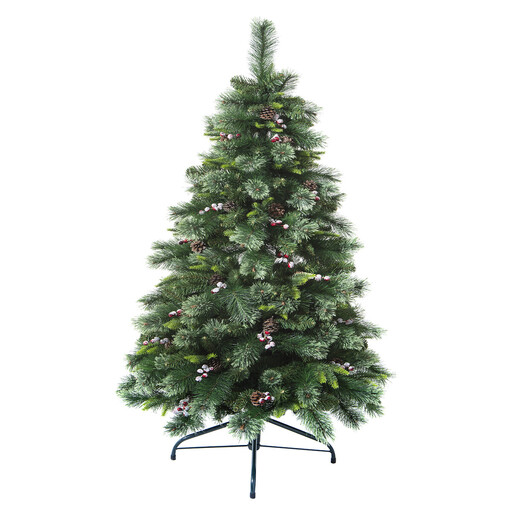
Why this choice suits this profile: Its height works well for small or medium rooms, while assembly and dismantling remain straightforward.
The listing mentions a stable stand and removable sections – two things to check against poorly documented models.
Height of 150 cm, PVC branches, metal frame and plastic base are all clearly stated.
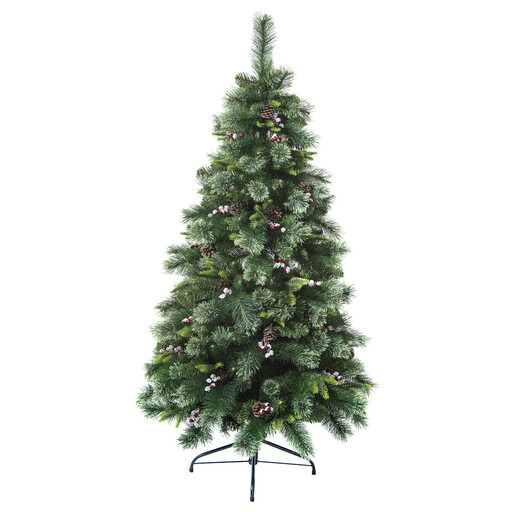
Why this choice suits this profile: Its 180 cm size fits larger rooms, halls, offices and commercial spaces.
Its multi-section structure and stand described as sturdy address the main assembly and stability issues.
Height of 180 cm, branches described as dense, stand included and easy storage after dismantling.
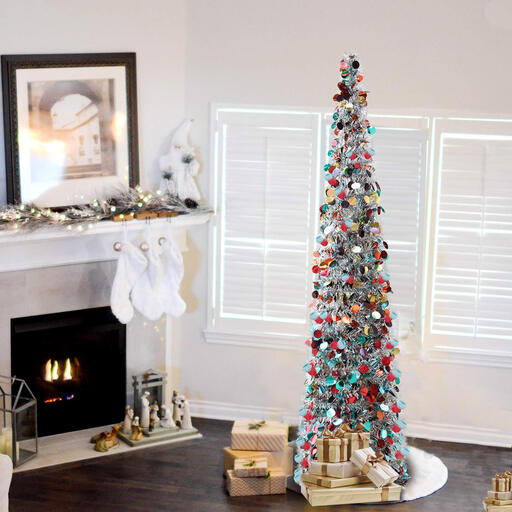
Why this choice suits this profile: Its foldable design and removable stand suit repeated setups, hallways and small spaces.
Its collapsible design reduces handling and the volume to store between decorating periods.
Advertised height of 152 cm, removable stand and tool-free assembly according to the product description.
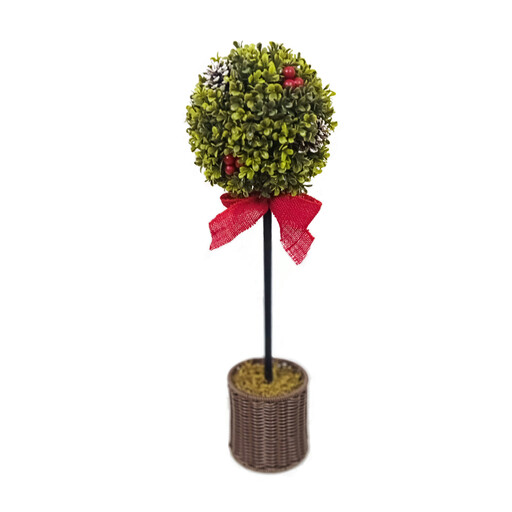
Why this choice suits this profile: This compact size sits on furniture, a counter or in a hallway where a large tree would be too bulky.
Its advertised height of 60 cm lets you control the footprint, rather than choosing a tree based only on its photo.
A compact decoration with berries and pine cones, the latter made from natural materials according to the product listing.
We've compiled a complete, real-time selection of products that meet these exacting criteria, as well as European safety standards.
Place the stand on a flat surface, then assemble the sections following the instructions. Check each joint before arranging the branches. For a fuller silhouette, gradually spread the branches from the bottom upwards, without pulling sharply on their tips.
For storage:
The cost of using an artificial tree depends mainly on its lifespan and the space needed to store it. A dismantlable or foldable model is practical if you reuse it regularly, while a smaller size works better for secondary displays.
Use the stand provided, place it on a level floor and make sure all sections are properly fitted together. Avoid concentrating heavy decorations on one side. In a busy area, also leave enough space around the base.
Its lifespan depends on the materials, how often it's assembled and storage conditions. Storing it in a dry place without compressing the branches too much helps preserve its appearance. Also check the stand and fixings before each new setup.
A 150 cm artificial tree can work in a medium-sized living room if its width is compatible with the room. For a table, hallway or office, a small Christmas tree around 60 cm limits the footprint. A foldable model is also a good option when storage space is tight.