
Livraison le jour même ou le lendemain

Qualité garantie

Débloquez vos offres de bienvenue: Livraison GRATUITE | Jusqu'à -80 % | 30 jours d'essai gratuits à JoyPlus
Téléchargez l'application
An artificial Christmas tree has some serious advantages: it's reusable, there are no needles to sweep up, and it always looks flawless. However, buying one can quickly become a headache, or even a disappointment, if you don't know what to look for. The gap between the flattering photos online and the reality upon unboxing can be huge. To avoid falling for the hype, here are the most common pitfalls to watch out for.
Keeping these weaknesses in mind is the first step toward a purchase you won't regret.
To choose an indoor decorative tree that will bring you joy for years to come, rely on objective technical criteria rather than marketing hype.
The realism of an artificial Christmas tree depends above all on the quality of its needles. Two materials dominate the market:
The best models often mix both: PE branches on the outside for maximum realism, and PVC branches on the inside to add fullness at a lower cost. Also, check the tip count: the higher it is for a given height, the denser and fuller the tree will be. A snow-flocked tree, with high-quality flocking, can add a touch of magic and enhance the illusion.
First things first: measure your room's ceiling height. A 180 cm (6 ft) artificial tree is a classic choice for a standard living room. Allow a margin of at least 15 to 20?cm between the top of the tree and the ceiling to place your star or topper. Also, consider the diameter at the base: a full model looks majestic in a large space, while a "slim" version will fit more easily into a corner or an apartment.
For office decoration or a side table, a small Christmas tree of 60 to 90?cm is a solution that's as practical as it is charming, bringing in some holiday cheer without taking up too much space.
Ease of assembly is a convenience factor that should not be overlooked. Hinged systems, where the branches are pre-attached to the trunk and unfold like an umbrella, are by far the quickest to set up. Finally, insist on a sturdy metal base, especially for trees over 1.50?m. It's the guarantee of rock-solid stability, which is essential for everyone's safety.
There's a solution for every need. Here are a few models that caught our eye, each catering to a specific profile while avoiding the usual pitfalls.

Why we love it: Perfect for an apartment, a studio, or for adding a festive touch to a desk. Its compact size allows it to be placed on a table, counter, or windowsill without taking up floor space.
It avoids the assembly headache: you just need to fluff out its branches. Its burlap base ensures good stability for its size, a far cry from cheap plastic stands.
Ready to use and easy to store. Delivered with its red berries and pinecones, it offers a turnkey decoration.
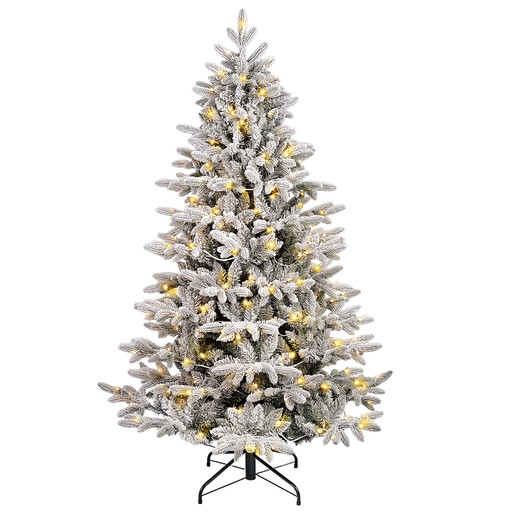
Why we love it: For those who want a spectacular tree without the hassle. With its beautiful 180 cm height, snow effect, and integrated lights, it becomes the centerpiece of a living room or entryway.
It meets the density challenge with its 1230 tips mixing PVC and PE. Its quick assembly system (hinged branches) and 300 pre-installed LEDs save you the chore of assembly and untangling lights.
An immediate "wow" factor, combining density, successful flocking, and warm white lighting.
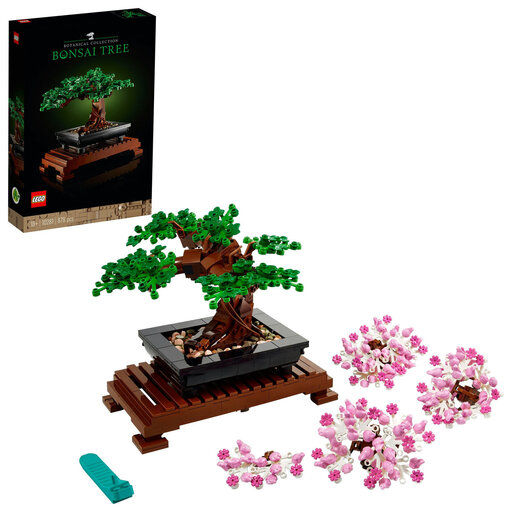
Why we love it: For those who see a Christmas tree as a design object and an experience in its own right. This LEGO Bonsai tree is both a relaxing building project and a unique decorative piece for the home or office.
It doesn't try to imitate a real tree, thus avoiding the "all-plastic" trap. It's an artistic reinterpretation that embraces its nature, turning a potential flaw into a creative strength.
Customisable with two sets of "leaves" (green or pink cherry blossoms), it also offers a mindful building experience.
Beyond traditional trees, the world of decorative trees is full of original options like the crystal tree of life, which can become both an aesthetic and energetic focal point in a room.
Explore our full selection of products that meet our quality criteria and current safety standards.
The lifespan of your artificial tree largely depends on how it's stored. The best way is to keep it in its original box or a dedicated storage bag. Choose a dry place away from light, like an attic or a large closet, and avoid damp basements. Try not to compress the branches too much so they maintain their shape year after year.
The initial investment for a quality artificial tree is certainly higher than for a natural one. However, the cost is typically recouped in 3 to 5 years. In the long run, the savings are real, not to mention avoiding the annual chore of buying and recycling a natural tree.
Yes, provided they comply with European safety standards, which is guaranteed by the CE marking. Always remember to check for it on the product page. As a simple precaution, always unplug your tree when you leave the house or before going to bed.