
Livraison le jour même ou le lendemain

Qualité garantie

Débloquez vos offres de bienvenue: Livraison GRATUITE | Jusqu'à -80 % | 30 jours d'essai gratuits à JoyPlus
Téléchargez l'application
As the holidays approach, the age-old question of the Christmas tree comes up again. The artificial tree is emerging as a smart choice that's both practical and cost-effective in the long run. The problem? The market is flooded with models of widely varying quality. How can you separate the wheat from the chaff and avoid a purchase you'll regret from the moment you unbox it?
As a product expert for the editorial team, my mission is to help you see things more clearly. Let's cut through the marketing jargon and get straight to the point. Here are the pitfalls to avoid and the essential criteria for choosing the perfect tree.
To avoid these pitfalls, there are a few points to verify. Focus on these three criteria, which make all the difference in the quality and durability of your artificial Christmas tree.
The realism of an artificial tree primarily comes down to its needles. There are two main technologies:
Another key indicator is the number of tips (or branch tips). The higher this number for a given height, the denser and fuller the tree will be, effectively hiding its central structure.
When it comes to safety, there's no room for compromise. For a tree of 150 cm or taller, always opt for a metal stand. It provides a much wider and more stable base than a plastic one, significantly reducing the risk of tipping. Also, check the assembly system: models with automatic deployment ("umbrella" style) are infinitely faster to set up and take down than systems where each branch must be attached manually.
Measure your room's ceiling height before any purchase, leaving a clearance of at least 15 to 20 cm for the star or tree topper. Also, consider the tree's diameter once it's fully fluffed. A very wide model can quickly become cumbersome in a small living room. Product pages usually mention this dimension, which is crucial for being able to move around the tree easily without having to be a contortionist.
Because every home is unique, here is our selection of models designed for different needs, all vetted against our quality and practicality criteria.
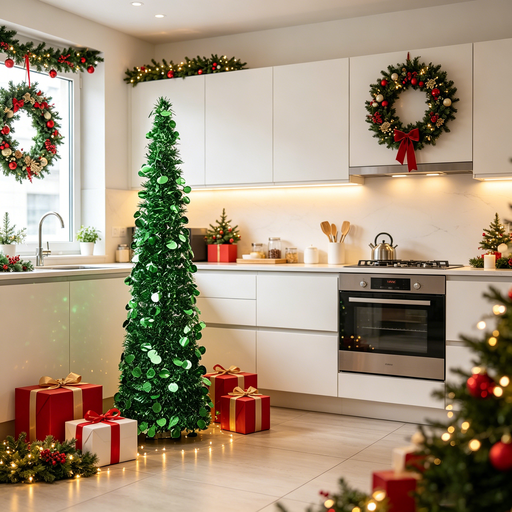
Why we chose it: Perfect for small apartments, studios, an office, or as a secondary tree. Its pop-up design is an ingenious solution for those short on space and time.
It eliminates assembly and storage hassles. Its collapsible design allows it to be stored flat in a very slim box, and setup takes just a few seconds.
Ultra-compact and budget-friendly. Its "tinsel" structure provides an instant festive look, even without any extra decorations.
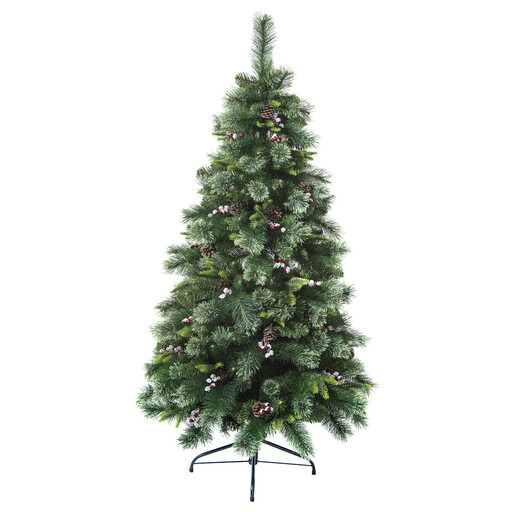
Why we chose it: The centrepiece of the family living room. This large 180 cm tree instantly creates a classic, warm Christmas atmosphere, ready to hold dozens of ornaments.
Its dense, high-quality PVC branches prevent the cheap "plasticky" look. Its sturdy metal base ensures perfect stability, even when heavily decorated.
The perfect balance of impressive height, a full appearance, and easy assembly for a picture-perfect Christmas.
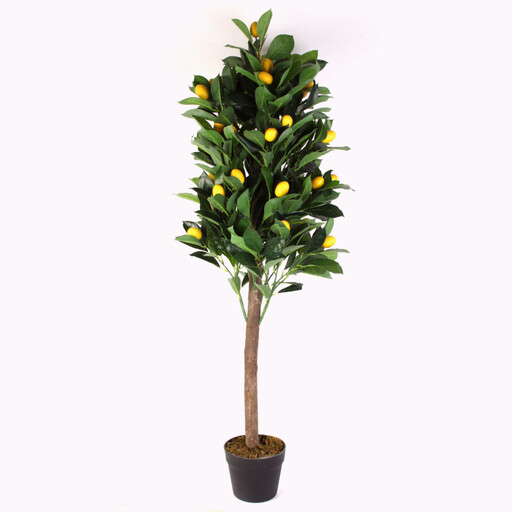
Why we chose it: The perfect alternative to a traditional Christmas tree for those who want a touch of greenery that lasts all year. It can be decorated for the holidays or simply enjoyed in its natural state.
It sidesteps the issue of seasonality. Since it's not a Christmas tree, it isn't confined to the holiday period and fits perfectly into your decor, no matter the time of year.
Zero maintenance for a sunny, Mediterranean touch at home. Perfect for an office, entryway, or living room.
Explore our full selection of models that meet our quality criteria and safety standards.
A good-quality artificial tree, properly maintained and stored away from light and moisture, can easily be reused for 10 to 15 years, or even longer. It's an investment that pays for itself over time.
The secret is to take the time to meticulously "fluff" each branch and tip during setup. Work from the trunk outwards and angle the tips in different directions to fill in any gaps. Adding thick garlands or wide ribbons can also help create an illusion of fullness.
Initially, a quality artificial tree has a higher upfront cost than a real one. However, the investment is paid off in just a few years. If you buy a real tree every year, the artificial option becomes more economical after 3 to 5 years on average, not to mention the time saved and simplified logistics each year.