
Livraison le jour même ou le lendemain

Qualité garantie

Débloquez vos offres de bienvenue: Livraison GRATUITE | Jusqu'à -80 % | 30 jours d'essai gratuits à JoyPlus
Téléchargez l'application
Every year, it's the same dilemma: a real tree or an artificial Christmas tree? If you're the type who prefers convenience, long-term savings, and a needle-free living room, the fake Christmas tree has a lot to offer. But be warned: the market is flooded with models of widely varying quality. It's easy to fall for the classic traps that turn the dream into a disappointment.
To help you make the right choice, here are the two most common mistakes to avoid:
This guide is here to help you avoid these pitfalls and identify the criteria that truly make a difference for a successful and long-lasting purchase.
To make the right choice, don't just focus on the height. Three technical criteria are crucial for judging the quality and practicality of your tree.
The realism of an artificial tree primarily depends on the material of its needles.
An easy-to-assemble Christmas tree is a guarantee you'll save precious time each year. The branch assembly system is the crucial point here.
Also, be sure to check the type of stand provided. A metal stand is a guarantee of stability, which is essential for large trees or if you have children or pets.
The advertised height usually includes the stand, from the floor to the very top. For a harmonious look, leave at least 15 to 20 cm between the top of the tree and your ceiling.
Also, consider its diameter once fully fluffed. Make sure it won't obstruct walkways.
Keeping these criteria in mind, here are some options that meet specific needs and will help you avoid disappointment.
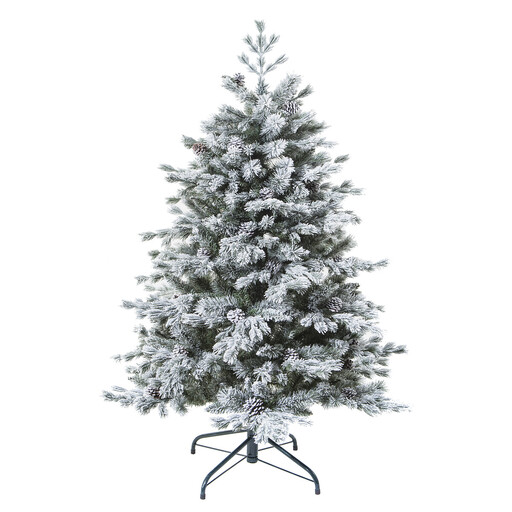
Why it's a great choice: At 150 cm tall, it fits perfectly into most apartments and living rooms without overwhelming the space. It's an ideal size for a first long-term investment or for those who don't want a huge tree to dominate the room.
Its dense, high-quality PVC branches are designed to provide a full look, avoiding the "sparse" effect of low-end models. Its simple assembly system and stable stand prevent unpleasant surprises during setup.
The perfect balance of a compact size, great density, and effortless assembly and storage.
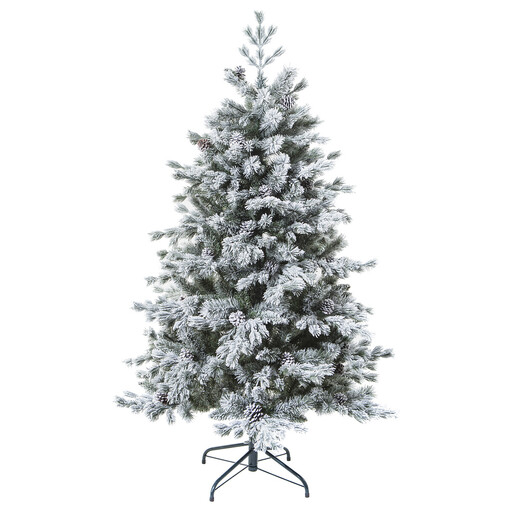
Why it's a great choice: Its 180 cm height makes it a spectacular centrepiece, ideal for living rooms with generous proportions or entryways that deserve an unforgettable festive atmosphere. It provides a strong visual presence.
The density of its branches is proportional to its large size, ensuring a full and majestic appearance. The sturdy metal stand provides rock-solid stability, a non-negotiable feature for a tree of this size.
A majestic presence and a beautifully realistic look to become the centrepiece of your holidays, year after year.
Once you've chosen your tree, the Christmas atmosphere is often completed with a cosy source of heat. For those looking to recreate the atmosphere of a fireplace, other options exist.
Discover our full selection of products, all tested and approved according to strict criteria and current standards.
A good quality artificial tree, handled with care and stored correctly in its box (away from moisture and light), can easily last 10 to 15 years. It's an investment that pays for itself in the long run compared to the annual purchase of a real tree.
The secret to a full, bushy tree is "fluffing" (or shaping the branches). Don't skip this step; it makes all the difference. Start with the bottom branches, near the trunk, and work your way outwards and upwards. Separate each small tip from the main branch and point them in different directions (up, to the sides...) to fill in the gaps and create natural volume.
The debate is complex. The manufacturing of an artificial tree (using plastic and metal) has a higher initial carbon footprint than that of a real tree. However, this impact is offset over time. According to several life cycle analyses, an artificial tree becomes more eco-friendly than a real tree purchased annually, provided it is reused for at least 7 to 10 years. It is at this threshold that its initial impact is compensated for compared to the annual cycle of growing, transporting, and recycling a natural tree. It all depends on your commitment to keeping it for the long term.