
Livraison le jour même ou le lendemain

Qualité garantie

Débloquez vos offres de bienvenue: Livraison GRATUITE | Jusqu'à -80 % | 30 jours d'essai gratuits à JoyPlus
Téléchargez l'application
Whether you draw regularly, keep a bullet journal or are looking for a creative activity for a child, choosing art felt-tip pens and markers is not simply a matter of counting the colours. A set of 20 pens that suits your paper, technique and storage space can prove far more useful than a palette of 60 shades.
There are several common pitfalls to watch out for when buying:
The nib has a direct impact on the finish and ease of use.
For versatile use, a brush nib and fine nib combination is often more practical than a single nib that claims to do everything.
Water-based colouring pens and drawing pens are generally designed for paper. They can be used for colouring, decorative writing and bullet journalling, but the result will depend in particular on the paper weight.
Watercolour pens contain water-soluble ink. Apply it to suitable paper, then add water with a brush to create gradients and washes. Be careful with paper that is too thin, as it may buckle or allow the ink to show through on the reverse.
Acrylic markers, also known as paint markers, are better suited to working on wood, ceramics, glass, metal, canvas and certain plastics. The product details should specify which surfaces are compatible. It is best to test the marker on an inconspicuous area, especially if you are decorating an item that will be kept or displayed.
A set of art pens should be pleasant and easy to use. A rigid box, pencil case or compartmented wallet makes it easier to identify colours and transport the pens, whether between home, school, the studio or a class.
To keep your markers in good condition for as long as possible:
Claims such as ‘washable’ should be treated with caution: how easy a mark is to clean depends on the fabric, the time before washing and the stained surface. Even washable children’s pens are not completely guaranteed to leave no mark.
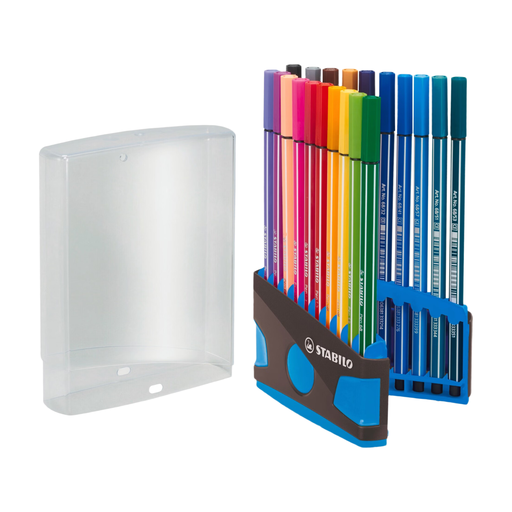
Why this choice suits this user: this set offers a palette of 20 colours, a 1 mm bullet nib and a reusable rigid box. It is ideal for first drawing projects, colouring and bullet journal pages.
The number of pens remains manageable and the 1 mm nib is clearly specified. This helps you avoid buying an assortment that is too large and difficult to make the most of.
The product details state that it has odourless water-based ink, a rigid case and drying resistance of up to 24 hours without a cap.
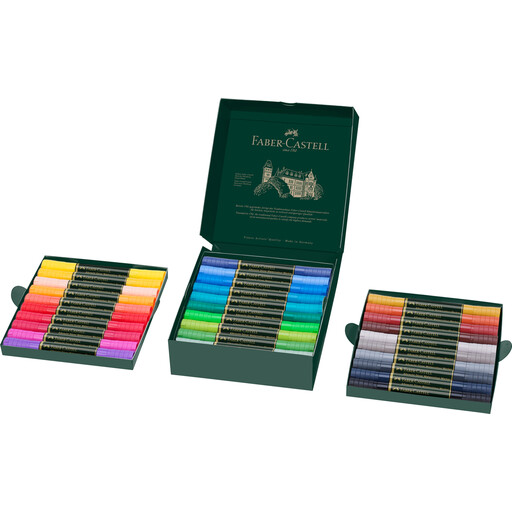
Why this choice suits this user: this set is designed for illustrators and enthusiasts who want to create watercolour effects, blends and details using two nibs per marker.
The watercolour function is clearly stated, while the two nibs distinguish broad coverage from detail work. There is no vague promise of universal use: each end has its own purpose.
The set includes 30 markers, a flexible brush nib, a fine nib and water-based ink described as water-soluble. The product details also mention good lightfastness.
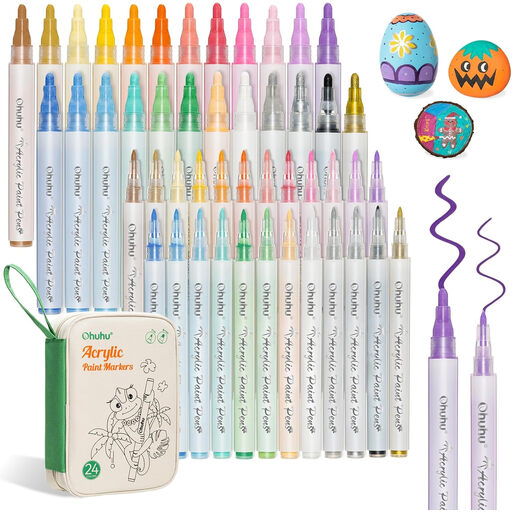
Why this choice suits this user: this set is aimed at creators who switch between detailed drawing, broad coverage and decorating different surfaces, including wood, ceramics, glass and canvas.
The nib sizes and compatible surfaces are clearly specified. This makes it easier to check that the set is right for your project before placing an order.
24 colours with duplicate nib options, a 0.7 mm fine nib and reversible round and chisel nibs. The product details state that the ink is water-based acrylic.
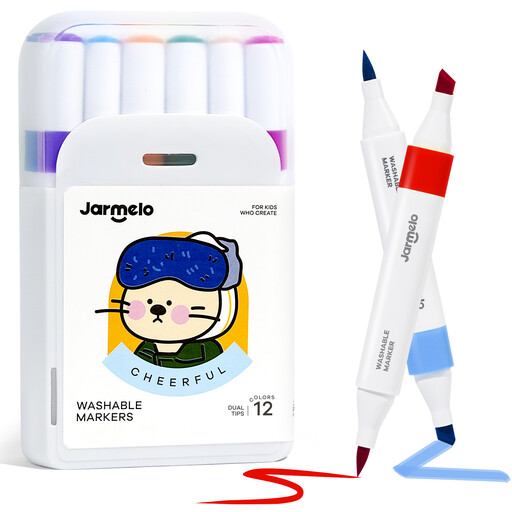
Why this choice suits this user: the set combines a brush nib and a chisel nib in a case with a handle. It is suitable for creative activities at home or on the go, under adult supervision.
The recommended age, ventilated caps and water-based composition are specified. Even so, the washable claim should still be checked promptly on each stain.
12 colours, two nibs per marker, water-based ink and a storage case with a handle. The manufacturer claims 90% washability on skin and most fabrics.
We have put together a complete, real-time updated list of products that meet these strict selection criteria and European safety regulations.
A marker’s lifespan depends on how often it is used, the pressure applied to the nib, the surface and how it is capped. A brush nib used on rough paper will wear out more quickly than a fine nib used on a smooth sheet. To preserve the ink, always replace the caps after use and follow the manufacturer’s storage recommendations.
Choose watercolour paper or heavyweight paper if you plan to add water. For lettering and bullet journalling, smooth paper reduces friction on the nib and helps prevent smudging. Test the pens on a sheet of the same type before working on a final page.
They can be used on paper, but their main advantage is that they allow you to decorate wood, glass, ceramics, canvas and certain plastics, subject to the manufacturer’s instructions. Allow each layer to dry as directed, then always test adhesion, coverage and durability on a small area.