
Livraison le jour même ou le lendemain

Qualité garantie

Débloquez vos offres de bienvenue: Livraison GRATUITE | Jusqu'à -80 % | 30 jours d'essai gratuits à JoyPlus
Téléchargez l'application
Buying art and stationery supplies seems straightforward… until you have to compare sets, sizes and marketing promises. Between the comprehensive but impractical palettes, pens that dry out in a few weeks, and creative kits that are always missing one accessory, so-called bargains can quickly end up costing you.
Whether you're a student, parent, teacher, bullet journal enthusiast or drawing beginner, three pitfalls crop up time and again:
To avoid nasty surprises, start by matching each product to the actual use you have in mind.
For a watercolour paint set, make sure it includes a mixing palette, a brush and a resealable case. Watercolour paper is still preferable to printer paper: it absorbs water better and warps less.
For pens, highlighters and pencils, look closely at the type of ink or lead stated:
A chisel tip usually lets you vary the width of your line. Models advertised as 1 to 5 mm or 2 to 5 mm give you more options for underlining, framing or decorating.
Brush pens have a flexible tip. The pressure you apply changes the line width, so they take a bit of getting used to, especially for calligraphy. For school or office use, a fine, consistent tip will often be easier to control.
For technical drawing, a propelling pencil with a push-button mechanism ensures a steady lead feed. Do check the refill diameter, and whether it comes with an eraser or a protective cap.
A metal case or rigid box protects your pencils and makes them easy to carry. For craft kits, also look at the list of included items: some projects will still need glue, scissors or an extra surface.
The quantity should mainly match how often you use them:
For children, check the recommended age, warnings and conformity information on the product page. Small parts, such as glitter or certain adult diamond painting accessories, need extra care.
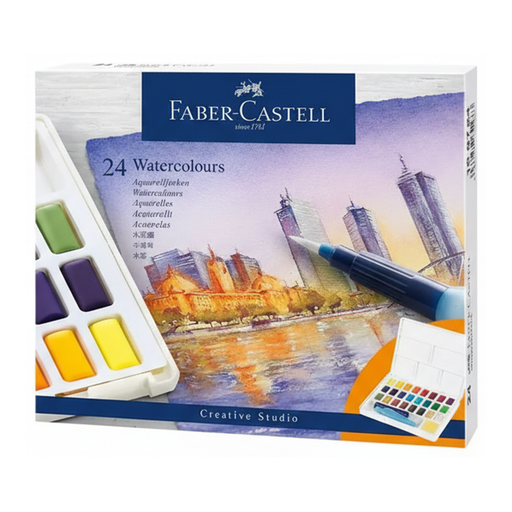
Why this suits this profile: With its 24 pans, synthetic brush and mixing palette, this set gives you the essentials in a portable format. Everything you need to start watercolour painting without buying each item separately.
The contents of the set are clearly listed, and the case closes securely to protect the colours between sessions.
24 colours, brush included, integrated palette and compact storage.
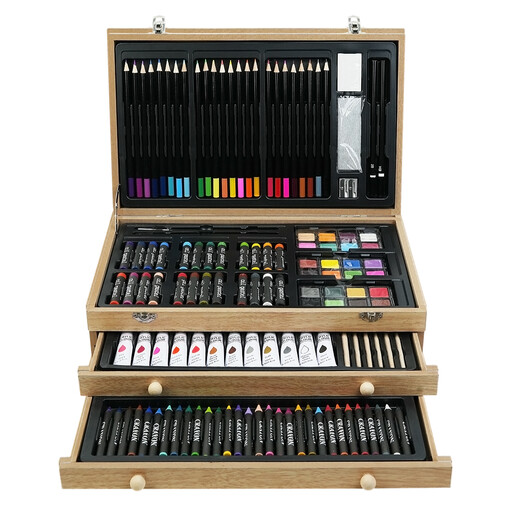
Why this suits this profile: With its 175 pieces and wooden box, this set is designed for those who want to try several techniques while keeping their materials neatly organised.
The box keeps the mess that large assortments can create under control. Still, take the time to check the full list of 175 items against what you actually do.
A very comprehensive assortment and a wooden case with handle for storing everything.
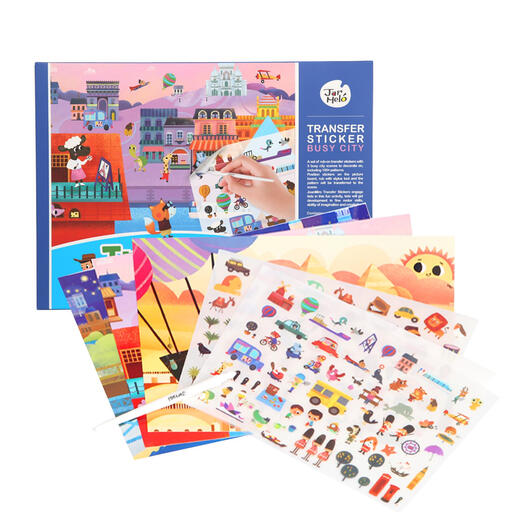
Why this suits this profile: This transfer sticker kit is suitable from age 3 and requires no glue or extra materials. It's easy to take along for a journey, a quiet activity at home or a classroom workshop.
The set includes 3 scenes, 2 transfer sheets with over 135 designs and a stylus. The transfers are single-use.
A glue-free activity, a portable format and a recommended age from 3 years.
For school and the office, HB graphite pencils, 0.5 mm propelling pencils, erasable gel pens and pastel highlighters already cover the essentials. A pack of 12 pre-sharpened M&G HB pencils makes a handy stash. For precise writing, the M&G 0.5 mm metal propelling pencil comes in a pack of three.
Bullet journal enthusiasts can pair WRITECH brush pens, available in 12 pastel or vintage colours, with chisel-tip highlighters. For a more classic approach, the STABILO BOSS ORIGINAL Pastel 15-piece set offers 14 pastel shades and two line widths stated as 2 mm and 5 mm.
For crafts, a six-colour glitter kit, a notebook, a few cards and some suitable glue are often enough to get started. Adult diamond painting projects mainly need a stable surface, good lighting and a sealed box to keep the small pieces safe.
We've put together a comprehensive, real-time selection of products that meet these exacting criteria and European safety standards.
A starter kit can be very simple: HB pencils, an eraser, a sharpener, a few coloured pencils or a watercolour set with a brush. Then add to your materials as you go, rather than buying a very large set straight away.
It all depends on how often you use them, the type of ink and how you store them. Put the lids back on after every use and keep felt-tips away from heat. The manufacturer's claims, such as resistance to drying out for several hours without a cap, don't mean you shouldn't keep them closed day to day.
Slip a protective sheet underneath the page and choose a suitable surface. For watercolour, go for paper designed for wet techniques. With felt-tips and highlighters, always test the colour on an inconspicuous area, especially if your notebook uses thin pages.