
Livraison le jour même ou le lendemain

Qualité garantie

Débloquez vos offres de bienvenue: Livraison GRATUITE | Jusqu'à -80 % | 30 jours d'essai gratuits à JoyPlus
Téléchargez l'application
A collection of art pens and markers can quickly add up if the features don't match how you actually work. A brush pen that's too soft will make detail work tricky, ink that bleeds through paper can ruin bullet journal pages, and a fine tip that isn't properly protected will lose its precision in no time.
Before you buy drawing pens, colouring markers or lettering supplies, there are three common pitfalls worth knowing about.
The right purchase starts with what you'll actually be doing: colourful writing, illustration, calligraphy, sketching, colouring, manga or journaling.
For detail work, 0.4 mm fineliners produce a fine line that's ideal for outlines, mandalas, diagrams and bullet journals. With its 0.5 mm tip, the WRITECH gel pen remains precise enough for writing and annotations, while giving a more visible line.
Brush pens work differently. Their flexible tip lets you vary the line width depending on how much pressure you apply. They're particularly handy for lettering, modern calligraphy, headings and expressive strokes. If you're a beginner, a very soft tip might take a little getting used to.
Terms like "waterproof", "indelible" or "lightfast" describe the properties claimed for a given formulation. The result also depends on the paper, the amount of ink applied and the drying time.
An ergonomic body soon becomes appreciated during long drawing or writing sessions. The cap must close properly and the tip needs to be protected from drying out. For large colour sets, a pencil case, rigid case or colour-coded storage helps you find the right shade quickly.
Keep markers capped, away from heat and direct light. Some models should be stored horizontally, while others can be stored tip-down, depending on the manufacturer's recommendations. On any surface you haven't tested before, do a trial run before starting an important piece of work.
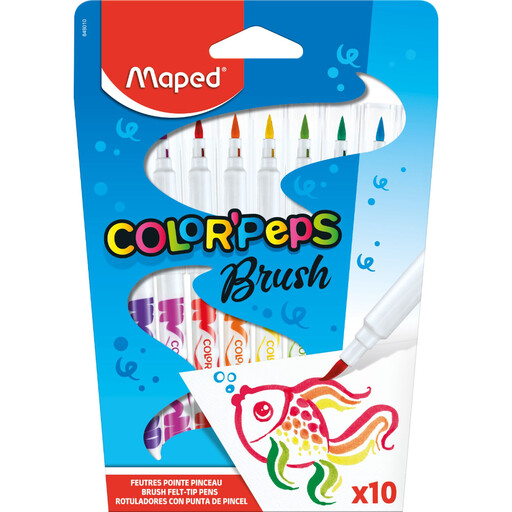
Why this suits this profile: This set of 10 colours combines a flexible 2.8 mm brush tip with a water-based ink that's claimed to be washable from skin and most fabrics. It's suitable for first experiences with drawing, colouring, manga or calligraphy.
The product page specifies the washable nature of the ink and the tip shape, which limits unpleasant surprises for family or multi-purpose use.
Flexible tip, 10 assorted shades, ergonomic grip zone and water-based ink.
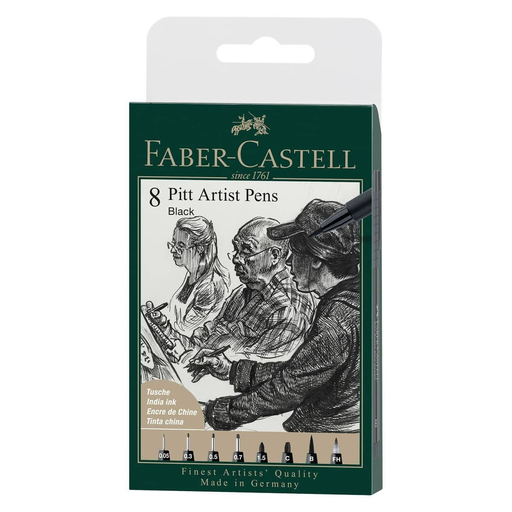
Why this suits this profile: This set brings together several tip types and a black India ink that's claimed to be permanent, water-resistant and lightfast. It's aimed at illustrators, calligraphers and enthusiasts who want to work with black lines in different widths.
The variety of tips means you don't need to buy several pens for outlines, hatching and broader strokes.
8 pens, assorted tips and India ink claimed to be water-resistant after drying.
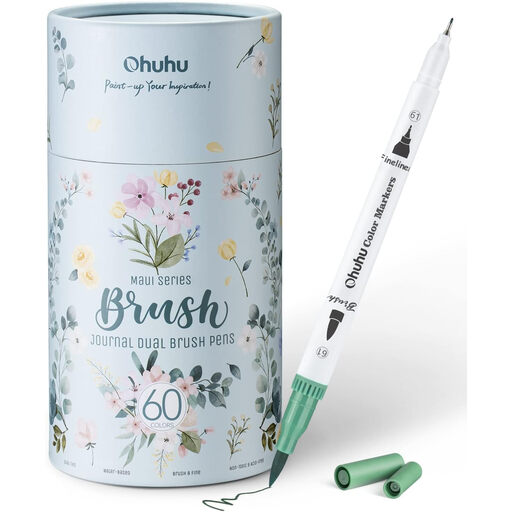
Why this suits this profile: The 60 markers feature a 0.4 mm fineliner tip and a brush tip ranging from 1 to 6 mm. This combination suits creators who switch between details, colouring, calligraphy and watercolour effects.
With two tips per pen, there's no need to multiply references: you go from outline to fill with the same set.
60 numbered colours, dual tip, colour chart and replacement tips included.
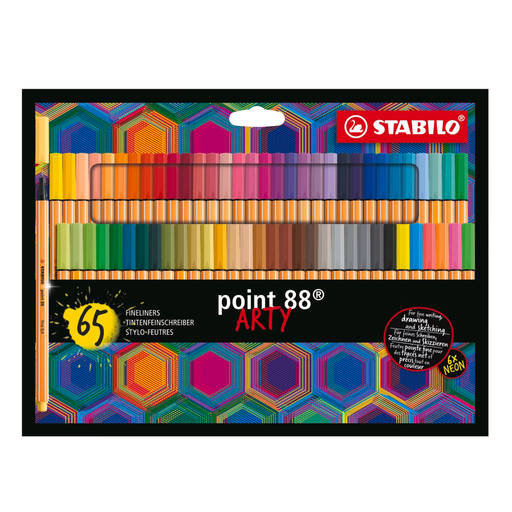
Why this suits this profile: Its 0.4 mm tip is suitable for compact writing, ruler-guided lines, mandalas and colourful layouts. The 65 shades, including 6 fluorescent ones according to the product page, offer a wide palette for organising your pages.
Its metal-sheathed tip is designed for fine lines and use with a ruler or stencil – two constraints often overlooked when choosing.
0.4 mm tip, 65 colours, metal protection and ISCC Plus certified bio-based plastic according to the product page.
We've put together a comprehensive, real-time updated selection of products that meet these exacting criteria and comply with European safety regulations.
Left-handed users should opt for quick-drying ink, especially for notes and solid areas. The WRITECH gel pen with a 0.5 mm tip is described as having quick-drying multi-coloured ink and a retractable mechanism – handy features for everyday journaling.
It depends on the formula, how often you use them, the cap and storage conditions. Capping each marker immediately after use and avoiding high temperatures reduces the risk of drying out. Brush tips should also be protected from unnecessary sideways pressure.
A brush pen has a flexible tip whose width varies with pressure. A regular marker, such as a 1 mm bullet-tip model, generally produces a more consistent line. The former is suited to lettering and calligraphy; the latter is simpler to use for colouring, writing or filling in areas.
It depends on the amount of ink applied, the paper weight and its porosity. Even ink that's claimed to be water-resistant can mark the back of thin paper. Always test in a margin or on a separate sheet before starting a full page.