
Livraison le jour même ou le lendemain

Qualité garantie

Débloquez vos offres de bienvenue: Livraison GRATUITE | Jusqu'à -80 % | 30 jours d'essai gratuits à JoyPlus
Téléchargez l'application
Choosing art markers and colouring pencils isn’t just about counting how many colours come in a set. Between promises of intense pigmentation, “versatile” tips and inks said to work on every surface, some purchases can quickly turn out to be disappointing or impractical.
To avoid unpleasant surprises, it’s worth looking at the type of ink, the shape of the tip, the compatible surfaces and the age of the user. Here are the criteria to consider when comparing different options and selecting materials suited to drawing, journaling, watercolour or creative hobbies.
A set of 72 coloured pencils might seem more comprehensive than a pack of 18 markers, but that doesn’t mean they meet the same needs. Pencils are better suited to gradual work, hatching and dry blending. Acrylic markers, on the other hand, lay down a more opaque colour on surfaces like wood, glass or ceramic.
Before comparing quantities, first identify the technique you want to use: colouring on paper, illustration, watercolour, customising objects or a creative activity for children.
A fine tip makes it easy to draw outlines and details, but it covers large areas slowly. A chisel tip lets you fill in more quickly, while a brush tip varies the line thickness depending on the pressure you apply. Dual-tip markers save you from constantly switching tools – provided both ends actually suit your needs.
The flexibility of a brush tip also takes a little practice to master. For children and beginners, a sturdy tip and a body that’s easy to hold can be far more practical.
A water-based ink won’t give the same result on ordinary paper as it will on watercolour paper. Watercolour markers and watercolour brush pens let you create blending effects with a damp brush, but paper that’s too thin may buckle or let moisture bleed through.
With paint markers, always test the product on a small area when working on a non-porous or delicate surface. The phrase “water-resistant” doesn’t guarantee the result will withstand outdoor use or repeated rubbing.
Don’t assume lightfastness or waterproofness just from the colour stated. Check the product details and the usage conditions provided by the manufacturer.
When comparing drawing markers, look at the shape and width of the tip:
The diameter of the body is also worth your attention. XXL lead pencils or short, chunky models are easier for small hands to hold, while a slimmer tool may be better for details and long drawing sessions.
A worthwhile set of art markers should offer a palette that matches your habits. Pastel shades can be useful for bullet journals and portraits, whereas highly opaque colours are better suited to customisation.
Also check what accessories are included: a suitable sharpener, a brush, a rigid case or a metal tin. These make storage, transport and maintenance easier, but they shouldn’t distract you from a palette that’s poorly suited to your projects.
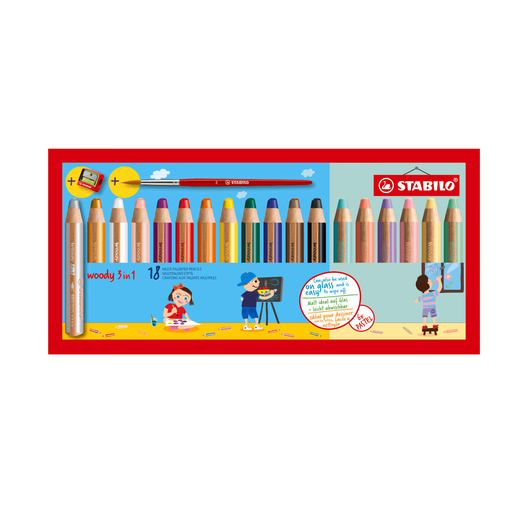
Why this choice suits this profile: This set combines the functions of a coloured pencil, a watercolour pencil and a wax crayon, with a sharpener and a brush included. It’s suitable for a wide range of creative activities, at home and at school.
The versatility is clearly defined: one pencil lets you practise three techniques and can be used on paper, card or certain smooth, wipe-clean surfaces.
18 colours, XXL 10 mm lead, PEFC-certified wood and accessories included.
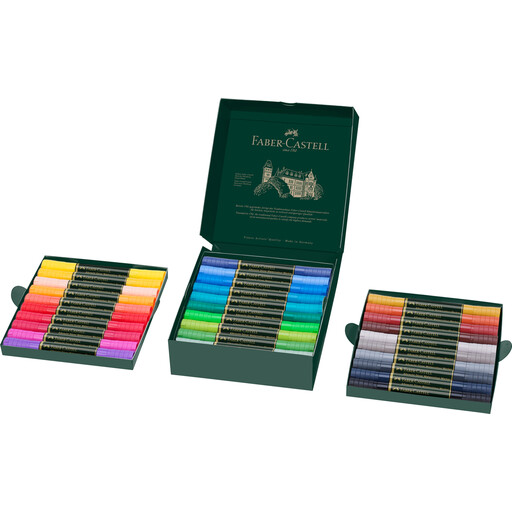
Why this choice suits this profile: Artists who switch between sketching, illustration and mixed media get two tips per marker and a water-based ink designed to be worked with a damp brush.
The product details specify a flexible brush tip and a fine tip, rather than claiming vague versatility.
30 shades, water-soluble ink, wallet-style case and good stated lightfastness.
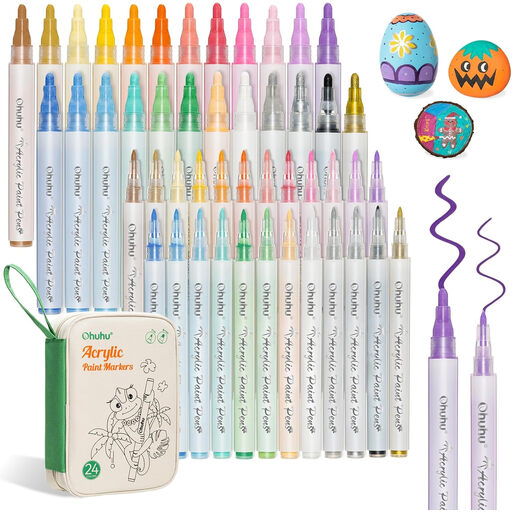
Why this choice suits this profile: This set is aimed at DIY projects, decorating objects and personalising a variety of surfaces, with two tip sizes available in the same colours.
The stated compatibility is detailed: paper, wood, stone, glass, ceramic, plastic and fabric. A prior test is still recommended depending on the surface.
48 markers, 24 fine tips of 0.7 mm and 24 reversible round or chisel tips.
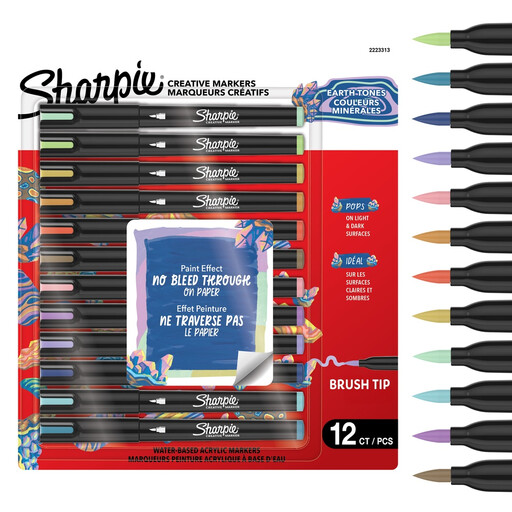
Why this choice suits this profile: The brush tip works well for colouring pages, lettering and lines of varying thickness. The palette of 12 warm tones is also easy to organise.
The product details specify the different compatible surfaces and recommend horizontal storage – two pieces of information often missing from overly general descriptions.
Water-based acrylic ink, flexible brush tip and the ability to layer colours once the first coat is dry.
We’ve put together a comprehensive, real-time selection of products that meet these selection criteria as well as European safety regulations.
The lifespan of a marker or pencil depends mainly on how often you use it, the surface you work on and how you store it. To keep your art materials in good condition:
For acrylic markers, shake the product when the manufacturer recommends it and prime the tip on a scrap sheet. Do not use them on skin or on surfaces intended for food contact, unless the manufacturer explicitly states it and it complies with the intended use.
Fine-tip markers are good for detailed patterns, while brush tips let you vary line thickness and fill larger areas more quickly. To minimise bleeding, choose paper that’s thick enough and check whether the ink shows through the pages.
They can be used dry on ordinary paper, but watercolour paper will handle the addition of water much better. Start with a small amount of liquid and let it dry between layers to limit warping.
Replace the cap immediately after use and make sure it’s fully closed. Also follow the recommended storage method. A case or metal tin helps protect the tips and keeps colours easy to see between sessions.