
Livraison le jour même ou le lendemain

Qualité garantie

Débloquez vos offres de bienvenue: Livraison GRATUITE | Jusqu'à -80 % | 30 jours d'essai gratuits à JoyPlus
Téléchargez l'application
Buying art drawing and painting materials can quickly become expensive if you rely solely on the number of colours, the promises printed on the packaging, or the look of a set. A beginner won’t have the same needs as an illustrator, an art student, or a child just discovering colouring.
Before you fill your basket, there are three pitfalls worth watching out for.
Start by determining your main use:
Paper matters just as much as the tool. Paper that is too light may buckle when it comes into contact with water, while a smooth surface will suit fineliners and precision work better. For wet techniques, choose a weight that meets the manufacturer’s recommendations.
For graphite pencils, the grades indicate the relative hardness of the lead: H references generally produce lighter, more precise lines, while B references offer deeper blacks and more pronounced shadows. A range from 2H to 8B opens up far more possibilities than a single all-purpose pencil.
For pens, check the tip type:
A metal tip, like that of the STABILO fineliners in 0.4 mm, can suit mandalas, technical drawing, or creative journaling. For acrylic markers, the width stated in millimetres will help you decide between precision and coverage.
A set with a case, roll, or compartmentalised box reduces the risk of breakage and makes it easier to transport between home, school, and studio. Pens must be recapped immediately after use. Some markers should be stored flat, while others need to be shaken and then primed on a scrap sheet.
Store soft pastels flat in their box and avoid inhaling the dust. Products containing small parts, caps, or sharp tips are not suitable for children under 3 years old. For younger children, adult supervision is strongly recommended.
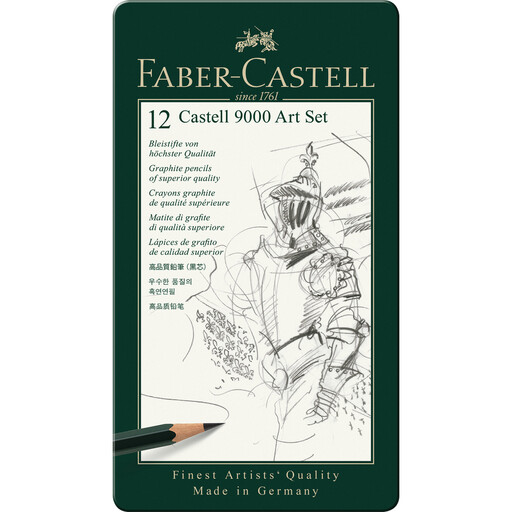
Why this choice suits this profile: The different hardness grades let you get started with both sketching and shading work, without needing to buy several sets. The case makes storage easy at home or in a bag.
It doesn’t rely solely on quantity: the 2H to 8B grades directly address the needs of line work and tonal values.
Lead claimed to be break-resistant, several hardness grades, and a cardboard box that’s easy to carry.
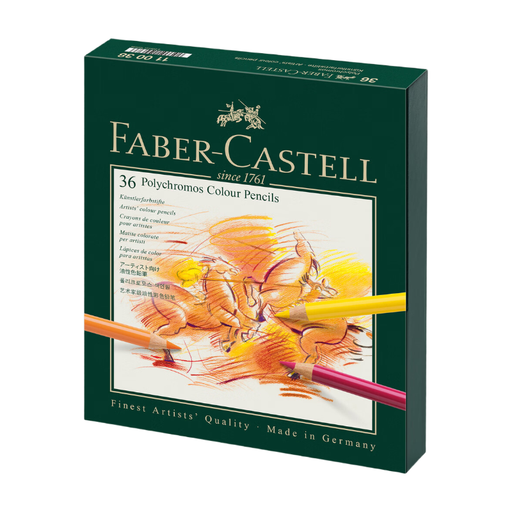
Why this choice suits this profile: This set is aimed at those who enjoy working with layering, colour transitions, and detailed illustrations over time.
The provided information mentions a 3.8 mm oil-based lead and an SV bonding process claimed to be break-resistant.
36 shades, studio box, and the ability to layer colours with a finish described as water-resistant.
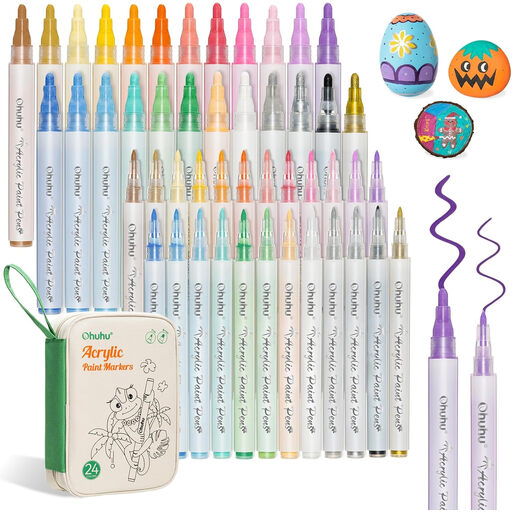
Why this choice suits this profile: Creators who regularly customise objects can switch from precision to outlining or filling thanks to the two tip types.
The 24 colours come with a fine tip and a reversible round or chisel tip, rather than a succession of repetitive shades.
Tips of 0.7 mm, 1.8–2 mm, and 4 mm depending on configuration, with a water-based ink described as opaque and suitable for multiple surfaces.
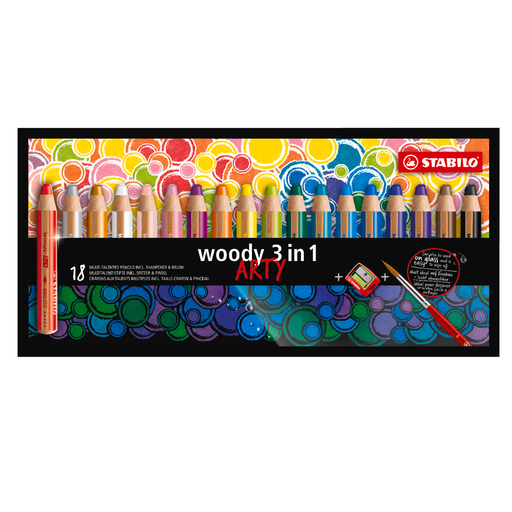
Why this choice suits this profile: Their chunky shape is suitable for small hands and allows you to switch between coloured pencil, oil pastel, and watercolour effects.
The set isn’t limited to a single use: the brush and sharpener support three techniques on paper.
18 pencils, XXL 10 mm lead, and use claimed on paper, cardboard, and smooth non-porous surfaces.
We’ve put together a comprehensive, regularly updated list of products that meet these demanding selection criteria and European safety regulations.
An assortment of graphite pencils covering several grades, an eraser, a sharpener, and a sketchbook with suitable paper form a simple, effective foundation. Then add coloured pencils or fineliners depending on your projects, rather than buying every family of art supplies all at once.
The lifespan depends on the type of ink, how often you use it, storage conditions, and how well you replace the cap. Recapping each pen after use, following the recommended storage position, and avoiding heat or direct sunlight helps preserve the tip and ink. Watercolour markers and brush pens need extra care to prevent their flexible tips from drying out.
Go for a children’s drawing set with easy-to-grip barrels, secure caps, and a clearly displayed age recommendation. Chunky pencils like the STABILO Woody or washable markers can work well for supervised creative activities. Always check the warnings, especially for small parts, and don’t leave a young child alone with pastels or sharp accessories.