
Livraison le jour même ou le lendemain

Qualité garantie

Débloquez vos offres de bienvenue: Livraison GRATUITE | Jusqu'à -80 % | 30 jours d'essai gratuits à JoyPlus
Téléchargez l'application
Choosing art drawing and colouring materials can quickly become a headache when faced with overwhelming sets, promises of "intense" colours, and sometimes significant price differences. Pencils, felt-tip pens, pastels and watercolours are not all used in the same way. Ill-suited equipment can lead to leads that break, colours that are difficult to layer, or a set that's impractical to carry around.
Here are the criteria to consider before making a purchase, along with a selection tailored to different profiles: art students, illustrators, adult creative colouring enthusiasts, parents and budding artists.
A set of 72 pencils might seem particularly comprehensive, but a large palette doesn't guarantee it will suit your technique. For portraiture, intermediate shades and flesh tones are essential. For decorative creations, metallic or fluorescent hues could prove more useful.
So, examine the actual composition of the palette, rather than just focusing on the number of items. A well-chosen set of 12 pencils can be perfectly adequate for illustration on the go, whereas a larger assortment will be preferable for working on gradients and blends.
Standard coloured pencils, oil-based pencils and watercolour pencils offer different feels and results. A soft lead makes it easier to create flat washes and blends, but it generally wears down faster. A harder, more resistant lead holds a fine point for longer, which is ideal for details.
For artist felt-tip pens, also check the type of nib, compatible surfaces and drying time. Acrylic ink can effectively cover a dark surface, but it's best to test it on an inconspicuous area before applying it to glass, fabric or a decorative object.
A set that's difficult to close, or a box where all the colours get mixed up, often ends up spoiling the fun. To transport your materials between home, the studio and school, a pencil case, a metal tin or a storage roll will protect your tools better.
Felt-tip pens must be recapped immediately after use. Dry pastels should be stored flat and can produce dust. As for watercolours, they require a brush, water and paper thick enough to prevent it from buckling.
For coloured pencils intended for regular use, choose a lead robust enough to withstand sharpening and variations in pressure. The diameter of the lead, its bonding system and its resistance to breakage are often more telling than simple marketing claims.
Polychromos pencils, for example, use an oil-based lead designed for layering, detail work and blending. Conversely, triangular pencils with a thick lead will be more suitable for learning to draw and for school activities.
Standard paper is fine for dry colouring, but watercolour requires a suitable weight and texture. With watercolour pencils, dedicated paper will minimise warping when you add water. Dry pastels can be used on paper, card or canvas, with a suitable fixative to reduce smudging.
Acrylic markers offer opaque coverage on many surfaces, but the result depends on surface preparation. On a non-porous surface, let each layer dry and check its adhesion before committing to a final creation.
For colouring materials intended for children, check the recommended age, the possible presence of small parts and the manufacturer's warnings. Tips, caps and wood shavings can pose a risk for children under 3. Even when an ink is washable or water-based, the products should not be ingested.
Pastels produce fine dust: with young children, it's best to use them in a well-ventilated space and under supervision. At school as at home, triangular shapes and thick bodies can also make them easier to grip.
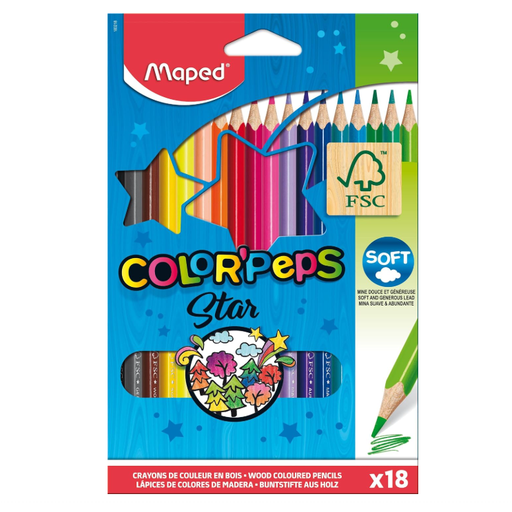
Why this choice suits this profile: its 18 colours and triangular shape are ideal for first drawings, homework and creative activities at home.
The set favours an easy-to-use palette and a 2.9 mm lead advertised as break-resistant, rather than an overly vast and difficult-to-manage assortment.
Ergonomic triangular body, FSC-certified wood, classic colours and fluorescent shades.
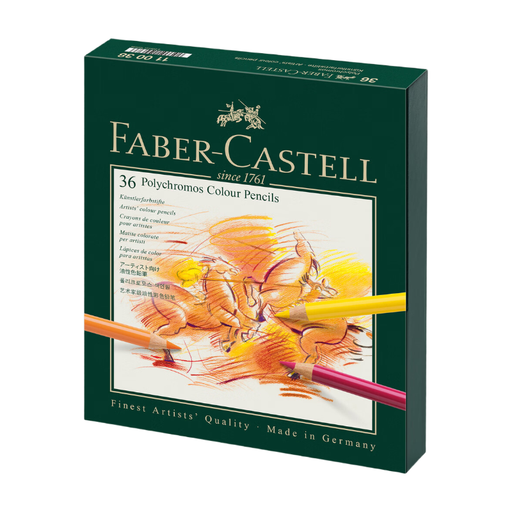
Why this choice suits this profile: its palette of 36 shades and oil-based lead are aimed at detailed illustrations, portraits and work requiring multiple layers.
The studio box and securely bonded lead, designed to resist breakage, address the issues of storage and repeated sharpening.
36 pencils, 3.8 mm oil-based lead, organised box and colours designed for layering.
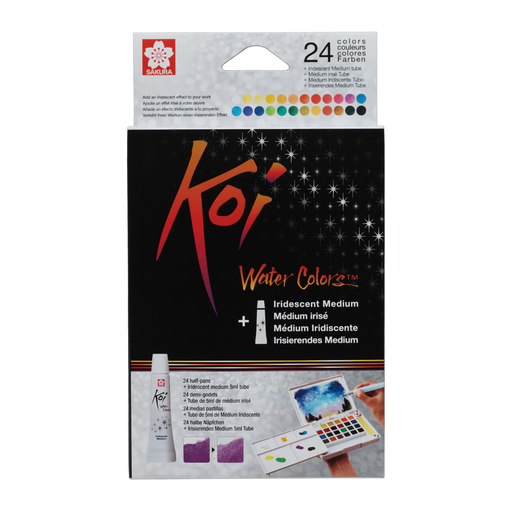
Why this choice suits this profile: its compact format slips easily into a bag for outdoor sketching, travel and artists who want to travel light.
The case incorporates a mixing area and brings together 24 half-pans: no need to buy several accessories separately to get started.
24 colours, iridescent medium, pocket case and integrated palette.
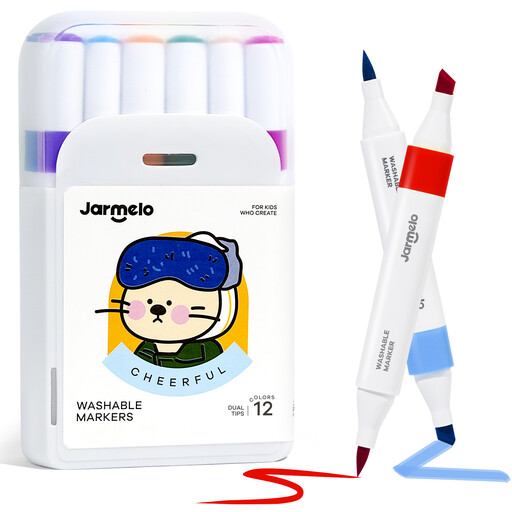
Why this choice suits this profile: the two tips allow you to switch from fine detail to filling in, whether at home or in the classroom.
The water-based ink is advertised as washable from skin and most fabrics, which simplifies supervised creative activities.
12 dual-tip felt-tip pens, storage case with handle and oval body suitable for small hands.
We've put together a comprehensive selection, updated in real time, of products that meet these demanding criteria as well as European safety regulations.
A set of coloured pencils, a suitable sharpener, an eraser and paper that's thick enough form a solid foundation. If you want to try out several techniques, gradually add a few artist felt-tip pens or a small travel watercolour set, rather than buying a very comprehensive assortment straight away.
It depends on the frequency of use, the pressure applied and storage conditions. Pencils should be kept dry and sharpened with a suitable blade. Felt-tip pens, on the other hand, must be recapped after each use and stored according to the manufacturer's recommendations. A dry nib or a broken lead is often a sign of improper care or storage.
No. They can be used on many surfaces, including wood, glass, metal, stone and canvas, but their adhesion and durability vary depending on the surface. Always test on an inconspicuous area, clean the surface and let each layer dry before layering colours.