Households with an older fridge or freezer
If your fridge or freezer runs continuously, look at replacing it before an appliance that is only used in cycles. ADEME points out that the capacity and features you choose also affect energy consumption.


Start by looking at an older fridge or freezer that runs continuously, or a washing appliance you use frequently, rather than replacing all your appliances. To decide, compare the energy consumption of appliances with the same function and a suitable capacity, factor in how many cycles you actually run, and consider a repair if your current appliance still meets your needs.
If your fridge or freezer runs continuously, look at replacing it before an appliance that is only used in cycles. ADEME points out that the capacity and features you choose also affect energy consumption.
To decide between a washing machine and a dishwasher, compare the figures on the energy label with your usual cycles. The European Commission gives washing machine consumption in kWh per 100 cycles; the capacity should also suit your household’s loads.
If the appliance still meets your needs, a diagnosis and quote can help you decide whether to repair or replace it. In France, the government departments responsible for the ecological transition describe the repair bonus as support subject to eligibility conditions.
Identify the appliance and how often you use it, then compare models with a suitable capacity before deciding whether to replace it.
| Criterion | What to check | Households concerned |
|---|---|---|
| Continuous operation | For a fridge or freezer, compare the kWh/year figures for models with the same function and a similar usable capacity. | If my old fridge runs day and night, I want to know whether it should be looked at before my other appliances; around 33% of consumers would put this need first. |
| Washing cycles | Check the kWh per 100 cycles and compare it with the number of cycles you expect to run. | When I use my washing machine or dishwasher often, I want to relate the energy label to my habits; this would be the priority for around 27% of consumers. |
| Suitable capacity | Check the fridge or freezer’s volume, the washing machine’s capacity in kg, or the dishwasher’s place settings against your usual loads. | If I rarely fill my appliance, I’d rather not replace it with an even larger model; around 20% of consumers would prioritise getting the capacity right. |
| Repair or replace | Ask for a diagnosis if the fault seems repairable, then check the rating that applies to that type of appliance and the conditions for the repair bonus. | If an appliance breaks down, I want to know whether it can still be used rather than ordering another model straight away; around 20% of consumers would put this decision first. |
A letter tells you neither the energy consumption in kWh nor the capacity. On its own, it cannot help you choose between a large fridge and a small one, or between two different types of appliance.
Compare appliances with the same function that meet similar capacity needs, then check the energy consumption shown on the label.
The cycles you actually run and the programmes you use may differ from the label’s test conditions. For fridges and freezers, the capacity you choose matters too, as ADEME points out.
For a washing appliance, compare the kWh per 100 cycles with how often you expect to use it, and check whether you’ll use the reference programme.
A washing machine drum or dishwasher that is rarely full may not meet the aim behind replacing it. A larger fridge or freezer should also be justified by your household’s needs.
Think about your loads and the capacity you’ll actually use. ADEME says a 7 kg washing machine is usually enough, although this capacity may not suit every household.
An appliance that still suits your needs may be able to keep going after a repair. In France, the repair bonus applies to eligible products and repairs carried out by an approved repairer, according to the government departments responsible for the ecological transition.
Ask for a diagnosis and a quote, then compare the repair option with a replacement that suits how you use the appliance. If you’re buying a new washing machine, check the applicable durability index too.
These models cover fridges and freezers, washing machines and dishwashers. Only compare models that match the appliance you’re thinking of replacing, your usable capacity needs and your installation requirements. Their inclusion here doesn’t mean you need to replace your appliance.
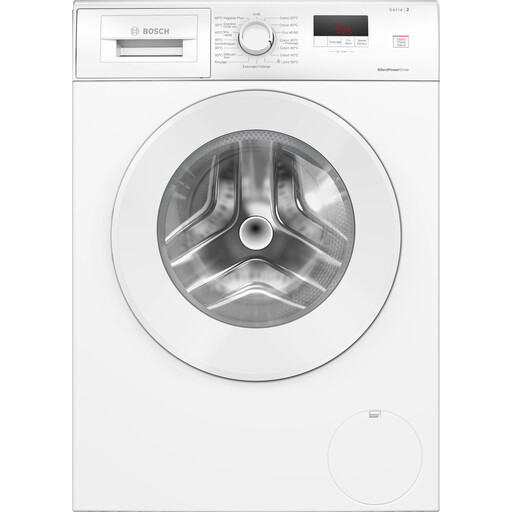 Image unavailable
Worth considering if you’re replacing a washing machine and 7 kg suits your usual loads.
Front-loading; spin speed listed as 1,400 rpm; energy rating A stated in the product name.
Check the durability index that applies to this model in France, as well as its connection and installation requirements.
 Image unavailable
Compare it with your current fridge or freezer if 344 L meets your needs.
Energy rating E stated in the product name.
Before deciding whether it could save energy, compare the kWh/year figures for appliances with the same function and a similar usable capacity.
 Image unavailable
Worth considering if you want a top-loading washing machine and 7 kg loads suit your household.
Spin speed listed as 1,200 rpm; energy rating A. The product name also mentions steam, Wi-Fi and an inverter motor.
Check the available space and the durability index that applies to this model before choosing.
 Image unavailable
Only worth considering if 444 L is the capacity you need.
The product name states energy rating E and frost-free operation.
Compare the kWh/year figures with those of an appliance with the same function and a similar capacity, and check the space needed for installation.
 Image unavailable
Worth considering if your usual loads are 6 place settings and a table-top model suits your kitchen.
The product name states 7 programmes, energy rating D and a noise level of 47 dB.
To compare its energy consumption with other dishwashers, check the figure on the energy label and how it is measured, as well as the connection required.
No. Start with how you use your current appliance, then compare the kWh figures for models with the same function and a suitable capacity. For washing appliances, how often you run a cycle matters; for fridges and freezers, consider how much capacity you actually need.
Yes. As the European Commission explains, dishwasher energy label figures are based on the Eco programme. Check how long it takes too: if you mainly use other programmes, the stated consumption may not reflect your habits as closely.
No. If an appliance breaks down, it’s worth looking into a repair first. Ask for a diagnosis and a quote if it still meets your needs. In France, the repair bonus depends on factors including whether the repair is eligible and whether you use an approved repairer, according to the government departments responsible for the ecological transition.
Check the durability index that applies to the model. According to the government departments responsible for the ecological transition, it has replaced the repairability index for washing machines since 8 April 2025. This rating complements your checks on energy consumption and capacity, but doesn’t guarantee that the appliance won’t break down.