A home without the basics
You’re moving into a home without a working fridge or a usable way to cook. First, check what’s provided and whether it works, then choose the appliances you need to store food and prepare meals.


Before you buy, check which appliances are already there, how much space you have and what connections are available. If you have no way to keep food fresh or prepare meals, start with these everyday essentials. A washing machine and dishwasher can come later, depending on your habits and what can be installed.
You’re moving into a home without a working fridge or a usable way to cook. First, check what’s provided and whether it works, then choose the appliances you need to store food and prepare meals.
You’re considering a washing machine, dishwasher or fixed cooking appliance. Before choosing a model, measure the space and check the water inlets, drainage and available electricity supply.
You know which appliances can be installed, but want to compare models by capacity, water or electricity use and noise levels. Compare these figures on a like-for-like basis rather than relying on a single feature.
In a home with few appliances, check refrigeration and cooking first if these needs aren’t already covered. Laundry comes next, depending on whether you have another option. A dishwasher can wait if you don’t yet have enough washing up to justify one, or the installation isn’t suitable.
| Need | What to check before buying | Consumers concerned |
|---|---|---|
| Store food and prepare meals | Check the inventory and make sure any existing appliances work. Then measure the available spaces and check the power supply for the cooking appliance you’re considering. | Without working refrigeration or cooking facilities, I need to be able to store food and prepare meals as soon as I move in. Around 33% of consumers would prioritise this ability to manage their own food. |
| Do laundry at home | Check the water inlet, drainage, electricity supply and whether the capacity suits the amount of laundry you do. | If using a launderette doesn’t fit my routine, being able to do laundry at home becomes essential. Around 25% of consumers would put this need first. |
| Install appliances without difficulty | Measure the space and delivery route. Check the connections and circuits needed for the appliances you’re considering. | If space or connections limit my choices, I need to know what can actually be installed in my home. Around 25% of consumers would prioritise this compatibility. |
| Manage the practicalities of everyday use | Once you’ve chosen an appliance, compare its capacity, noise level and stated consumption for the same reference programmes. ADEME recommends looking at the energy label as a whole. | Once my needs and installation requirements are clear, I want to compare models by water and electricity use, noise and cycle duration. Around 17% of consumers would make this their top criterion. |
A working fridge or cooking appliance that’s already there can change what you need to buy first, especially in a furnished home.
Check the appliances against the inventory and make sure they work before you order anything.
Buying a duplicate could also mean having to transport or store an appliance you don’t need.
A washing machine or dishwasher needs to fit in the space and be connected correctly. Promotelec highlights the importance of dedicated circuits for these appliances.
Measure the route and space, locate the water inlet and drain, and have the electrical installation checked if you’re unsure.
A large capacity is only useful if you generate enough laundry to make use of it. ADEME says a 7 kg capacity is usually sufficient.
Estimate how much laundry you do and how often you wash before comparing capacities.
A larger appliance takes up more space and could lead to loads that aren’t full.
Two models in the same appliance category can also differ in capacity, noise, water use and the length of their Eco programme.
Check the other details on the energy label and compare models based on the programmes and practical considerations that matter in your home.
Bosch’s French catalogue covers refrigeration, cooking, laundry care and dishwashers, so you can explore several appliance categories from one brand.
Electrolux’s range in France includes ovens, hobs, laundry appliances, refrigeration and dishwashers.
Beko offers ranges for refrigeration, cooking, laundry and dishwashing, with models to compare depending on the type of installation you need.
These appliances cover several needs when setting up a home for the first time: refrigeration, laundry, countertop cooking and dishwashing. Start by choosing the functions your home is missing, then check the space and installation requirements for each model.
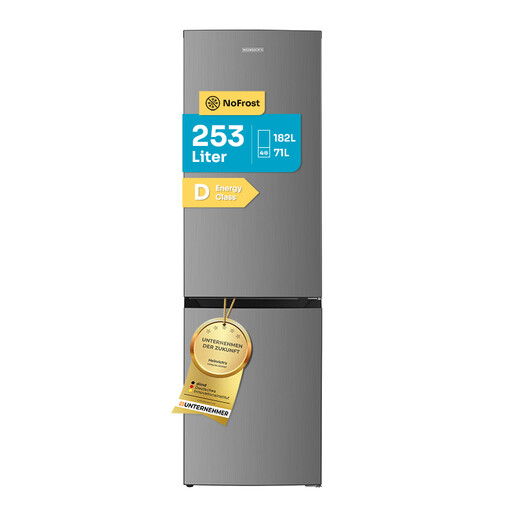 Image unavailable
Worth considering if your home doesn’t have an appliance for keeping fresh and frozen food.
Stated capacities: 182 L for the fridge and 71 L for the freezer; No Frost technology and a stated noise level of 39 dB.
Measure the space and delivery route, then check the model’s energy label.
 Image unavailable
For a household that wants to do laundry at home and has a suitable space with the necessary connections.
7 kg capacity, stated spin speed of 1,400 rpm and energy rating A.
Before choosing this model, check the water inlet, drainage, electricity supply and space needed to open the door.
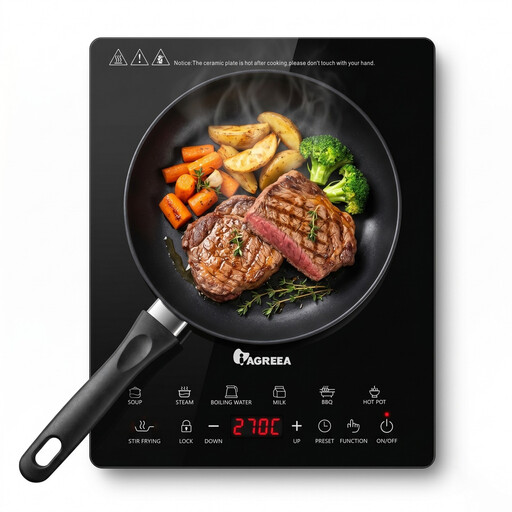 Image unavailable
A countertop cooking option if one cooking zone is enough for your meals and you have induction-compatible cookware.
Stated power of 2,000 W, eight power levels and a stated compatible cookware diameter of 12 to 26 cm.
Check that the socket and circuit are suitable for the stated power. This single-zone hob can’t replace the option of cooking on several zones at once.
 Image unavailable
Worth considering if you regularly have enough washing up to make use of the appliance and have the necessary connections.
Stated width of 60 cm, noise level of 41 dB and energy rating C.
Check the space, water inlet and drain, and electrical circuit before installation.
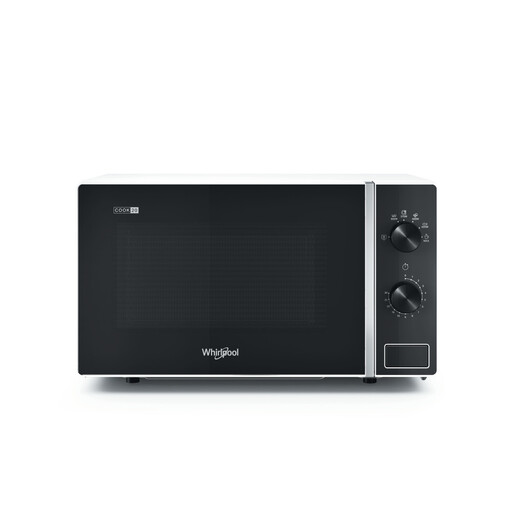 Image unavailable
For reheating or preparing simple portions on a worktop. Check that it suits the meals you make.
Stated capacity of 20 L and output power of 700 W.
This solo microwave doesn’t replace a hob. Allow for the ventilation space specified for the appliance, particularly at the sides.
Not until you’ve checked what’s provided and working in the home. Compare the appliances that are there with the inventory, then buy only what’s missing to store food and prepare meals.
Measure the space, delivery route and room needed to open the appliance. Also locate the water inlet, drain and electricity supply. Promotelec notes in particular that a dishwasher should have a socket on a dedicated circuit.
Compare the energy labels for appliances in the same category and using the same reference programmes. For washing machines and dishwashers, ADEME recommends checking the energy figure in kWh per 100 cycles. Also look at water use per cycle and whether the capacity suits your needs.
Check the durability index that applies to the model, then look at the information available on maintenance and repairability. ADEME describes the index as an additional point of reference; it doesn’t replace checking that the capacity, dimensions and connections meet your needs.