Who is this guide for?
The order in which you buy appliances depends first on what’s already in your home and what your household needs from day one.
Households moving into an unfurnished or partly equipped home
Make a list of the appliances provided before choosing what else you need to store food, cook and do the laundry. The CAF recommends checking which appliances are there and whether they work before buying anything.
Tenants in a small home
A tight space, existing sockets or connections can influence the size and type of appliance you choose. The CAF recommends measuring the available spaces and checking the connections. If separate appliances won’t work in your home, consider a compact or multifunctional option.
Households buying appliances gradually
Start with the functions you need every day, then look at the energy label, repair options and delivery arrangements before choosing your next appliances. The CAF recommends prioritising the essentials; the National Consumer Institute also advises considering how long you’ll use an appliance and whether it can be repaired before you buy.
What should you prioritise, and what should you check?
The CAF recommends starting with the appliances already in your home and prioritising the essentials for your household. For each function you’re missing, check that the appliance you choose can actually be installed and used in your home.
| Priority |
What to check |
My needs |
| Essential functions |
List and test the appliances provided. Identify what’s missing for refrigeration, cooking and laundry before planning your purchases. |
I want to be able to store food and prepare meals as soon as I move in. Laundry is a priority if I don’t already have a washing option that suits me. |
| Space and connections |
Measure the width, height and depth, as well as the delivery route. Check sockets, connections and clearance for doors before choosing a freestanding, built-in or bulky appliance, as recommended by the CAF. |
An appliance needs to fit in the kitchen or utility room, but it also needs to get through the doors and connect up where you plan to put it. |
| Energy use and capacity |
Compare the energy labels for the relevant appliance categories and check the details of the specific model. Consider capacity and size too: ADEME explains that the label is a guide to energy performance, not a substitute for choosing the right size. |
For storing food or doing the laundry, I’m looking for a capacity that suits how I’ll use the appliance, rather than choosing on energy rating alone. |
| How long you’ll use it |
Check the repairability and durability information available for the appliance category, along with the warranty terms and availability of spare parts. According to the ministry responsible for ecological transition, the durability index has been gradually replacing the repairability index for washing machines since April 2025. |
If I’m equipping my home for several years, I want to look at repair options before choosing—particularly for a washing machine or vacuum cleaner. |
A guide to the brands
There are no brand profiles to show in this section.
Fridges to equip your home
These models are for storing food, one of the things to plan for when moving in. Start by choosing a model that suits your available space and storage needs. Appliances for cooking, laundry and cleaning are separate decisions.
 Image unavailable
Haier HTW5618ENMG, 360 L fridge freezer
Worth considering if you’d like refrigeration and freezing in one three-door appliance. The model name lists a 360 L capacity, Total No Frost, an E energy rating, Wi-Fi and My Zone. Check the full dimensions, delivery route and clearance required before deciding where to put it.
View on Joybuy
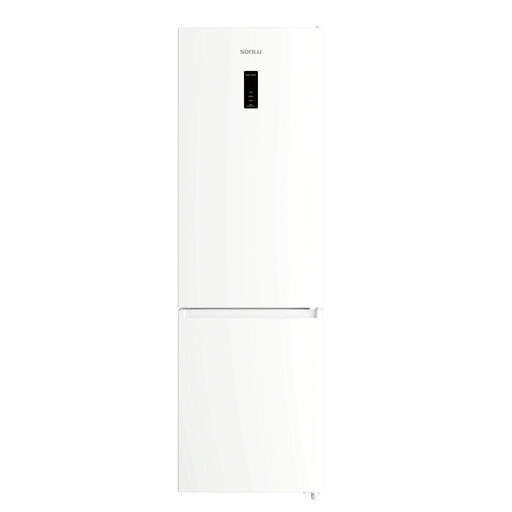 Image unavailable
Sonlu CD‑400RW, 355 L fridge freezer
This fridge freezer provides space for both fresh and frozen food. The model name lists a 252 L fridge, a 103 L freezer, a width of 60 cm, a reversible door and an E energy rating. Also check its height and depth, and which way the door can open in your kitchen.
View on Joybuy
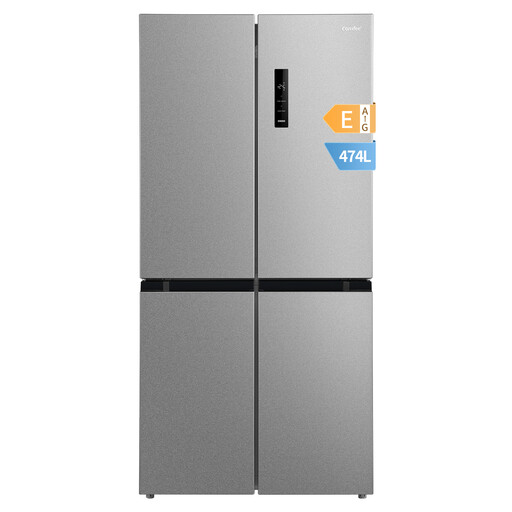 Image unavailable
COMFEE' RCF470LS2EU(E), 474 L four-door fridge
Worth considering if you’re looking for a four-door appliance to help organise food storage. The model name lists a 474 L capacity, a three-temperature crisper drawer and an E energy rating. Measure the space and delivery route before choosing this size.
View on Joybuy
 Image unavailable
Sonlu CC-520WE, 444 L fridge
This model is worth considering if you need food storage and a stated total capacity of 444 L. The model name mentions frost-free cooling and an E energy rating. Before choosing it, check the full dimensions, door-opening clearance and how the capacity is divided between compartments.
View on Joybuy
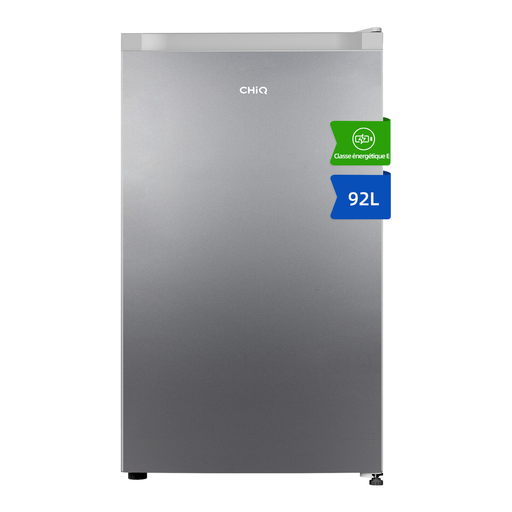 Image unavailable
CHiQ JR92DSE, 92 L single-door fridge
This compact model may suit a smaller space, provided 92 L is enough for your storage needs. The model name lists a compact freezer compartment, a footprint of 0,22 m² and an E energy rating. Check the full dimensions and the freezer compartment specifications if you plan to store frozen food.
View on Joybuy
Frequently asked questions
In what order should I buy appliances for an unfurnished home?
First, check which appliances are already provided, then buy what you need to fill the gaps from the day you move in. The CAF lists a fridge, hob and washing machine among the appliances to prioritise according to your needs. You can wait on laundry appliances if you have another option that works for you.
What should I measure before ordering a large appliance?
Measure the space where you plan to put it and the entire delivery route, then check the sockets and connections required for the model. The CAF recommends making these checks before buying. For a washing machine, the available space may also influence whether you choose a top-loading model or a front-loader.
Is the energy label enough to help me choose?
No. As ADEME explains, the energy label helps you compare the energy performance of relevant appliances, but it won’t tell you whether their capacity or dimensions suit your household and home. Once you’ve worked out what you need, compare the information for the specific model.
Which index should I check for repairability or durability?
The index depends on the appliance category. According to the ministry responsible for ecological transition, the durability index has been gradually replacing the repairability index for washing machines since April 2025. The Ministry of the Economy says the repairability index applies to appliances including dishwashers and vacuum cleaners. Check which indicator applies to the model you’re interested in, along with information about its spare parts.


