Households starting from scratch
You’ll need to be able to store food, cook and look after your home, without rushing to buy appliances you may not need. Make a list of what’s already there before deciding what can’t wait.


After moving home, start by buying appliances for the essential tasks you know you’ll need to do: keeping food fresh, cooking, washing and cleaning. Take into account what’s already in the property. Before adding an appliance, check that its capacity and dimensions suit your needs, then look at its energy and water consumption and, where relevant, its durability or repairability rating. A multifunction appliance only replaces several others if its features and capacity genuinely meet your needs.
You’ll need to be able to store food, cook and look after your home, without rushing to buy appliances you may not need. Make a list of what’s already there before deciding what can’t wait.
Available space, door clearance, noise and usable capacity can matter just as much as the advertised features. For laundry, ADEME recommends choosing a capacity to suit your needs rather than automatically opting for a large drum.
If an appliance runs continuously or gets frequent use, its energy consumption deserves particular attention. Depending on the category, the energy label and durability or repairability ratings offer other useful points of comparison, alongside the model’s specifications.
Start with the tasks your home can’t yet handle, then measure the space available before comparing appliances. If you want an appliance that will last, also check its stated energy and water consumption and any repair information relevant to its category.
| Priority | What to check | Who this matters to |
|---|---|---|
| Essential functions | Make a list of the appliances already in the home and the essential tasks you know you’ll need to do: storing food, cooking, washing and cleaning. Put off less frequent functions if they can wait. | When I’m starting from scratch, I want to cover everyday tasks first, without buying lots of appliances before I know what I need. Around 31% of consumers put these essentials first. |
| Space and capacity | Measure the space, access routes and door clearance; check that usable capacity is right for the amount of laundry or food you need to handle. | In a small kitchen, I need to be able to install and open each appliance without blocking the way. Space and fit come first for around 25% of consumers. |
| Energy and water | Compare label figures on a like-for-like basis: annual consumption for refrigeration, or energy and water per reference cycle where these figures appear on the label. | If an appliance runs continuously or I run washing cycles often, I want to understand what that means for my electricity and water use. Around 25% of consumers put these running costs first. |
| Durability and repair | Look for the rating that applies to the category and find out about repair options for the model you’re considering. | I’d like to check the repair options before choosing an appliance I plan to keep for a long time. This is the top priority for around 19% of consumers. |
A capacity that’s bigger than you need can mean running cycles with only a small load. For washing machines, ADEME says a 7 kg drum is enough most of the time. It also recommends sizing refrigeration appliances to your needs, as they run continuously.
Work out how much laundry or food you usually need to handle, then compare the capacity, dimensions and energy use of suitable models.
The rating alone won’t tell you whether an appliance will fit in your home, provide the capacity you need or be quiet enough. Consumption figures for laundry appliances are based on reference conditions, including the Eco programme.
Check the other figures on the label, including capacity, water use, Eco programme duration and noise level where listed. For relevant categories, also check the durability or repairability rating.
Combining functions can be a good solution if space is limited, but a product’s name alone doesn’t tell you whether it can handle all the tasks you have in mind, with enough capacity.
Check each function, its usable capacity, the dimensions and the model’s care requirements before deciding you don’t need a separate appliance.
If it doesn’t cover one of your regular tasks well, you may end up needing an additional appliance after all.
These appliances can help with two everyday tasks after moving home: keeping food fresh and washing clothes. First, make sure each meets a need in your home, then compare the capacity and space required for installation.
 Image unavailable
For storing food, if a 360 L capacity suits your household’s needs and the space available.
Total No Frost cooling; energy rating E. Check the dimensions and clearance needed for installation, as well as repair options if a long lifespan is a priority.
 Image unavailable
For regular laundry, if a 6 kg capacity suits the amount your household typically washes.
Spin speed: 1,400 rpm; energy rating B. Check that there’s enough room to open it, and that you have the required water supply and drainage. Also check the durability rating that applies to washing machines.
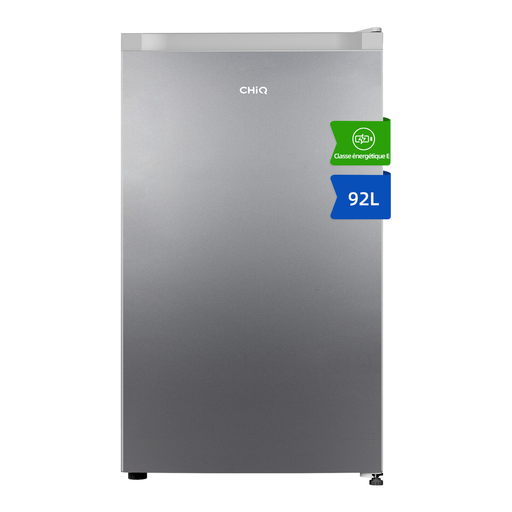 Image unavailable
For a home with limited space or as extra refrigeration, provided 92 L is enough for the food you need to store.
Compact freezer compartment; energy rating E. Check how the capacity is divided, the installation dimensions and annual energy consumption before choosing it as your main appliance.
Start with appliances for essential tasks that the equipment already in your home can’t handle. Different homes need different appliances for storing food, cooking, washing and cleaning. Make a list of what’s already there, and wait until you know your routine before adding appliances for occasional use.
Compare models using the same indicators, not just their energy ratings. ADEME also recommends checking energy consumption, water use, capacity, Eco programme duration and noise level where these are shown on the label. Reference figures don’t cover every programme or usage pattern.
No. The rating depends on the category. According to the French Ministry for Ecological Transition, the durability rating replaced the repairability rating for washing machines in France on 8 April 2025. ADEME lists dishwashers and vacuum cleaners, among others, as appliances covered by the repairability rating. Check which rating applies to the appliance you’re considering.
No. In France, the Directorate-General for Competition Policy, Consumer Affairs and Fraud Control distinguishes between an optional commercial guarantee and the statutory guarantee of conformity that applies to purchases from a professional seller. You have two years to make a claim under the latter for both new and second-hand goods. Check the length, exclusions and repair terms of a commercial guarantee to see what extra cover it actually provides.