Households with a fridge or freezer
These appliances run continuously, according to ADEME. If you’re thinking of replacing one, compare its annual energy use in kWh with its storage capacity and the features you actually need.


Start by comparing the energy use of appliances that run continuously, such as fridges and freezers, or that you use frequently for washing. Compare models with similar functions and capacities, then look at their energy consumption, maintenance and repairability. A better energy rating alone isn’t enough to justify replacing an appliance that still meets your needs.
These appliances run continuously, according to ADEME. If you’re thinking of replacing one, compare its annual energy use in kWh with its storage capacity and the features you actually need.
If you regularly use a dishwasher or washing machine, the figures for the standard cycle can help you compare models with a suitable capacity. ADEME recommends checking details such as energy use per 100 cycles, water use per cycle, cycle duration and noise levels.
If your appliance still meets your needs, check whether it can be repaired and whether spare parts are available before replacing it. In France, the applicable ratings for dishwashers and washing machines provide guidance on the repairability or durability of the model, according to the ministries responsible for the environment.
Start with how often you use it, then compare the figures for appliances with the same function and a similar capacity.
| Priority | What to check | Consider your needs |
|---|---|---|
| Continuous use | For a fridge or freezer, compare annual kWh, storage capacity and whether it has the compartments you need. The European Commission says this information is shown on the energy label. | My appliance stays on day and night. I want a suitable capacity without paying for features I won’t use. |
| Washing cycles | For a dishwasher, compare kWh per 100 eco cycles, water use per cycle, place settings, cycle duration and noise levels. For a washing machine, check the figures for its standard cycle and the drum capacity. | I run cycles often, so the capacity needs to suit my usual loads, and the programme duration must fit around my routine. |
| Fair comparison | First, compare appliances with the same function and a similar capacity. ADEME points out that a fridge or freezer’s size and extra features can increase its energy use. | A larger appliance won’t help if I don’t use the extra space. |
| How long you’ll use it | Check the condition of your current appliance, whether it can be repaired and whether spare parts are available. In France, the repairability index applies to dishwashers, among other appliances; the durability index has applied to washing machines since 8 April 2025, according to the ministries responsible for the environment. | My appliance still works, so before considering a replacement I want to know whether keeping or repairing it will meet my needs. |
According to ADEME, a newer fridge or freezer that is larger or has extra features may use more energy. Its age and energy rating alone don’t tell you what impact replacing it will have.
Compare appliances with similar capacities and functions, then consider the condition of your current one and whether it can be repaired.
Appliances with different capacities won’t necessarily do the same job. According to the European Commission, the label also shows annual kWh and storage volumes for refrigeration appliances, or kWh per 100 cycles and capacity for a dishwasher.
Work out what capacity you need before comparing the energy figures for appliances in the same category.
The eco cycle used as a reference can take a long time. Noise levels are also worth considering if the appliance is near a living area.
Check the eco programme duration and the noise level shown on the label, taking into account when and where you’ll run your cycles.
Whether spare parts are available and how easy an appliance is to maintain can affect how long you can keep using it. France’s repairability and durability indices provide different information depending on the appliance category.
Check the relevant index for the exact model, then look into the information available on spare parts and repairs.
This selection includes a dishwasher and fridge-freezers, so you can compare options for regular washing and continuous food storage. Check the energy label for the exact model before comparing their energy consumption.
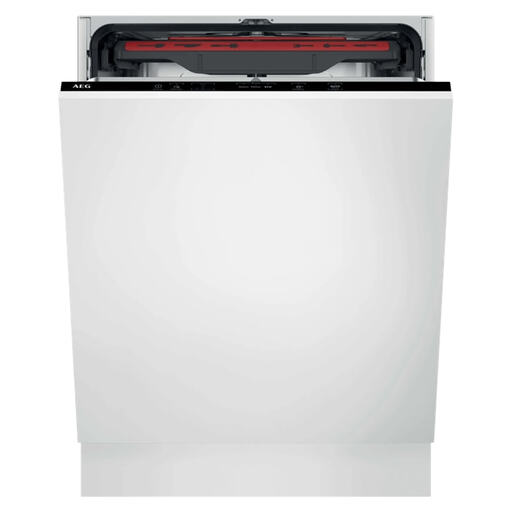 Image unavailable
If you run washing cycles regularly, consider whether its capacity of 14 place settings suits your usual loads. Check the installation dimensions and kWh per 100 cycles on the label for the exact model before comparing it with another dishwasher.
 Image unavailable
Its stated total capacity of 467 L is worth comparing with your storage needs: a larger-than-necessary appliance isn’t automatically a better choice. Check the label for the exact model to compare annual kWh and compartment volumes.
 Image unavailable
For an appliance that runs continuously, check whether the stated total capacity of 444 L suits your usual storage needs. The title lists a noise level of 40 dB; check the label for the exact model for annual kWh and the volume of each compartment.
 Image unavailable
Before choosing this model for continuous use, check that its 495 L capacity suits your needs. Confirm the door configuration and installation requirements for the exact model, then check its energy label to compare annual consumption with similar-capacity appliances.
No. For a fridge or freezer, compare annual kWh and storage volumes too; for a dishwasher, check kWh per 100 cycles, water use per cycle and capacity. The European Commission displays these figures on energy labels. They’re most useful when comparing appliances with the same function and a similar capacity.
It’s a standard measure used to compare the energy consumption shown on the labels of relevant dishwashers and washing machines. For a dishwasher, it’s based on the eco programme; your actual energy use will depend, among other things, on how many cycles you run.
Check its energy label and its entry in EPREL, the European database of models covered by energy labelling. The European Commission says EPREL includes declared performance parameters, among other details. Make sure the reference you look up matches the exact appliance you’re considering.
For a dishwasher, look for the repairability index, rated from 0 to 10. For a washing machine, the durability index replaced the repairability index on 8 April 2025, according to the ministries responsible for the environment. Also check the repair information for the specific model: the index can’t predict what a particular breakdown will involve.