Which replacement should you look at first?
First, identify the appliance you’re considering replacing and how often you use it, then compare models that do the same job. According to ADEME, fridges and freezers run continuously. For laundry and dishwashing, compare the consumption shown per cycle with how often your household actually uses the appliance.
| Your concern |
What to check before buying |
Who this applies to |
| Always-on cooling |
Compare the annual consumption shown for fridges or freezers with a similar capacity and configuration. Check that any extra features would be useful in practice. |
My old appliance stays plugged in day and night; I want to know whether replacing it should come before other purchases. Around 25% of consumers prioritise this need for cooling appliances. |
| Frequent dishwasher use |
For models of a similar size, check the kWh per 100 reference cycles, water use per cycle and place settings capacity. |
I run the dishwasher often and want a capacity that suits my loads, without assuming that the Eco cycle reflects all the programmes I use. For around 25% of consumers, these cycles are their main concern. |
| Frequent laundry |
Compare the kWh per 100 cycles for the Eco 40-60 programme with the capacity in kg and the amount of laundry you usually wash. |
My regular laundry could justify a new washing machine, but a large drum is only useful if I fill it. Around 25% of consumers prioritise this. |
| Replacing a cooking appliance |
For an oven, check its energy label. For a hob, check the technology, dimensions and cookware compatibility rather than looking for the same label. |
I’m already replacing a cooking appliance I use a lot and want to choose using the criteria specific to an oven or hob. Around 25% of consumers put this replacement first. |
Brands to consider
These brands offer categories you can compare for cooling, laundry or cooking. Their inclusion here doesn’t guarantee the features of any particular model or its availability on Joybuy.
Bosch
In France, Bosch offers fridges and freezers, dishwashers and washing machines.
- Bosch Électroménager France explains, among other things, how to read washing machine consumption figures, capacity and reference programme data.
- This guidance doesn’t describe features that are shared by every model. Check the energy label and product information for the model you’re considering.
Miele
Miele France offers washing machines, dishwashers, fridge-freezers and cooking appliances.
- This range lets you explore replacement options across several categories from the same brand.
- The rating or consumption shown for one model doesn’t apply to other models from the brand. Check each energy label separately.
Beko
Beko France offers cooling, laundry and cooking appliances.
- The brand provides information about energy labels for several categories affected by the change to the rating scale.
- When choosing an appliance, compare the brand’s information with the energy label, capacity and consumption of the exact model.
Hobs on Joybuy
These induction hobs are options to consider when replacing a hob, particularly as part of a kitchen update. Their installation details can help you assess whether they’re suitable, but aren’t enough on their own to show that replacing your hob should come before cooling or laundry appliances in your household.
 Image unavailable
TOPWISH, 60 cm built-in four-zone induction hob
Worth considering if you’re replacing a built-in four-zone hob. The product name mentions touch controls, a timer, a child lock and a residual heat indicator.
Before buying, check the cut-out dimensions, electrical supply and whether your pans are suitable for induction. These features don’t tell you how much energy you could save compared with your current hob.
View on Joybuy
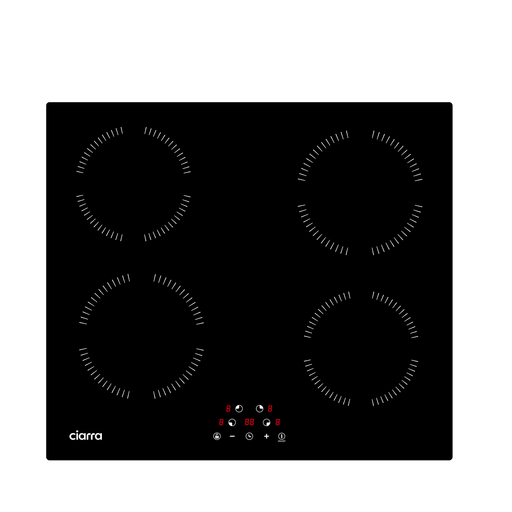 Image unavailable
CIARRA CABBIH4-A, built-in four-zone induction hob
An option to consider if your built-in four-zone hob needs replacing. The model is listed with nine power levels.
Before choosing this model, check the cut-out, electrical connection and whether your pans are suitable for induction. Its power levels aren’t a measure of electricity savings.
View on Joybuy
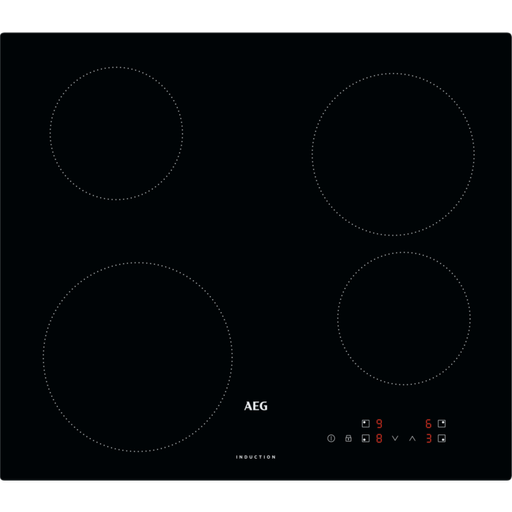 Image unavailable
AEG IBS64200CB, 59 cm semi-flush induction hob
Worth considering if you’re replacing a hob and a semi-flush design suits your kitchen. The model name specifies a two-phase Perilex connection.
Check the cut-out dimensions and electrical supply compatibility before installation. The design and connection type don’t indicate how much energy you could save in your household.
View on Joybuy
Frequently asked questions
Does a new appliance sold online in France need to display an energy label?
Yes. If it belongs to a category covered by this requirement, its energy label must also be available when it’s sold online. The DGCCRF includes fridges, dishwashers, washing machines and ovens among the examples. Check the model’s category before comparing its figures.
How can I estimate the electricity cost of a washing machine or dishwasher?
Start with the kWh per 100 cycles shown for the exact model: divide this figure by 100, then multiply it by your annual number of cycles and your electricity price per kWh. As ADEME explains, the label figure is based on a reference cycle, so the result doesn’t reflect every programme or guarantee savings.
Is an old A+++ rating equivalent to a current A rating?
No. Don’t treat the letters as directly equivalent ratings. Beko France explains that the scale has changed for several product groups, including cooling appliances, washing machines and dishwashers. When comparing current models, compare their consumption figures and capacities using labels from the same generation.
Does a hob have the same energy label as an oven?
No. The European Commission’s list distinguishes between energy labels for domestic ovens and ecodesign requirements for hobs. When replacing a hob, check its technology, dimensions and whether your cookware is compatible; don’t apply oven energy-label data to a hob.
Should you always replace an old fridge?
No. Consider whether it can be repaired before deciding. If you choose to replace it, compare the consumption and capacity of appliances with the same function, then arrange for your old refrigerating appliance to be collected appropriately.


