Start by identifying the fault and checking whether maintenance could solve it: an appliance that is not working properly does not automatically need replacing. If buying new is justified, compare appliances of the same type and with a suitable capacity, looking at the energy label, reference consumption figures, noise level and applicable rating; ADEME guidance helps you compare usage, but does not guarantee savings for every household.
Who this decision matters to
Households with a fridge or freezer running continuously
You want to reduce consumption that builds up throughout the year without buying an unnecessarily large appliance or one packed with energy-hungry features. ADEME distinguishes between continuous-use refrigeration appliances and points out that size and excessive features can increase your bills.
Households that use a dishwasher or washing machine frequently
You need to weigh up consumption per cycle, water consumption, genuinely useful capacity, eco programme duration and noise, rather than choosing based solely on an energy class letter.
People deciding between repair and buying new
Your appliance has broken down or is performing less well, and you need to check the cause, whether a repair is available and which support schemes may apply before paying for a replacement.
Criteria to compare before choosing
Diagnose and repair first
Worth considering: when the fault has not yet been identified, a maintenance issue is possible or a repairer can offer work that fits your budget.
Keep in mind: a repair alone cannot predict the future consumption of an older appliance; the Repair Bonus depends, among other things, on the guarantee, the fault and the professional carrying out the work.
Replace it with a suitable appliance
Worth considering: after diagnosis, if repair is not worthwhile and the new appliance better meets a genuine need for capacity, lower consumption or reduced noise.
Keep in mind: a more favourable energy class does not prove that you will personally save money if the capacity, actual cycles or usage conditions are different.
Include durability in your decision
Worth considering: alongside the energy label when you need to buy a new appliance.
Keep in mind: a durability or repairability rating does not replace checking the capacity, noise level, dimensions and guarantee terms.
| Priority |
What to check |
Your needs |
| Energy and water |
Compare appliances of the same type and a similar capacity. Note the kWh per 100 cycles and litres per cycle for washing appliances, or annual kWh for refrigeration. |
I want to relate the stated figures to my usual cycles and electricity tariff, without confusing a national benchmark with my actual spending. |
| Useful capacity |
Check the kg of laundry, number of place settings or refrigeration volume against your actual loads and storage needs. Measure the available space too. |
My loads are often small or irregular: I am looking for a capacity that avoids both overly frequent cycles and unnecessarily large appliances. |
| Noise |
Check the decibel level and noise class on the label. For a washing machine, look specifically at the spin-cycle noise level. |
Cycles may run in the evening, in an open-plan kitchen or near living areas: quiet operation matters just as much as consumption. |
| Repair and lifespan |
Note the symptom, check the maintenance recommended in the manual and request a diagnosis if necessary. For a new purchase, check the rating applicable to the model. |
I would rather find out whether a fault can be fixed before replacing the appliance, then choose a model with clearly displayed repair or durability information. |
Mistakes to avoid
-
Replacing an appliance without diagnosing the fault or checking maintenance
ADEME states that some appliances returned to after-sales service can be put back into working order without replacement parts, particularly when hoses, filters or limescale-covered components are involved.
Note the symptom, check the maintenance steps in the manual and request a diagnosis or quote if the problem continues. Also check the Repair Bonus terms before work begins.
An unsuitable capacity can result in partial loads, more cycles or unnecessarily high consumption.
-
Presenting ADEME benchmarks as guaranteed savings
Consumption benchmarks are based on usage scenarios and do not predict the consumption of your old appliance, how full you load it or your electricity tariff.
Use them to frame your comparison. To estimate your own situation, start with the known consumption of the old model, the new model’s label, how often you run cycles and your price per kWh.
What to know about brands
When comparing brands, look at repairability, spare-parts availability, guarantee terms, energy performance and the support available after purchase.
Joybuy options
These Joybuy options include washing machines and a dishwasher, allowing you to compare capacity, reference consumption figures and noise levels when replacing an appliance.
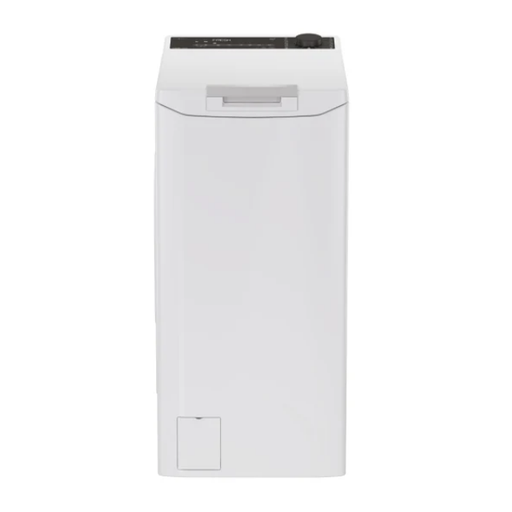 Image unavailable
Haier T Series 7 THASN276TM6-S, 7 kg
A 7 kg capacity may suit everyday loads if a top-loading design fits your available space.
Class A, 40 kWh/100 cycles, 42 L/cycle, 1,200 rpm, width 40.5 cm.
Check: stated spin noise of 77 dB(A), noise class C, dimensions, connections and the durability rating shown for the model sold.
Joybuy
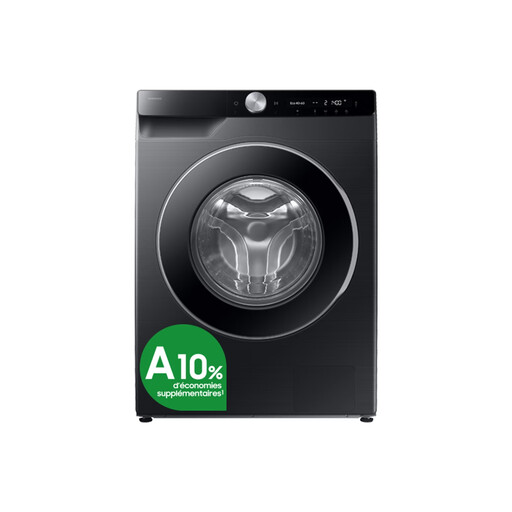 Image unavailable
Samsung WW90DG6U85LBU3 AI Wash, 9 kg
This 9 kg capacity is best suited to households that regularly wash genuinely large loads.
Class A, 44 kWh/100 cycles, 50 L/cycle, stated noise level 72 dB, noise class A; stated depth 55 cm excluding the door.
Check: total depth including the door, connections and the durability rating shown for the model sold.
Joybuy
 Image unavailable
Haier X Series 11 HW100-BD14397PGU1, 10 kg
The 10 kg drum is worth considering for large or frequent loads that will genuinely be filled.
Class A, 41 kWh/100 cycles, 48 L/cycle, 1,400 rpm, stated spin noise of 68 dB, width 595 mm and depth 611 mm.
Check: installation space, clearances, connections and the durability rating shown for the model sold.
Joybuy
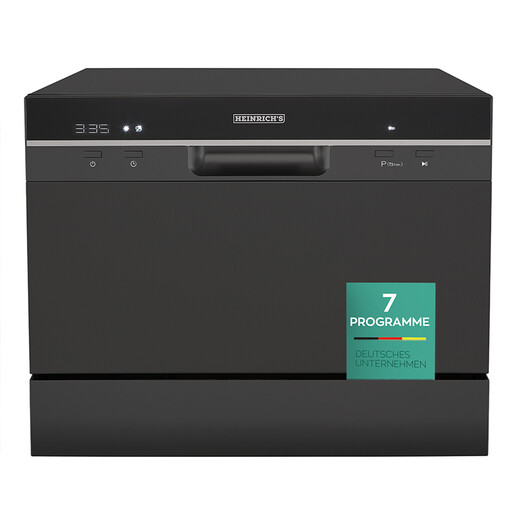 Image unavailable
Heinrich's HTG 8840 Schwarz, 6 place settings
This table-top model with space for 6 place settings may suit a small household or occasional use if the connections are compatible.
Class D, 49 kWh/100 uses, 6.5 L/cycle, 47 dB and 7 programmes.
Check: dimensions, water inlet and drainage, as well as the repairability rating shown for the model sold.
Joybuy
 Image unavailable
Candy TCA464TM4-S ProWash 500, 6 kg
The 6 kg capacity and stated width of 40.5 cm may suit a narrow space and regular small loads.
Class B, 49 kWh/100 cycles, 41 L/cycle, 1,400 rpm and 17 programmes.
Check: stated spin noise of 79 dB(A), noise class C, clearance needed to open the top, connections and the durability rating shown.
Joybuy
Frequently asked questions
Is an energy label compulsory for a new washing machine, dishwasher, fridge or freezer sold in France?
Which figures on the label should I compare to estimate running costs?
Is the eco programme the right programme to use for comparison?
Which rating should I check for a new washing machine or dishwasher?
Can I get financial support if I have the appliance repaired rather than replacing it?


