Households dealing with a breakdown
A repair quote alone won’t settle the question: before replacing the appliance, you should also consider the condition of its other components and how much longer it’s likely to last.


Before replacing a large appliance that has broken down, ask for a diagnosis and quote, then weigh these against its overall condition and how much longer you expect to use it. If replacing it seems the better option, compare models suited to your needs using their energy consumption data. For a refurbished appliance, you’ll also need to check the condition and tests for the specific product being sold. Neither option guarantees the same savings for every household.
A repair quote alone won’t settle the question: before replacing the appliance, you should also consider the condition of its other components and how much longer it’s likely to last.
If you’re replacing a washing machine, tumble dryer, fridge, dishwasher or oven, the figures for the specific model let you compare appliances with similar capacities and usage.
When comparing an offer with a new appliance, check the condition of the actual item being sold, the tests carried out, the accessories included and the delivery terms.
Start by assessing the repair using the quote and the appliance’s condition. If you’re considering a replacement, first work out what capacity you need, then compare energy consumption.
Consider this when: the fault can be repaired, parts are available and the quote makes sense given the appliance’s overall condition.
Drawback: repairing it won’t automatically reduce its water or electricity use.
Consider this when: repair doesn’t seem worthwhile and there’s a model suited to your needs with comparable energy consumption data.
Drawback: a better energy rating alone won’t tell you what your actual running costs will be.
Consider this when: the listing clearly describes the capacity, condition and features of the item being sold.
Drawback: information about components and energy consumption can vary from one listing to another.
| Criteria | What to check | What matters to me |
|---|---|---|
| Repair | Ask for a diagnosis and an itemised quote. Check the appliance’s overall condition and whether parts are available. If relevant, ask a participating repairer about the terms of the Repair Bonus. | I’d rather know what’s wrong and how much the repair will cost before replacing the appliance. In a survey of 10 020 adults representative of the French population, conducted in August 2024, ADEME reports that repair costs were the top factor when choosing a repairer for 80% of respondents. This result is not specific to large household appliances. |
| Energy consumption | Compare the label for the exact model with those of appliances with a similar capacity and use. For washing machines, the European Commission lists energy use per 100 cycles and water use per cycle, among other details. Check the cycle duration and noise level too. | If I’m replacing an appliance, I want to relate its energy consumption figures to how many cycles I run, the programmes I usually use and my energy tariffs. |
| Capacity | Check the storage volume or load capacity you need, as well as the available space and installation requirements. An energy rating alone doesn’t show whether an appliance is right for your household. | I’m looking for an appliance that can handle my usual loads or food shopping, rather than choosing a larger capacity just because of its displayed rating. |
| Durability | Check the indicator that applies to the category, along with information about parts and maintenance. According to France’s Ministry for Ecological Transition, the durability index replaced the repairability index for washing machines on 8 April 2025. | I want to be able to look into repair options after buying, without assuming that the same index applies to every appliance. |
| Condition of the item | For a second-hand or refurbished appliance, check the condition of the item being sold, the stated tests and repairs, the accessories and the delivery arrangements. | If I choose an appliance that’s already been used, I want to know about the specific item I’ll receive, not just the features of the new model. |
A single breakdown doesn’t tell you about the condition of the other components or how much longer the appliance could last after a repair.
Get a diagnosis and quote, then check the warranty, parts availability and whether you may be eligible for the Repair Bonus before deciding.
The rating alone doesn’t tell you how much energy an appliance will use for the capacity you need and how often you use it.
Compare models designed for similar uses and read the energy label for the exact model. For relevant categories, you can also access more information in EPREL using the product’s QR code.
France’s Ministry for Ecological Transition says the move to a durability index applies to washing machines, among other products, from 8 April 2025. This indicator shouldn’t be applied to every category.
Check which index applies to the model you’re considering, and look for further information about parts, maintenance and after-sales service.
According to the DGCCRF, a refurbished item is a second-hand product whose functions have been tested and which has been repaired or restored if necessary before sale.
Ask for a description of the specific item being sold, the tests carried out and the accessories included. Check the delivery arrangements and any applicable warranties too.
Depending on the offer, delivery, installation or removal of your old appliance could affect the overall cost you need to compare.
These models are options to consider if you’re replacing a fridge or dishwasher. First check whether their capacity suits your needs, then compare the advertised features with the information for the exact model.
 Image unavailable
Worth considering if you’re replacing an appliance for a large amount of storage: the advertised capacity is 467 L, with Total No Frost and an E energy rating. Check that the capacity and dimensions suit your needs, then check the label for the exact model to compare its energy consumption.
 Image unavailable
If you need plenty of storage, check whether the advertised 444 L capacity is right for your household. The product name states that it’s frost-free, has an E energy rating and a stated noise level of 40 dB. Compare its energy consumption with the label for the exact model.
 Image unavailable
Its advertised 495 L capacity is worth weighing against your actual storage needs and the space available. It has a stated E energy rating; check the label for the exact model before comparing its energy consumption with an appliance of a similar size.
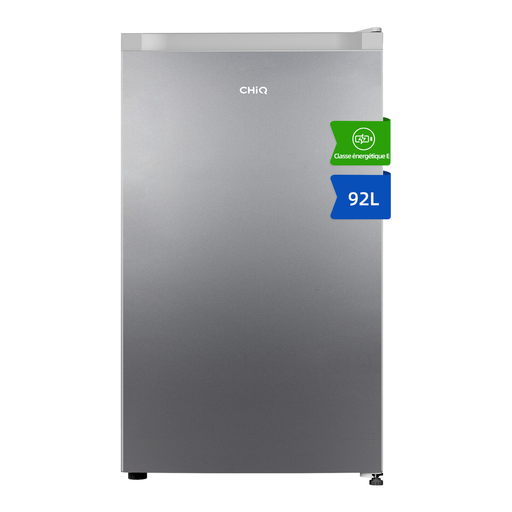 Image unavailable
This 92 L model is worth considering if you don’t need much storage, but it may not be large enough to replace a full-size fridge. The product name mentions a freezer compartment and an E energy rating; check the label for the exact model to confirm its energy consumption.
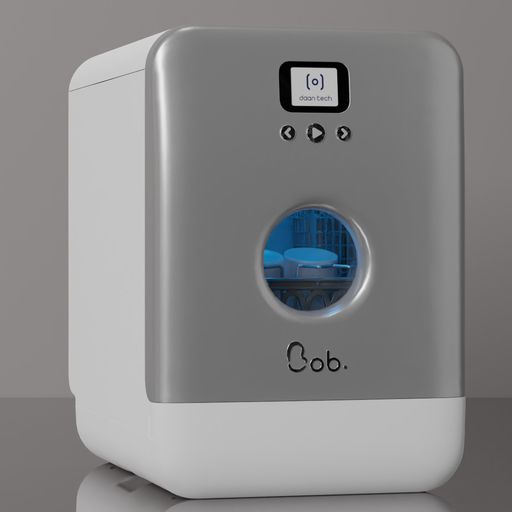 Image unavailable
Consider this for smaller loads: its stated capacity is three place settings, which may not be enough to replace a full-size dishwasher. Check the space and connections required, then compare energy consumption using the standardised data for the exact model.
Compare models with a similar capacity. The European Commission says the label includes the energy rating, energy use per 100 cycles, water use per cycle, cycle duration and noise level, among other details. France’s Ministry for Ecological Transition says the durability index replaced the repairability index for washing machines on 8 April 2025.
Check before arranging the repair. According to ecosystem, the appliance must no longer be covered by a warranty, among other conditions, and the fault must be eligible. Confirm the terms with a participating repairer.
According to the DGCCRF, a refurbished appliance is a second-hand item whose functions have been tested and which has been repaired or restored if necessary before resale. Check that the listing describes the condition of the specific item you’ll receive.
No: you should also compare the capacity and the label for the exact model with your needs. The European Commission says that, from 1 July 2025, only tumble dryers with the most efficient heat pump technology can be placed on the EU market. This doesn’t tell you how much energy the appliance will use in your household.