Households with a large fridge
A fridge runs continuously, ADEME points out. Before replacing yours, compare the annual energy consumption of models with a capacity and layout that genuinely suit your household.


A breakdown alone doesn’t mean you need to replace an appliance: ADEME recommends finding out what caused the problem and considering a repair first. If replacing it is still the right choice, compare appliances that meet the same needs by looking at their reference energy consumption, capacity, noise levels and the repairability or durability information that applies.
A fridge runs continuously, ADEME points out. Before replacing yours, compare the annual energy consumption of models with a capacity and layout that genuinely suit your household.
If your washing machine, dishwasher, fridge or tumble dryer isn’t working properly, start with routine maintenance checks and a diagnosis. ADEME recommends taking this step before deciding that the appliance needs replacing.
If an appliance is near a living area, noise levels matter just as much as programme duration in everyday use. For laundry appliances, also compare consumption on the reference programme and choose a capacity that suits your loads.
First, work out whether your existing appliance can continue to serve you. Then compare the information relevant to its category and how often you use it.
| Priority | What to check | Your needs |
|---|---|---|
| Maintenance or repair | Check the maintenance steps recommended by the manufacturer and arrange a diagnosis if the fault persists. For a new appliance, check the relevant index for its category, where one is available. | A fault has left me unsure whether to keep or replace my appliance; I want to understand the cause before deciding. |
| Energy consumption and capacity | For a fridge, compare annual kWh for models with a similar capacity and layout. For laundry appliances, compare kWh per 100 cycles and water per cycle alongside capacity and the reference programme, using the information shown. | My fridge runs continuously, or I use my laundry appliances often. I’m looking for a capacity that suits my needs, rather than choosing an appliance that’s too large. |
| Reading the energy label | Compare the energy class within the same category, then check the consumption figures and the conditions they relate to. ADEME and the European Commission explain these indicators for different appliance types. | I want to compare models on a like-for-like basis, without mistaking a figure measured on a reference programme for my actual energy use. |
| Noise and cycle duration | Check the noise level shown and, where relevant, the duration of the eco programme. Compare appliances with similar capacities. | In an open-plan kitchen or near a living area, I take both noise levels and cycle times into account. |
| Tumble dryer installation | Check the space available and the connection requirements for the model you’re considering, as well as the information on its energy label. | If I’m replacing a tumble dryer that I use frequently, I need to make sure the new appliance can be installed and maintained in my home. |
Poor maintenance or a blockage can make an appliance seem as though it has broken down. Replacing it without a diagnosis could leave the underlying problem unresolved.
Check the maintenance steps recommended by the manufacturer. If the problem persists, get the appliance diagnosed before deciding to replace it.
The energy class doesn’t tell you whether two appliances have the same capacity. ADEME points out that a larger fridge, or one with extra features, may use more energy.
First compare fridges with similar capacities and layouts, or laundry appliances with similar capacities and programmes. Then check their energy consumption figures.
The figures shown are based on reference conditions. Your programmes, how often you use the appliance and the size of your loads may all be different.
Use annual kWh or kWh per 100 cycles to compare suitable models, but don’t treat these figures as a guaranteed estimate of your household’s energy use.
A long eco cycle, noise near a living area or an unsuitable location can all affect everyday use.
Check the programme duration and noise level. For a tumble dryer, also check the installation requirements for the specific model.
These appliances suit several of the replacement scenarios covered here, including large-capacity fridges, tumble dryers and a compact dishwasher. Their inclusion doesn’t remove the need to diagnose your existing appliance or compare energy labels for products that meet the same needs.
 Image unavailable
This large model is worth considering if you need its storage capacity. The product title lists an E energy class and Total No Frost. Compare its annual energy consumption on the label with similar models in terms of capacity and layout.
 Image unavailable
Consider this model if replacing your tumble dryer is the right choice and an 8 kg capacity suits your loads. The product title lists a C energy class. Check the label for reference energy consumption and make sure the model’s installation requirements work for your home.
 Image unavailable
Before replacing your fridge, consider whether its 495 L capacity meets your storage needs. The product title lists an E energy class. Compare its annual energy consumption with similar models and check the space needed for installation.
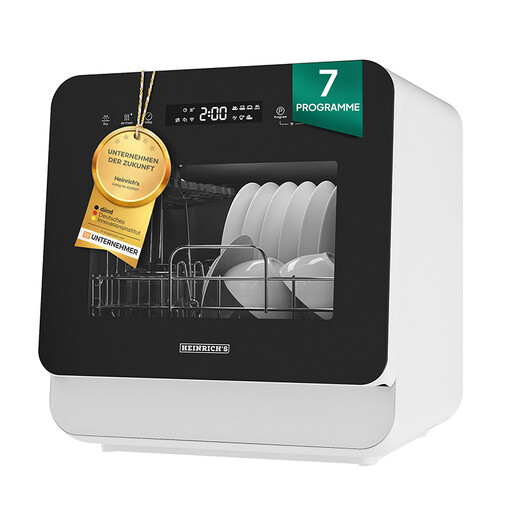 Image unavailable
Its capacity of 3 place settings is designed for smaller loads, rather than a large volume of dishes. The product title lists 7 programmes, 56.3 dB and a C energy class. Check the label for consumption on the reference cycle and make sure the installation requirements are suitable.
 Image unavailable
Consider whether this 444 L model offers the storage capacity you actually need. The product title lists an E energy class and a noise level of 40 dB. Check the label for annual energy consumption and confirm the dimensions and clearance needed for installation.
No. Start with the maintenance checks recommended by the manufacturer, and get the problem diagnosed if it persists. ADEME advises finding out what caused a breakdown before deciding to replace the appliance.
Compare their annual energy consumption in kWh, choosing models with a similar capacity and layout, and check the noise level shown on the label. ADEME points out that a fridge runs continuously and that a larger size or extra features can affect its energy consumption.
For the relevant laundry appliances, this is the energy consumption for 100 cycles of the reference programme, not your annual consumption. ADEME also recommends checking water consumption per cycle. For dishwashers, the European Commission says the label includes details such as capacity and eco programme duration.
For new washing machines covered by the scheme, check the durability index, which gradually replaced the repairability index from 8 April 2025, according to the French ministry responsible for ecological transition. The ministry lists dishwashers among the categories covered by the repairability index.