Households looking to keep their appliance
Your appliance still meets your needs. A diagnosis, checking whether a part is available and getting a quote can help you decide whether it’s worth going ahead with a repair.


When an appliance breaks down, start by identifying the appliance and finding out exactly what has gone wrong before deciding whether to repair or replace it. Compare the quote and any eligibility conditions for the Repair Bonus with how much longer you expect to use the appliance. If you replace it, check the durability or repairability ratings that apply to its category, as well as whether it suits your household.
Your appliance still meets your needs. A diagnosis, checking whether a part is available and getting a quote can help you decide whether it’s worth going ahead with a repair.
If you’re considering buying new, compare the ratings that apply to its category and find out about parts and servicing for the specific model you’re interested in.
After a breakdown, you may want a different capacity or place more importance on noise levels and stated energy use. These considerations matter just as much as whether your next appliance can be repaired.
If the appliance still suits your household, start by finding out exactly what has gone wrong. You can then use the quote to compare a possible repair with the cost of replacing it. If your needs have changed, also think about what you want a new appliance to offer.
When to consider it: you don’t yet know what has gone wrong, and the appliance still suits your household.
Bear in mind: this step helps you decide what to do next, but doesn’t by itself confirm that a repair will be possible.
When to consider it: the fault can be dealt with and a repair suited to the model is available.
Bear in mind: the Repair Bonus is subject to eligibility conditions. Ask whether they apply before accepting the quote.
When to consider it: a repair isn’t an option, or the appliance no longer meets your household’s needs.
Bear in mind: a durability or repairability rating doesn’t replace checking the capacity, installation requirements and intended use.
| What matters | What to check | Consumers concerned |
|---|---|---|
| Access to repairs | Ask for a quote for the identified fault and check with an approved repairer whether the Repair Bonus applies. | I want to know whether a repair will let me keep an appliance that’s still useful, without having to replace it. Around 33% of consumers put this decision first. |
| Future repairability | Check the rating that applies to the exact model and ask about spare parts. | If I buy a replacement, I want to know what parts and repair options will be available if it breaks down again. This is the top concern for around 27% of consumers. |
| Keeping it in use | Confirm how long a diagnosis or part will take. If you’re replacing the appliance, check the dimensions and installation requirements. | I can’t have an appliance I use every day out of action for too long. Around 20% of consumers prioritise getting it back in use. |
| Choosing a suitable replacement | Compare the capacity you need, noise levels and stated consumption for the reference programme. | My needs have changed, so I’m looking for a capacity and features that suit my routine. Around 20% of consumers prioritise finding the right fit. |
The scheme doesn’t automatically apply to every appliance or every fault. According to information from the French ministries responsible for the environment and from ecosystem, eligibility depends in particular on the appliance and whether you use an approved repairer.
Ask for confirmation of the conditions that apply to your appliance, and request a quote that shows any potential deduction separately.
ADEME distinguishes between the durability rating used for washing machines and the repairability rating used for some other categories, including vacuum cleaners and dishwashers. So the ratings may not be measuring the same things.
Find out which rating applies to the appliance you’re considering, then look at the criteria behind its score.
A larger appliance isn’t automatically a better fit. For washing machines, ADEME says a 7 kg capacity is enough for most households, although you should still consider how much laundry you wash.
Compare the capacity you need and, where the information is shown on the label, the consumption figures for the reference programme and the noise level.
A stated period for parts availability or longevity testing doesn’t confirm that a specific part will be available for your version, or that a particular fault can be repaired.
Give the relevant service team the full model reference and check which part you need, whether it’s available and what the repair involves.
Worth considering if identifying the part for your model is an important part of your decision.
Worth considering if you want to understand the conditions behind the longevity testing claimed for the category you’re interested in.
Worth considering if access to manuals, parts and a repair service is one of your priorities.
These washing machines and vacuum cleaners suit two different replacement needs after a breakdown. Before choosing, compare their size and features with the way you’ll use them, then check the durability or repairability ratings that apply to the model you choose.
 Image unavailable
Worth considering if you’re replacing a washing machine and a top-loading model suits your installation.
Listed with a 7 kg capacity, 1 200 tr/min spin speed, A rating and Wi-Fi connectivity. Check the durability rating that applies to this model and confirm who handles after-sales service.
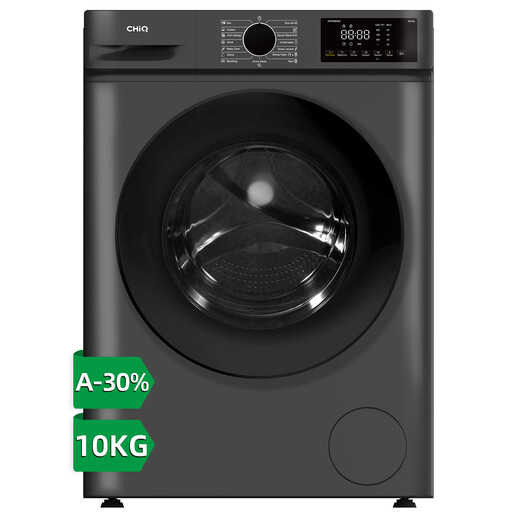 Image unavailable
Worth considering if your household’s larger loads make a 10 kg capacity useful.
The product details list a 1 400 tr/min spin speed and 16 programmes, including a steam programme. Check the durability rating for the exact model and the consumption figures on its label.
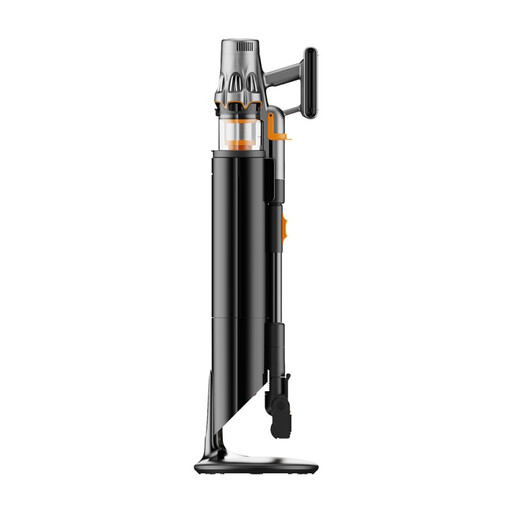 Image unavailable
Worth considering if you’re replacing a vacuum cleaner and would like an automatic emptying station.
The product details state up to 100 minutes of battery life and 220 AW suction power; these figures are not independent measurements. Check the repairability rating that applies and whether parts are available for this model.
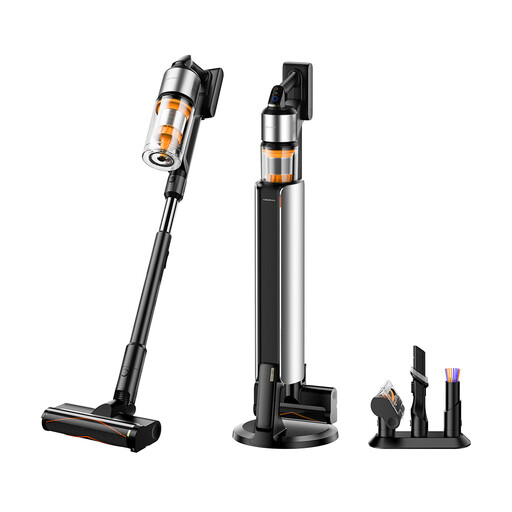 Image unavailable
Worth considering if an automatic collection base would help you empty the vacuum less often by hand.
The product details state up to 70 minutes of battery life and several accessories; check they’re suitable for your floors. Also check the repairability rating that applies and the service options for this model.
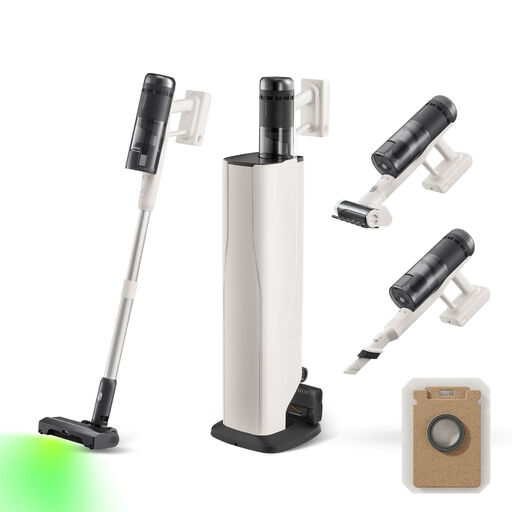 Image unavailable
Worth considering if you’re looking for a vacuum cleaner with automatic emptying for hard floors and carpets.
The product details state up to 80 minutes of battery life and 170 AW suction power; these figures are not independent measurements. Check the repairability rating that applies and whether parts are available for this model.
No. Whether it applies depends in particular on the appliance, the fault and whether the repair is carried out by an approved repairer. According to ecosystem, for eligible appliances you should also check the conditions relating to buying in France and whether the appliance is covered by a warranty or insurance before requesting a quote.
In France, the durability rating applies to televisions and, according to ADEME, to washing machines placed on the market since April 2025. For other categories, including vacuum cleaners and dishwashers, check the repairability rating that applies to the product you’re considering.
First compare appliances covered by the same rating, then look at the criteria behind each score. ADEME says reliability and repairability are included in the durability rating. A score alone doesn’t tell you whether a specific part will be available if the appliance breaks down in the future.
Note down the full reference shown on the appliance and describe the fault to the professional. Bosch uses the E-Nr reference to help find parts, while Electrolux asks for the PNC product number to direct you to the right support.