Who is this decision for?
The best place to start depends on what’s prompted you to act: a breakdown, high energy use or an interest in buying second-hand.
Households dealing with a breakdown
If your washing machine, fridge or another appliance has broken down, ask for a quote and check that parts are available before deciding. If the appliance meets the conditions for the Repair Bonus, the deduction could change the amount you need to compare with the cost of a replacement.
Households with an appliance that gets frequent use
If an appliance runs continuously or is used often, it’s worth comparing its energy use with your actual usage. When looking at a potential replacement’s energy label, consider its capacity and how the figures were measured too.
Buyers considering second-hand or refurbished appliances
Check the exact model, its condition and its energy use before choosing. In France, the statutory conformity guarantee applies to second-hand and refurbished goods sold by a trader to a consumer, as the Ministry of the Economy points out. It does not apply to sales between private individuals.
What should you compare before choosing?
Repairing, buying new and choosing second-hand each come with different considerations. First, work out what each option would cost and offer for your appliance.
Repair it or keep using it
Consider this if: the fault can be repaired, parts are available and the quote seems reasonable for the appliance’s expected remaining use.
Bear in mind: a repair being possible doesn’t guarantee a specific remaining lifespan or lower energy use.
Buy a new appliance
Consider this if: a repair won’t meet your needs, or a comparison of energy use shows that replacing the appliance makes sense for your usage and capacity requirements.
Bear in mind: a better energy rating alone isn’t enough to calculate how much you’d save at home.
Choose second-hand or refurbished
Consider this if: you can confirm the appliance’s condition and specifications, and that the model suits your needs.
Bear in mind: a second-hand appliance isn’t necessarily refurbished or more energy-efficient. Legal protections also depend on the seller’s status.
ADEME Infos reports that, in a survey carried out in August 2024 among 10,020 people representative of the French population aged 18 and over, respondents had distinct concerns about the difficulties and quality of repairs. These results reflect people’s opinions; they don’t indicate the likelihood of a particular appliance being repairable.
| Criterion |
What to check |
Depending on your needs |
| Repair cost |
Ask for a quote for the fault identified. Check whether the Repair Bonus can be deducted, then compare the remaining cost with that of a like-for-like replacement. |
I want to know whether repairing the appliance is still worthwhile for the use I expect to get from it, without applying the same cost threshold to every fault. |
| Parts and documentation |
Check the availability of parts for the exact model and how to obtain them. Look up the repairability or durability index if one applies to that category. |
I want to be able to get the appliance repaired if a part causes a problem. In the ADEME survey published by ADEME Infos in 2025, 77% of the French adults surveyed felt that manufacturers make repairs difficult. |
| Repair outcome |
Ask for details of the fault being addressed and the proposed work. Bear in mind that this is separate from the appliance’s overall condition and how long it may continue to be used. |
Before accepting the quote, I want to understand what the repair will fix. In the same ADEME survey from August 2024, 52% of the French adults surveyed felt that a repair could lead to quality problems. |
| Energy use and capacity |
Compare appliances of the same type and suitable capacity, using the same unit and reference programme. For dishwashers, ADEME notes that the label shows, among other things, kWh per 100 cycles and water use per cycle. |
If my appliance runs often or continuously, I want to compare its energy use with my actual usage before deciding that a replacement would lower my bills. |
| Condition of a second-hand appliance |
Identify the model, its capacity, energy use and condition. Check whether the seller is a trader and what “refurbished” means for the appliance being offered. |
I’m open to considering a second-hand appliance, as long as it meets my needs. I won’t assume it uses little energy or that a sale between private individuals offers the same protections. |
Which shortcuts should you avoid?
A single indicator can help guide your search, but it can’t decide on its own whether you should repair or replace an appliance.
-
Replacing an appliance at the first sign of a fault
Its age or a one-off fault doesn’t tell you whether repairing it would be the better option. ADEME Infos reports that, in its 2024 survey on repair habits, the average amount people considered acceptable was 30% of the product’s value. This reflects people’s stated views; it isn’t a decision-making rule.
Ask for a quote, check parts availability and whether the Repair Bonus could be deducted, then compare the cost with that of an appliance that meets the same need.
-
Comparing only the letter on the energy label
The energy use shown depends on the appliance category and how it’s measured. For dishwashers, ADEME explains that it’s shown, among other things, in kWh per 100 reference cycles.
Also look at capacity, water use per cycle and the duration of the Eco programme, then compare these figures with how often you use the appliance.
-
Looking for a durability index on every appliance
The durability index doesn’t cover all household appliances. According to the Ministry responsible for the Environment, it was introduced for televisions and washing machines from 2025.
Check which index applies to the category you’re considering, and look separately for information about spare parts.
-
Assuming a sale between private individuals is the same as buying from a trader
The Ministry of the Economy explains that, in France, the statutory conformity guarantee applies to second-hand and refurbished goods sold by a trader to a consumer, but not to sales between private individuals.
Before buying, confirm the seller’s status as well as the appliance’s model, condition and energy-use specifications.
A guide to the brands
There are no brand references to feature in this section.
New appliances to consider on Joybuy
These fridge-freezers and dishwashers show two types of replacement to consider once you’ve decided whether to repair your current appliance. Compare each model with an appliance that has a suitable capacity for your household. This selection doesn’t make the decision for you about your existing appliance.
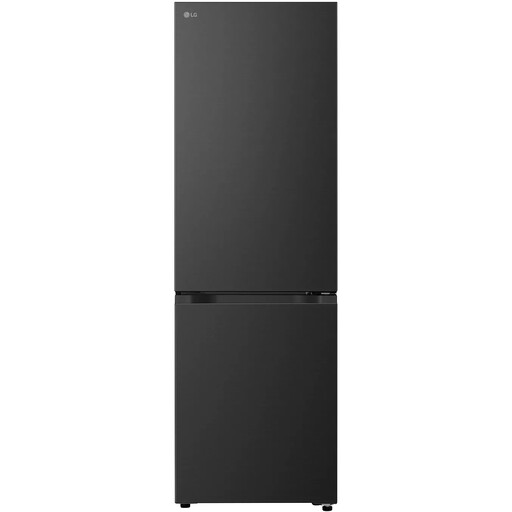 Image unavailable
LG GBBS312AEV, 333 L fridge-freezer, No Frost, Class A, black
If you’re considering replacing a fridge-freezer that runs continuously, first check whether its 333 L capacity suits your household. Then compare the energy use on the label with that of your current appliance and look into spare parts availability.
View on Joybuy
 Image unavailable
Candy CFQQ5T817EPS, 467 L fridge-freezer, Total No Frost, Class E, silver
Make sure the 467 L capacity matches the space you need. To assess whether a replacement makes sense, compare the energy use on the label with that of models of a similar capacity, and check the information about spare parts.
View on Joybuy
 Image unavailable
Sonlu CC-520WE, 444 L fridge-freezer, frost-free, Class E, light silver
If you’re looking for a 444 L fridge-freezer, check that its capacity and dimensions suit your space. Deciding whether to replace your appliance also means comparing energy use on a like-for-like basis and looking into repair options.
View on Joybuy
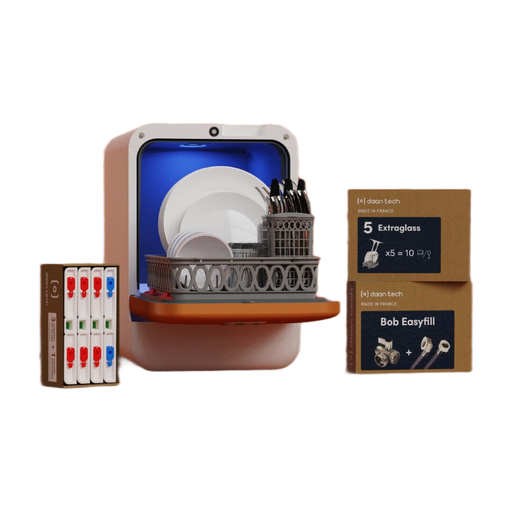 Image unavailable
Bob The Eco-Compact, All-Options Pack dishwasher, white/copper
If you’re replacing your dishwasher with a compact model, check the space available and how much washing-up you need to do. Compare energy use per cycle only with programmes and capacities that suit your needs, and look into the repairability information too.
View on Joybuy
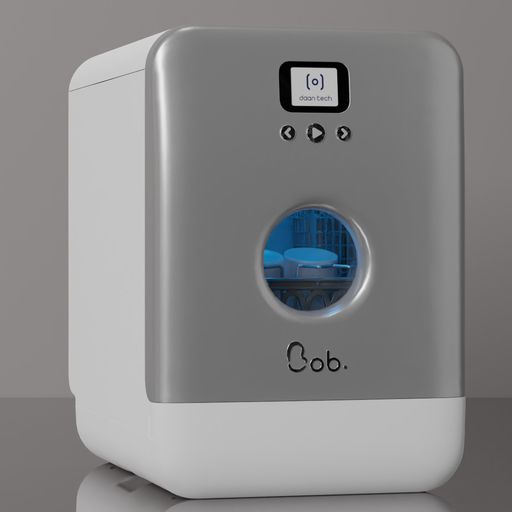 Image unavailable
Bob Mini, compact dishwasher for 3 place settings, 34 cm, metallic grey/white
This compact model could be a good option if space is limited. Before buying, check that its usable capacity suits your washing-up, then find out which programme the per-cycle energy figures relate to and check the information on spare parts.
View on Joybuy
Frequently asked questions
Does the Repair Bonus automatically apply to a broken appliance?
No. According to the Ministry responsible for the Environment and ecosystem, the deduction applies to eligible repairs carried out by a QualiRépar-approved repairer. The appliance must, among other things, be owned by a household, have been bought in France and no longer be covered by a warranty or insurance. Check that it’s eligible and confirm the amount before accepting the quote.
Is the energy rating enough to decide whether to replace my appliance?
No. Compare its energy use with that of appliances of the same type and suitable capacity, using the same measurement basis. ADEME explains that a dishwasher label shows, among other things, kWh per 100 reference cycles, water use per cycle, capacity and the duration of the Eco programme. These figures alone won’t tell you how much it will cost to run.
Do all appliances have a durability index?
No. The Ministry responsible for the Environment says that the durability index began replacing the repairability index for televisions and washing machines in 2025. For other categories, look for the relevant index and check the information on spare parts.
What protection does a second-hand or refurbished appliance come with?
In France, the statutory conformity guarantee applies to second-hand and refurbished goods sold by a trader to a consumer, but not to sales between private individuals, according to the Ministry of the Economy. A refurbished item is a second-hand item whose functions have been tested and which has been restored to working order if necessary. Check its condition and energy use before choosing too.
Can I decide to replace an appliance based on its age alone?
No. Age alone doesn’t tell you what’s wrong with the appliance or whether a repair would suit your needs. Have its condition assessed, ask for a quote, check which parts are available and compare its verifiable energy use with that of a suitable replacement.


