Households reviewing their refrigeration appliance
Your fridge, fridge-freezer or freezer runs continuously. Before replacing it, compare its annual energy use, usable capacity and condition with your current needs.


Start by looking at your fridge or freezer, which runs continuously, then consider your laundry appliances according to how often you use them. When deciding whether to buy or replace an appliance, compare models of a similar type and capacity that suit your household. Check kWh/year for refrigeration and kWh/100 cycles for the reference washing programme. These figures alone cannot predict how much energy an appliance will use in your home.
Your fridge, fridge-freezer or freezer runs continuously. Before replacing it, compare its annual energy use, usable capacity and condition with your current needs.
You run washing machine loads regularly and want to choose a capacity that suits your usual loads. The kWh/100 cycles for the Eco 40–60 programme, water use per cycle and spin performance will help you compare models.
You want to balance place settings with energy use, Eco programme duration and noise, rather than choosing based on the energy class alone.
The ADEME notes that refrigeration appliances run continuously, so their annual energy use is a good place to start. For laundry and dishwashing, consider how often you use the appliance and compare the reference programme figures for models with similar capacities.
| Consideration | What to check | Consumers concerned |
|---|---|---|
| Continuous refrigeration | Compare kWh/year and compartment volumes for appliances of the same type. | If my fridge or freezer runs all year round, I want to know whether its capacity and energy use justify replacing it. This would be the top priority for around 36% of consumers. |
| Laundry cycles | Compare the kWh/100 cycles for the Eco 40–60 programme with a capacity in kg that suits your loads. | When I do laundry frequently, I’d rather have a machine that suits my loads than a larger drum I don’t need. Around 29% of consumers would make laundry their main concern. |
| Dishwashing cycles | Check the kWh/100 cycles for the Eco programme, the number of place settings and the cycle duration. | If I use the dishwasher often, the energy-use figure alone isn’t enough: the capacity and cycle duration also need to suit me. Dishwashing would come first for around 21% of consumers. |
| Scheduling | Check that the appliance has a delay-start function, and read the manual and installation instructions for the model. | I mainly need to choose when my cycles run, without mistaking this setting for a way to reduce energy use. This would be the top priority for around 14% of consumers. |
The same letter doesn’t mean two appliances have the same volume or capacity. The European Commission gives figures in kWh/year for refrigeration appliances and kWh/100 cycles for washing machines and dishwashers.
First compare appliances of a similar type and capacity, then check the energy-use unit that matches how each one is used.
A larger drum is only practical if it suits your household’s loads. The ADEME recommends checking whether you need the extra capacity and notes that 7 kg is usually enough for a washing machine.
Estimate the size of your usual loads before comparing the energy use of models that can handle them.
Delaying a cycle changes when it runs, not the programme’s standardised energy use. For an appliance connected to the water supply, installation and usage instructions depend on the model.
Check for the function, read the manual and make sure the connections are in good condition before scheduling a cycle. Don’t assume that delay start is suitable in every situation.
The energy-use benchmarks published by the ADEME provide context, but they can’t predict how much your appliance uses or what difference replacing it would make in your home.
If you can, note down the details of your current appliance, then consider its condition, the capacity you need and whether you can keep or repair it.
To compare specific refrigeration or laundry models, check their energy labels. The European Commission’s EPREL database lets you look up a product’s declared specifications, but it doesn’t rank brands overall.
A brand to include when comparing fridges, freezers or dishwashers.
A brand to consider for a dishwasher, particularly if its size and noise level will influence your choice.
Another brand to consider if you’re choosing a dishwasher based on how it will fit into your kitchen and how often you wash up.
These models cover three of the choices discussed here: washing machines, dishwashers and fridge-freezers. Compare each one with appliances of the same type, then check that its capacity, dimensions and energy label details suit the way you’ll use it.
 Image unavailable
Worth considering if an 8 kg capacity suits your usual loads. The model name indicates a spin speed of 1,400 rpm; check its energy label to compare the kWh/100 cycles for the Eco 40–60 programme with those of other washing machines that suit your loads.
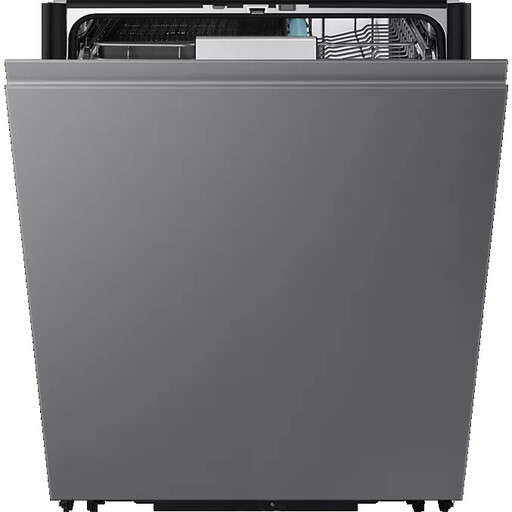 Image unavailable
Worth considering if you’re looking for an integrated dishwasher with 14 place settings. Check that the 60 cm size will fit the space, then compare the Eco programme’s energy use and duration, as well as water use per cycle, with similar-capacity models.
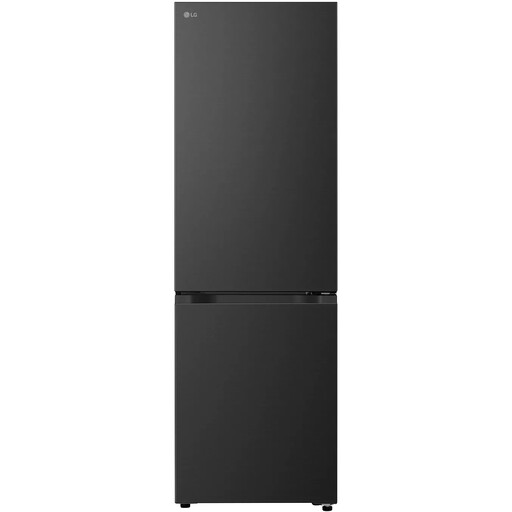 Image unavailable
Worth considering if a 333 L fridge-freezer meets your storage needs. Before replacing your appliance, check the capacity of its compartments and compare the kWh/year on its energy label with those of fridge-freezers of a similar capacity.
 Image unavailable
A top-loading machine may suit you if access is an issue and a 7 kg capacity is right for your loads. The model name indicates a spin speed of 1,200 rpm and Wi-Fi connectivity. Compare the kWh/100 cycles for the Eco 40–60 programme separately, and read the manual before scheduling a cycle.
 Image unavailable
Worth considering if your household needs a 467 L fridge-freezer and you have enough space for it. Compare its stated annual energy use with that of appliances of a similar type and capacity, rather than with a small fridge.
Compare the kWh/year figures for appliances of the same type and with a similar usable capacity. According to the European Commission, labels for refrigeration appliances also show compartment volumes and noise levels. So the energy class alone isn’t enough to compare a large freezer with a small fridge.
No. They refer to the reference programme: Eco 40–60 for washing machines and Eco for dishwashers. The European Commission provides these figures as a basis for comparison. If you mainly use other programmes, check the model information for those too.
No. Delaying a cycle doesn’t, by itself, reduce the programme’s standardised energy use. The ADEME discusses shifting some energy use to different times of day; choose this function to suit your routine, but don’t confuse it with the product’s energy performance.
Read the manual for the exact model and check its installation and connections before use. Bosch Home Appliances recommends following the manual’s warnings when installing a dishwasher; usage requirements shouldn’t be assumed to apply to every appliance.